InControl Enterprise Dynamics appoints new CEO for EMEA

InControl Enterprise Dynamics appoints new CEO for EMEA.

Woerden, January 31st 

Louis Schijve, the founder and owner of InControl Enterprise Dynamics, is stepping down as CEO of the company after a period of 34 years. The board of directors is pleased to announce the appointment of Geert-Jan van Nunen as the new CEO for the EMEA region. Geert-Jan is a seasoned manager with a proven track record of implementation and growth of software and platform technologies in the telecom and automotive industries.

Before joining InControl, Geert-Jan held various management positions. Understanding technology to accelerate business growth has been central to his career. Experienced with IoT, AI, platform technology, and integrated software systems. Previously he grew businesses from scratch to multimillion revenues. In his most recent role, he was responsible for the growth of a German AI technology scale-up.

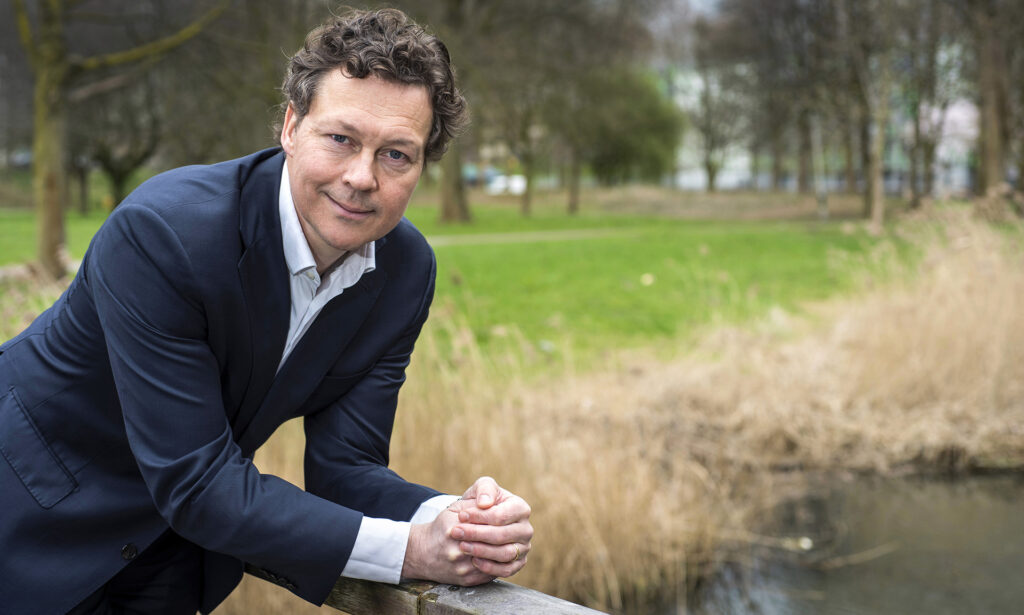
geert-jan van nunen

Geert-Jan van Nunen. CEO InControl Enterprise Dynamics EMEA region.

His mission is growing InControl as a partner of choice for customers that use digital simulation and digital twins as tools to better plan and operate their core processes; and to establish InControl as the leading emulation and simulation software provider for large-scale and complex operations.

“We are happy to have Geert-Jan van Nunen as the new CEO for EMEA. He is a proven leader with the vision and experience to expand on the success that InControl has been building over the past 34 years and take the company into its next phase of growth and innovation.”

 –  Louis Schijve, Founder and Chairman of the board of directors  – 

About InControl Enterprise Dynamics

InControl Enterprise Dynamics is a global software company that provides simulation software and services for the safety and sustainability of critical infrastructures such as warehouses, manufacturing plants, logistics, airports, railroads, border control, public events, etc. By accurately simulating the flow of people and goods we enable our clients to better plan and optimize their core business processes making their business more efficient, robust, and safer. InControl’s Simulation Platform delivers customers essential insights to continuously improve and optimize complex infrastructures and physical business processes.

Find more information about our software here.

Related news articles

Simulation contributes to the future of Rail Transport

Simulation contributes to the future of Rail Transport

For over 30 years, InControl develops innovative customized railway-traffic simulators and is an expert in railway simulation. InControl’s simulation software platform enables the development of applications. One example is a high-performance railway application designed, built, and maintained by InControl for organizations responsible for rail infrastructures and passengers. It supports the decisions related to system (future) performances and the effects of innovations. At this moment rail organizations have to implement efficiency and security-related programs like ERTMS*, ATO*, or TMS* and passenger flows at public transport hubs in cities and metropole areas.

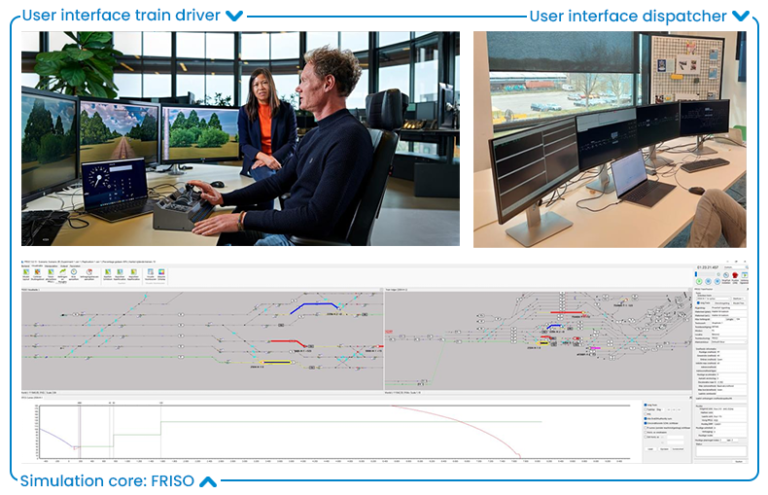
InControl’s Dutch railway simulator application called “FRISO” is developed for ProRail, the Dutch infrastructure company. It allows users to simulate and visualize large networks on a microscopic level including tracks, switches, signals, etc. The application supports users by automatic generation of a complete simulation model based on several databases. The benefits are valid data and information provisioning in a short timeframe. Visualization of the (sub)systems, insights into conflicting planning of rolling stock and staff, and multi-organizational and discipline staff training are part of the application services.

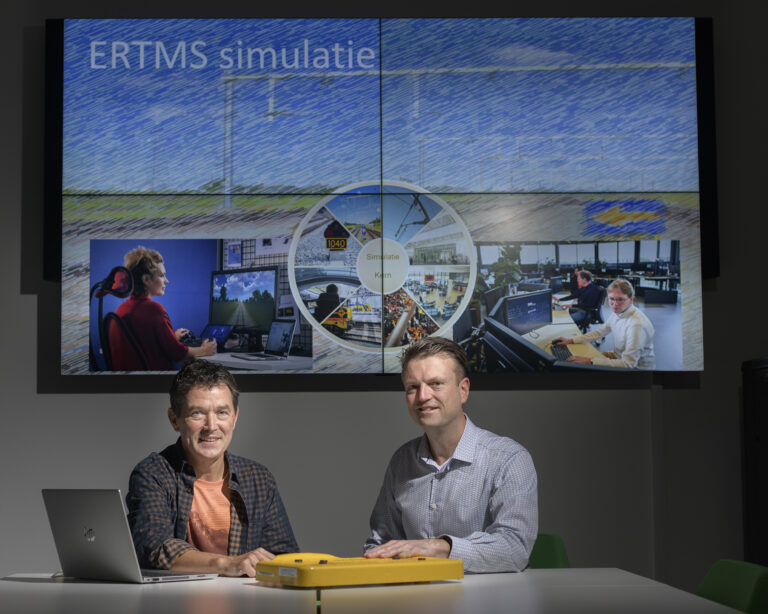
ERTMS affects the entire rail sector, so collaboration is a must. How does that work in practice? Last month, Joris Steneker, Team Manager Public Transport at InControl, and Dick Middelkoop, Program Manager ProRail Innovation, were invited by ERTMS Flash to discuss the long-lasting relationship. The original interview is in Dutch, for the English version please click here.

Source: Text Eveline Bets and foto Fokke Eenhoorn

Het ideale samenwerkingsmodel (geen simulatie, maar realiteit)
ERTMS raakt de hele spoorsector, dus samenwerken is een must. Hoe gaat dat in de praktijk?

Source: Fokke Eenhoorn

Hoe kennen jullie elkaar?
Dick
: “Als programmamanager Modelontwikkeling houd ik me bezig met de ontwikkeling van simulatiemodellen en optimalisatievraagstukken. ProRail heeft een lange geschiedenis in simulaties, maar onze software was niet goed ingericht op de steeds complexere ontwikkelingen. Toen we jaren geleden op zoek gingen naar een flexibeler systeem met meer mogelijkheden, kwamen we terecht bij een platform dat is ontwikkeld door InControl.”

Joris: “Ik kwam er later bij, in 2006 geloof ik, toen ik als teammanager Public Transport verantwoordelijk werd voor simulatiemodellen voor onder andere het spoor.”


Aan welke simulatie(s) werken jullie op dit moment?
Joris
: “Actueel is een groot project waarin we de ERTMS-gebruikersprocessen hebben nagebouwd in een simulator. Doel is het valideren van die processen, en betere communicatie tussen machinist en treindienstleider. De simulator bootst de treindienst na in een soort 3D-omgeving van het spoor.”

Dick: “Het gaat dus om testen of we het goed hebben uitgedacht, nog niet om het trainen van de mensen die ermee gaan werken. Dat komt later.”


Kunnen jullie het doel van de samenwerking omschrijven?
Dick
: “Ons doel is dat we op een efficiënte manier de toekomst van het spoor in beeld brengen en zo kunnen beleven, en dat we inzicht krijgen in die complexiteit.”

Joris: “Ja, dus gezamenlijk dingen beproeven en ontwikkelen. Dat is ook de kracht van simulatie. Een mooi voorbeeld is dat we na zo’n sessie van machinisten en treindienstleiders terugkregen: ‘Nou, dat ga ik in de praktijk nooit zo doen.’”

Dick: “Of omgekeerd: ‘Dit scenario is niet goed, kunnen we dat nog aanpassen?’ Dat vond ik een mooie les. Het werkt dus twee kanten op. Zo verbeteren we de praktijk.”

Joris: “En daar worden we heel blij van!”

Kom je ook knelpunten tegen en zo ja: hoe lossen jullie dit op?
Dick
: “Ja, mijn werk is een leuke, maar uitdagende puzzel. Dat vraagt om chemie in de samenwerking en gebruik maken van elkaars kwaliteiten.”

Joris: “ProRail stelt ons soms uitdagende vragen. Bijvoorbeeld: ontwikkel een wiskundig optimalisatie-algoritme voor Automatic Train Operation. Dan is het best spannend of we dat ook kunnen leveren.”

Dick: “Meestal leidt het tot goede resultaten. Of het valt nu nog niet in goede aarde, maar later wel. Dan zijn we onze tijd vooruit.”

Wat is er volgens jullie nodig voor goede samenwerking? En zie je dat terug bij elkaar?
Dick
: “Eerlijkheid, duidelijkheid, een open houding, doen wat je zegt.”

Joris: “Ja, Dick is inderdaad open en duidelijk. Er is daarnaast ruimte voor creativiteit, dat vind ik ook belangrijk.”

Dick: “Joris doet wat hij belooft. En hij verrast mij niet alleen met zijn diepgaande inhoudelijke kennis, maar kan ook uitleggen dat niet alles wat ik wil als opdrachtgever relevant is.”

Joris: “Dick heeft ook veel kennis en stelt kritische vragen. En hij kan mensen overtuigen. Ik vind Dick wel een echte ambassadeur. Het leukste is als we samen aan anderen enthousiast vertellen wat we doen!”

Tot slot: kunnen jullie samen door 1 deur? Waarom?
Dick
: “Zeker. Omdat we niet bang zijn een beetje in te schikken als die deur, laten we zeggen, wat smal zou zijn.”

Joris: “Dan proberen we die deur breder te maken.”

Dick: “Zodat er nog meer mensen mee kunnen lopen.”

English version:

The ideal collaboration model (not simulation, but reality)
ERTMS affects the entire rail sector, so collaboration is a must. How does that work in practice?

Source: Fokke Eenhoorn

How do you know each other?
Dick
: “As a Model Development program manager, I am involved in the development of simulation models and optimization issues. ProRail has a long history in simulations, but our software was not well equipped for the increasingly complex developments. Years ago, when we were looking for a more flexible system with more options, we ended up with a platform developed by InControl.”

Joris: “I joined later, in 2006 I believe, when I became responsible for simulation models for rail, among other things, as team manager Public Transport.”

Which simulation(s) are you currently working on?
Joris: “Currently we are involved in a major project in which we have recreated the ERTMS user processes in a simulator. The aim is to validate those processes and improve communication between the train driver and train traffic controller. The simulator simulates the train service in a kind of 3D environment in which the railway system is modelled.”

Dick: “It is therefore about testing whether we have thought it through properly, not yet about training the people who will work with it. That will come later.”

Can you describe the purpose of the collaboration?
Dick
: “Our goal is to visualize and experience the future of rail in an efficient way, and to gain insight into that complexity.”

Joris: “Yes, so testing and developing things together. That is also the power of simulation. A good example is that after such a session we received feedback from drivers and train controllers: ‘Well, I will never do that in practice.'”

Dick: “Or vice versa: ‘This scenario is not good; can we still adjust it?’ I thought that was a good lesson. So, it works both ways. This is how we improve practice.”

Joris: “And that makes us very happy!”

Do you also encounter bottlenecks and if so: how do you solve them?
Dick: “Yes, my work is a fun, but challenging puzzle. That requires chemistry in the collaboration and making use of each other’s qualities.”

Joris: “ProRail sometimes asks us challenging questions. For example: develop a mathematical optimization algorithm for Automatic Train Operation. Then it is quite exciting whether we can also deliver that.”

Dick: “It usually leads to good results. Or it may not be well received now, but it will later. Then we are ahead of our time.”

What do you think is necessary for good cooperation? And do you see that back together?
Dick
: “Honesty, clarity, an open attitude, do what you say.”

Joris: “Yes, Dick is indeed open and clear. There is also room for creativity, which is also important to me.”

Dick: “Joris does what he promises. And he not only surprises me with his in-depth substantive knowledge but can also explain that not everything I want as a client is relevant.”

Joris: “Dick also has a lot of knowledge and asks critical questions. And he can convince people. I think Dick is a real ambassador. The best part is when we enthusiastically tell others about what we do!”

Finally: Are you both on good terms with each other? Why?
Dick
: “Certainly, because neither of us is afraid to compromise a little if necessary.”

Joris: “Then we try to create more space for each other.”

Dick: “So that in the end more people can join us and benefit from our efforts.”

Abbreviations:
* ERTMS: European Rail Traffic Management System
* ATO: Automatic Train Operation
* TMS: Traffic Management System

Are you interested in our contributions to the Rail Transportation Industry? Contact us, we are happy to tell you more about our expertise and experience.

Related news articles

Pedestrian Dynamics® 4.2 released!

Pedestrian Dynamics® 4.2 released!

For all leading construction companies, architects, engineers, and consultants using crowd risk analysis. We are happy to announce the release of our crowd simulation software Pedestrian Dynamics® 4.2!

With Pedestrian Dynamics® you can increase customer experiences, decrease costs, and contribute to your innovation programs to contribute to more safe, secure, and sustainable infrastructures and events.

Pedestrian Dynamics® 4.2 gives the crowd modelers more tools to help them in the model building process and to present the results to the end user.

The new features of Pedestrian Dynamics® 4.2 are:

  • New TextBox Element, to enhance your model by showing text or output in your 2D or 3D visualization 
  • New functionality in the Error Monitor, to easily find the location where the error in your model is reported  
  • Miniature Map, a small layout shown at the bottom. Click on this layout to easily navigate your model. 

New TextBox element

The new text box element can show predefined messages or dynamically updatable
text. This tool brings extra functionality to help you analyze your environment during
the simulation run and create videos to show your projects’ results.
This element can be found on the draw toolbar of the 2D Builder. Draw the text box
in your layout, adjust its size, font, and many other settings in the settings window,
including the visualization in both 2D and/or 3D. Use the available predefined
logics to define the text to be shown: a fixed text such as the name of an activity
or its capacity, or even text that is updated dynamically during the run, such as the
number of people in a queue line.

Show the location in your 2D/3D model layout directly from the location reported in the Error monitor

New functionality has been added to the error monitor and tracer window. In the context menu you can find a new function Go to location. Use this for example to easily find the location of an error that is reported in the error monitor in your 2D/3D model layout.

Debugging your model is now facilitated by this tool. Select the line in the error
monitor which is reporting the location. Right-click on the error and the context
menu opens, which shows the “Go to location” option. By selecting this option, a red
circle pops up on the environment which indicates the location.

Miniature Map for easy navigation

A miniature layout of your entire model for easy navigation. When working with
large models, the zoom in/out process to find a specific location can sometimes
be cumbersome. The miniature map tool does not only give you extra information
about which part of the model is shown in the view, but also makes it easier to move
between different areas.

A new button can be found on the View tab of the Model Layout. Click this
button and a settings window will appear in which you can enable the miniature
map. This map is shown in the bottom left corner of the 2D Builder windows. The
green area shows the current area shown in the Layout. Click the image to move the
view to the indicated location. The map can be updated via the settings window or
on reset.

Download our release highlights document to read more details about the new improvements in Pedestrian Dynamics® 4.2. 

Curious what Pedestrian Dynamics® can do for you, your company, and your customers? Please contact us, or try our software free of charge.

InControl erhält ISO 9001 Zertifizierung

InControl erhält ISO 9001 Zertifizierung

Wir freuen uns bekannt zu geben, dass InControl Enterprise Dynamics offiziell mit der ISO 9001 Zertifizierung ausgezeichnet wurde. Dieser Meilenstein zeigt unsere Verpflichtung zu Qualität und kontinuierlicher Verbesserung.

Warum ISO-Zertifizierung?

Die ISO 9001 Zertifizierung verdeutlicht unser Engagement zur kontinuierlichen Bereitstellung von Produkten und Dienstleistungen, die die Kundenanforderungen nicht nur erfüllen, sondern übertreffen. Diese Anerkennung erfolgt nun auch offiziell durch TÜV Nord, ein weltweit anerkanntes Unternehmen für ISO-Zertifizierung. Es unterstreicht unsere Qualität in Bezug auf unsere Digital Twin Software und Dienstleistungen, setzt einen hohen Standard für Professionalität und legt eine solide Grundlage für zukünftiges Wachstum.

Feedback TÜV NORD Nederland:

Neben der Anerkennung erhielt InControl positives Feedback vom Hauptprüfer:

„Was diese Überprüfung interessant machte, war die Kombination aus Technologie und ihrem Einfluss auf die Sicherheit und Nachhaltigkeit logistischer Prozesse sowie von Personenbewegungen. Es war inspirierend zu sehen, wie Kunden die Software nutzen, um Effizienz zu steigern, aber auch um Risiken zu reduzieren und eine sicherere Umgebung für Menschen zu schaffen.

Mir wurde erläutert, wie die Software verschiedene Szenarien simuliert, angefangen bei logistischen Prozessen in Verteilzentren, bis hin zur Planung des öffentlichen Verkehrs und großer Veranstaltungen. Die Mitarbeiter, mit denen ich sprach, waren sehr sachkundig und enthusiastisch. Sie waren begeistert von den Auswirkungen, die ihr Produkt auf die Sicherheit und Nachhaltigkeit entscheidender Infrastrukturen hat.

Darüber hinaus waren sie offen und bereit, ihr Wissen zu teilen. Während der Demonstration erklärten sie geduldig, wie die Software funktioniert, wie sie verschiedene Szenarien simuliert und wie sie Unternehmen dabei helfen kann, potenzielle Risiken zu identifizieren und zu verwalten. Die Offenheit des Teams, Einblicke zu teilen und bei kontinuierlichen Verbesserungen zusammenzuarbeiten, machte das Audit nicht nur informativ, sondern auch angenehm.

Alles in allem führte dies zu einer positiven Bewertung. Ein guter Anfang wurde gemacht, und nun gilt es, dies fortzusetzen. Ein effektives Managementsystem ist flexibel, um sich an veränderte Bedürfnisse und Rahmenbedingungen anzupassen und gleichzeitig die Konsistenz und Qualität in allen Aspekten der Geschäftstätigkeit zu wahren. Ich freue mich auf das nächste Audit zur kontinuierlichen Verbesserung.“

– Zitat von Stacey Martodikromo, Hauptprüfer, TÜV Nederland –

Für unsere bestehenden und zukünftigen Kunden stellt dieses Qualitätssiegel einen objektiven “Beweis des Vertrauens” in unsere Arbeitsweise dar. Zudem erweitert es unseren Markt, da wir nun auch Kunden bedienen können, die eine ISO-Zertifizierung verlangen.

Bei InControl glauben wir, dass Qualität der Grundstein für die Zufriedenheit von Kunden und Geschäftspartnern ist. Diese Zertifizierung ist eine offizielle und externe Bestätigung unserer operativen Exzellenz, die auf einem robusten Qualitätsmanagementsystem basiert.

Wir möchten unserem Team für ihre Professionalität und Einsatzbereitschaft während des Zertifizierungsprozesses danken. Nicht zuletzt möchten wir unseren Kunden und Geschäftspartnern für ihr fortwährendes Vertrauen und ihre Zusammenarbeit danken und freuen uns darauf, auch in Zukunft intensiver mit Ihnen zusammenzuarbeiten.

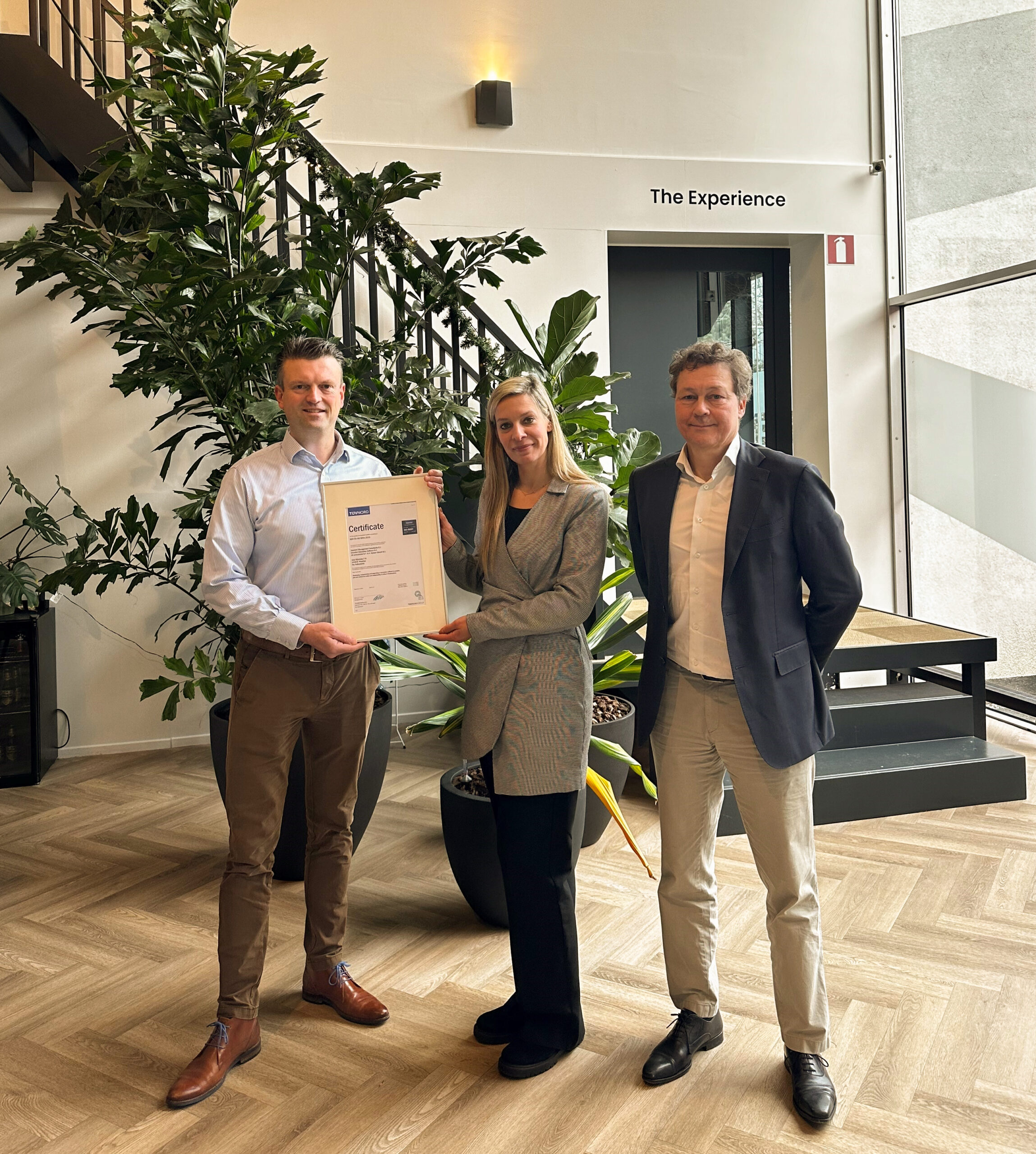
Marcia Konings von TÜV NORD Nederland überreicht offiziell das ISO 9001 Zertifikat.

ISO

ISO, die Internationale Organisation für Normung, ist eine weltweit anerkannte Organisation, die internationale Standards entwickelt und veröffentlicht. ISO 9001 bezieht sich speziell auf Qualitätsmanagementsysteme und legt Kriterien fest, anhand derer Organisationen ihre Verpflichtung zur Bereitstellung hochwertiger Produkte und Dienstleistungen nachweisen können.

www.iso.org

TÜV NORD Nederland

TÜV NORD ist ein technischer und betriebswirtschaftlicher Dienstleister, der sich auf unabhängige Bewertungen wie den Zertifizierungsprozess nach ISO 9001 spezialisiert hat. Seit 1981 fördern sie Sicherheit, Qualität, Zuverlässigkeit und Umweltbewusstsein für Organisationen, Regierungen und die Gesellschaft.

www.tuv.nl

Simulation adds value to Education

Simulation adds value to Education

Inspiring online seminar for our Educational User Community

On April 29th a group of enthusiastic teachers from several Universities working and teaching with Enterprise Dynamics® attended our online seminar Simulation & Education. InControl received loads of positive reactions launching the simulation software Enterprise Dynamics version 10.4. Particular new features and the user-friendliness were mentioned.  

In the discussion about online teaching, the teachers expressed great appreciation of the free-of-charge Enterprise Dynamics Student Starter extended edition. InControl made this version available since universities and Applied Sciences Institutes closed their facilities due to the COVID-19 pandemic.    

A part of the new software release and the extended Student Starter edition, the following two subjects were presented: 

The first presenter was Mr. Koos van Overdijk from Avans University of Applied Sciences. He explained how they are using the Enterprise Dynamics program for many years. More than 150 students per year studying Industrial Engineering and Management uses InControl’s software program during Discrete Simulation courses. Where students have to design a soft drink factory in Enterprise Dynamics with all its features as part of a group projectMr. Koos van Overdijk, has provided this inspiring course for many years and presented the ins and outs of this case and the way he shared his knowledge during the seminar.  

Thereafter, Mr. Han Mackor of Royal Schiphol Group and Mr. Harry Bunnik of InControl explained how a Digital Twin is created. What are the starting points and what steps do you need to take before you are even ready to run Digital Twin? To give insight into this process we elaborated on our approach to the baggage handling system of Airport Amsterdam Schiphol. How does Schiphol translate a suggestion to (re)design or improve a system or process into realistic implementation using the advantages of simulation software? 

Are you interested in teaching with Enterprise Dynamics classroom?  

Become part of our active Educational User Community and discuss or share your knowledge and experiences with other lecturers. 

Just send an email or check our website.  

Financieel Administratief Medewerker

Financieel Administratief Medewerker 24 uur Woerden & Hybrid Voor onze Financiële Administratie, gevestigd op het hoofdkantoor in Woerden, zoeken wij op korte termijn een Financieel
Read More

Visit InControl at LogiMAT 2026

Meet InControl at LogiMAT 2026 in Stuttgart. Discover how digital twin simulation helps optimise intralogistics, automation and material handling decisions.
Read More

EES implementation runs smoothly due to simulation software of InControl

EES implementation runs smoothly due to simulation software of InControl

Only a year to go and a new control system must be implemented at all external border locations in Europe. The EES will be mandatory from the  2022. EES stands for European Entry / Exit System and this system regulates the digital registration of all non-European passenger traffic. The stamps in passports will be part of the past and in addition to personal data, the registration and control of fingerprints and facial recognition will also be obligated.

The European member states are responsible themselves for the organization and registration of EES at their own external borders. Collaboration and innovation are  key words for a successful and, above all, smooth/seamless border control. It is and it will remain absolutely necessary to control border capacity both from a passenger and (FedPol) staff perspective. Border locations most of the time have to be (re)designed. This is important in order to guarantee the safety and security of the passengers and residents of the host country against pandemics, persons with terrorist motives or other calamities.

Predict passenger flows


InControl is an indispensable partner for predicting crowds at border areas: airports, seaports, cruise terminals and train stations. With the simulation models of InControl, passenger flows can be made transparent and therefore better monitored and enforced. Thanks to the software it is possible to create analysis, impact- and what-if scenarios, 2D and 3D models and relevant instructions for staff and passengers. With these forecasts safe and smooth/seamless passage of passengers is ensured.

Gain insights with predictive analysis of InControl


Every border location is different and the intensity of use of those locations differs per season, per week, per day and even per moment. During the holidays it is busier at the (air)ports and train stations. And as a widebody aircraft fly in from outside of Europe, there will be a peak moment that should be anticipated and addressed. By making this transparent in advance with simulation models, a lot of very important issues can be taken into account. For example the layout and size of the border area, the installation of counters, (mobile) kiosks and hiring of adequate and sufficient (FedPol) staff. With simulated models and scenarios you can prepare and fulfil a smooth border operation. In short, be prepared very specifically for the purchase of hardware, software and staffing.

The role of simulation software is extremely useful for capacity planning by predicting and limiting waiting times, for making cost estimates, and above all ensuring the safety of passengers and residents of Europe. We will support you to meet EES-ruling in an efficient and effective manner.

Would you like to know what InControl can do for you and your organization? Please do not hesitate to contact us. We are happy to tell you about our experiences and expertise.

Student using Enterprise Dynamics® Software successfully at Royal Schiphol Group

Student using Enterprise Dynamics Software successfully at Royal Schiphol Group

During my graduation project of the master Operations Management and Logistics at the Eindhoven University of Technology (TU/e) I conducted a research project at the Royal Schiphol Group. In my research I worked with the software of InControl Enterprise Dynamics to improve the trucks’ lead time designated for the air cargo handling. This software was preferred since Royal Schiphol Group already collaborated with InControl before. Besides, the software is suitable for the proposed model since it is able to develop discrete-event simulations, shows the flow of the trucks, and has the possibilities to analyze and visualize the model in 2D and 3D perspectives. Moreover, the TU/e provided a user license to the students for this software.

In more detail, my research investigated the flow of trucks arriving at five airport locations to pick up or deliver goods. Specifically, their waiting times at each location were evaluated for the current situation and how the waiting times would change with the adoption of a new concept. The new concept was called Drop and Collect and allows trucks to park their trailers at a truck parking until their goods need to be further processed. This concept ensures more control of the trucks’ flow and a just-in-time handling of goods when they are needed for the next stage of transport (e.g. flying to the next destination). Since a truck parking is added to the current situation, the trucks’ waiting times will change. Enterprise Dynamics was able to measure the change in time well. The design of my models consisted of three steps. Thereafter, the results were analyzed and evaluated.

First, I developed a simulation model of the current situation in the software. Before I started this research I had never worked with Enterprise Dynamics. However, a lot of information could be extracted from the InControl community where a lot of students had asked questions that were similar to my questions. Besides, tutorials and videos were available with basic models to compare and receive information. And what I really liked about InControl is that they were very accessible to ask questions.

Second, I developed additional models for five different scenarios of the Drop and Collect concept in Enterprise Dynamics. These scenarios were more complex than the current situation. Additional simulation objects were necessary to model these scenarios. Also changes in the behavior of the model was necessary. The new scenarios required a lot of capacity and processing constraints. These could be easily implemented using the Enterprise Dynamics Script language 4DScript.

Third, I run the models using the real data sets. During the development phase of the models I worked with small self-conceived data sets to build accurate models. After the models are validated and verified real data sets were used. Therefore, the corresponding trucks’ waiting times could be analyzed by running the models. The software was really helpful by analyzing and quantifying the trucks’ flows.

Last, the results of the simulation were evaluated and conclusions about the adoption of the Drop and Collect concept were drawn.

Overall, the software of InControl gave a good representation of the trucks’ flow at the airport and show where bottlenecks occur. The possibility to show the movements in 3D are very valuable for the understanding of the system and possible errors could be found more easily.

Financieel Administratief Medewerker

Financieel Administratief Medewerker 24 uur Woerden & Hybrid Voor onze Financiële Administratie, gevestigd op het hoofdkantoor in Woerden, zoeken wij op korte termijn een Financieel
Read More

Visit InControl at LogiMAT 2026

Meet InControl at LogiMAT 2026 in Stuttgart. Discover how digital twin simulation helps optimise intralogistics, automation and material handling decisions.
Read More

InControl’s crowd simulation supporting Transportation industry

InControl’s crowd simulation supporting Transportation industry

The transportation industry is facing a dramatic drop in passenger activity due to the COVID-19 pandemic. In order to ensure safe travelling for passengers and complying with physical distancing requirements InControl’s crowd simulation software Pedestrian Dynamics® has been used.  InControl simulation software predicts pedestrian flows and human behavior in a detailed way with high accuracy and processing large number of travelers.

Our software in 2D and 3D visualization models enabled business partner CGI and their end customers to get insights in several key questions, if and how to:

  • meet health legislation and protocols;
  • optimize schedules and capacity;
  • support management decisions and
  • organize the content of staff training.

Business partner CGI and InControl run several scenarios and delivered reports including What-If and Impact-scenarios and 2D and 3D visualizations.

Read the article of our business partner via this link.

Future Multimodal Hub Schiphol modelled with InControl Software

Future Multimodal Hub Schiphol modelled with InControl Software

The Multimodal Hub of Amsterdam Airport Schiphol is one of the largest public transport hubs in Europe and The Netherlands. Under normal (pre-COVID 19) circumstances the Schiphol public transport hub sees an average of 109,000 travelers per day. Every hour, 140 public transport buses passing through the center of Schiphol. These and other modalities all arrive, depart and transfer in and around Schiphol Plaza.

In the near feature an increasing number of people (up to 120,000) travelling through the Schiphol public transport hub is expected. In line with these numbers the current Multimodal Hub Schiphol (MHS) will be redesigned in order to create sufficient capacity to handle this increase.

InControl was requested by Schiphol to take a seat in the project organization as the passenger flow specialist. Over the course of 14 months, our team of experienced simulation engineers will assist Schiphol and the other project team members by simulating the complete new infrastructure of the new Multimodal Hub Schiphol. This will contribute to the vision of Royal Schiphol Group to create the world’s most sustainable, and high quality airport.

Pedestrian Dynamics®, InControl’s crowd simulation modelling software, is globally implemented to analyze passengers flows on airports and other public transport hubs.

Source Schiphol Group