Skip to content

Pedestrian Dynamics®

Agent Based Simulation Software

Simulate, analyze, and optimize pedestrian movement in crowded environments with Pedestrian Dynamics®

Organizations worldwide rely on Pedestrian Dynamics® to design safer, more efficient public spaces. Whether you’re planning a new infrastructure project or optimizing an existing facility, our platform provides the tools to model pedestrian behavior accurately and make informed decisions throughout the entire lifecycle—from design to daily operations.

With Pedestrian Dynamics®, you can create detailed simulations of pedestrian flows, test various scenarios, identify potential bottlenecks, and enhance safety measures without disrupting real-world activities.

25%

pedestrian flow optimization

20%

customer experience improvement

20%

construction time decrease

25%

pedestrian flow optimization

20%

customer experience improvement

20%

construction time decrease

Why Choose Pedestrian Dynamics®?

Our customers choose Pedestrian Dynamics® for its precision, scalability, and adaptability. It enables you to:

Key Features of Pedestrian Dynamics®

Pedestrian Dynamics® combines user-friendly modeling with advanced simulation capabilities to support a wide range of crowd management applications.

Agent-Based Modeling


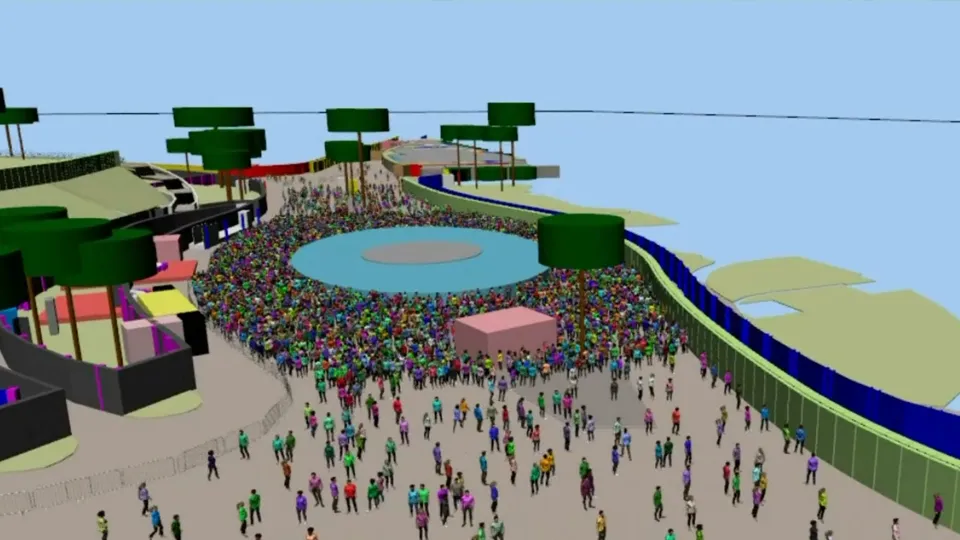
Pedestrian Dynamics uses agent-based modeling to simulate how individual pedestrians (or “agents”) move and interact within an environment. By assigning behavioral rules to each agent, the model captures realistic crowd patterns such as movement flows, congestion, and route choices.
This approach makes it possible to forecast how people respond to changes in infrastructure.
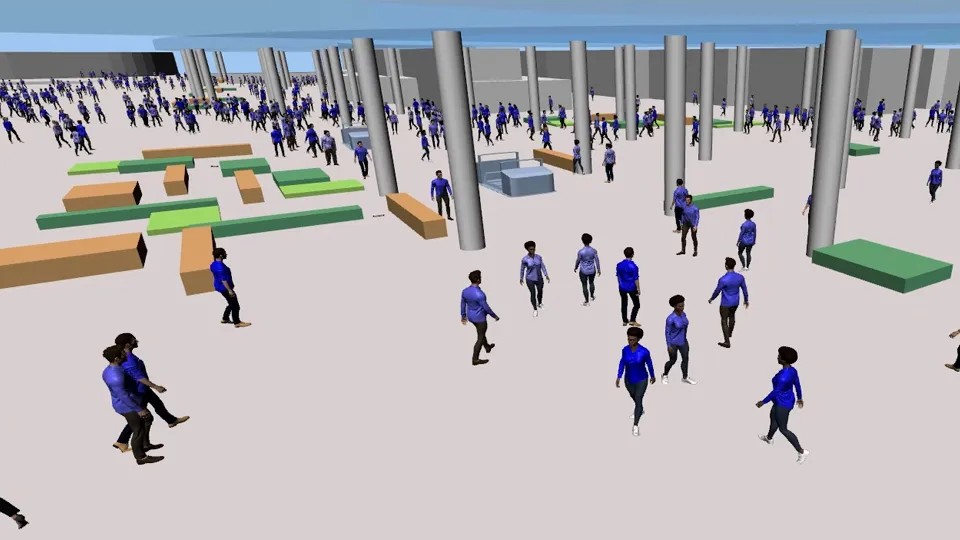
Pedestrian Dynamics uses agent-based modeling to simulate how individual pedestrians (or “agents”) move and interact within an environment. By assigning behavioral rules to each agent, the model captures realistic crowd patterns such as movement flows, congestion, and route choices. This approach makes it possible to forecast how people respond to changes in infrastructure.
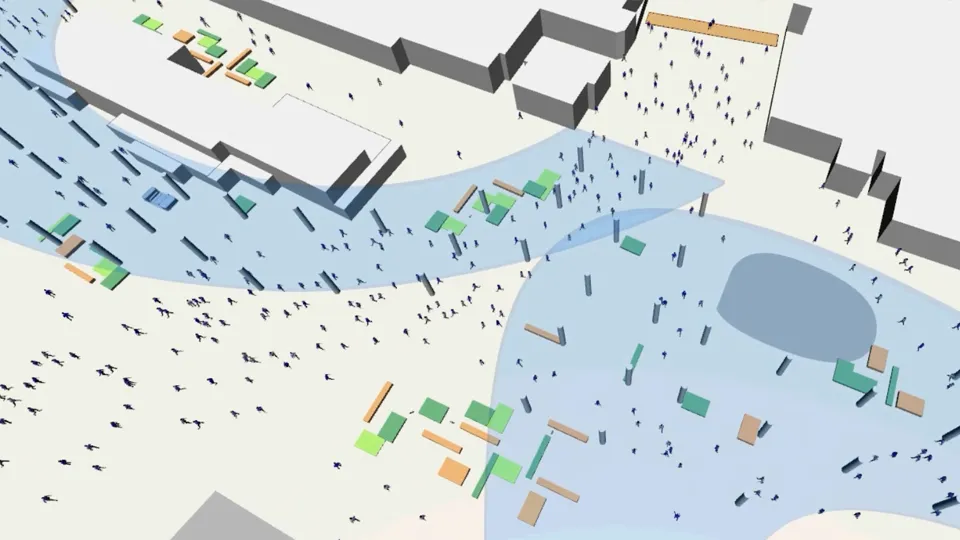
Pedestrian Dynamics® lets you model and simulate pedestrian behavior in and around transportation infrastructure with full integration of road traffic and public transport. This allows you to create realistic, end-to-end simulations of how pedestrians interact with vehicles, buses, trains, and other transport systems, helping optimize safety, flow, and connectivity across urban environments.
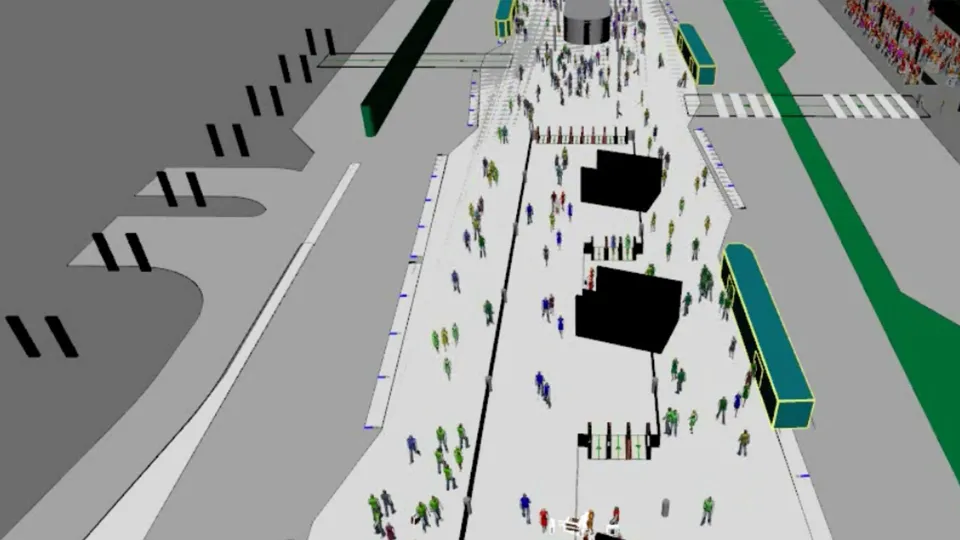
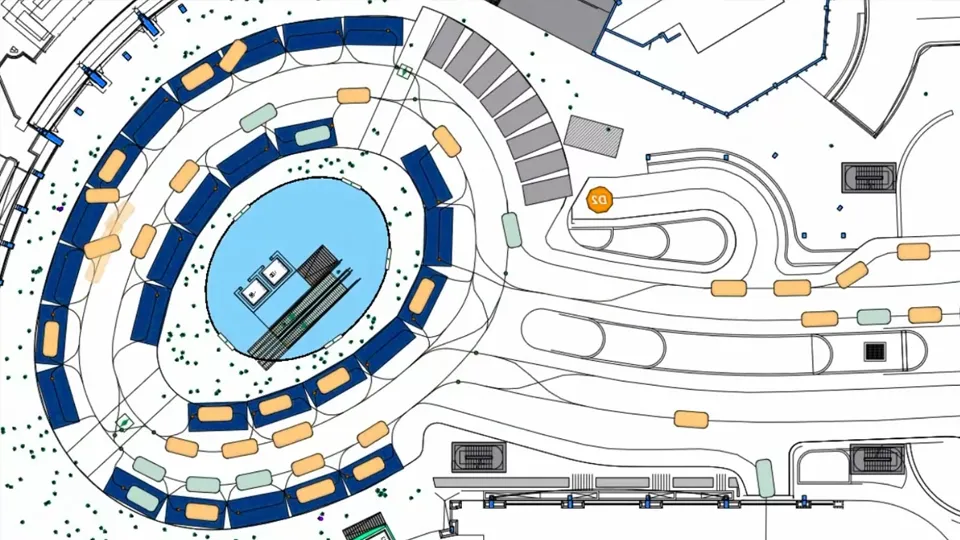
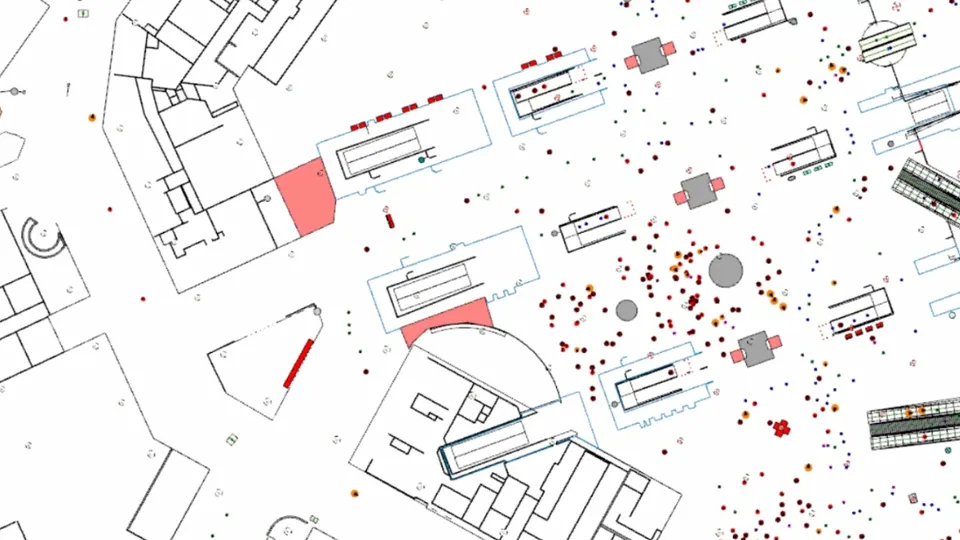
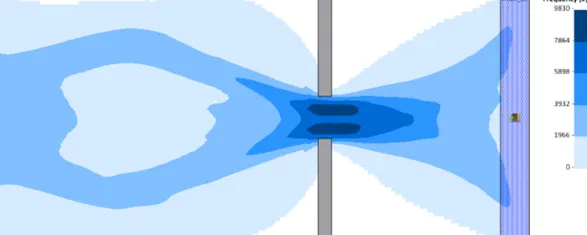
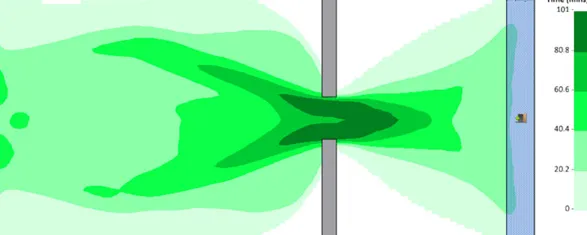
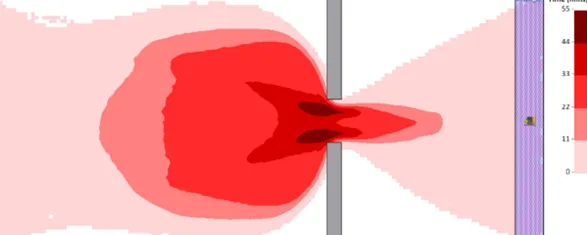
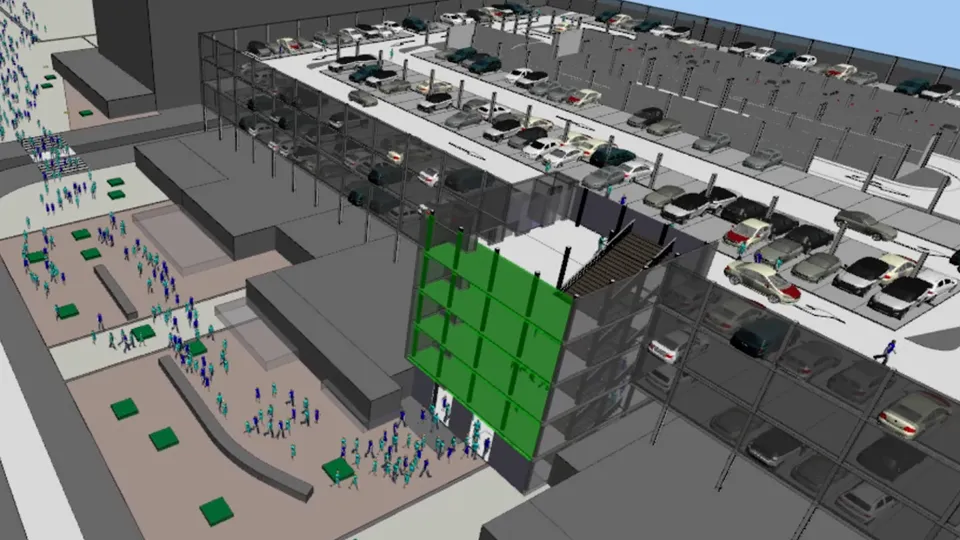
With Pedestrian Dynamics®, you can bring simulations to life through powerful 2D and 3D visualization. Imported data is transformed into interactive models that clearly show how pedestrian crowds move through different infrastructures.

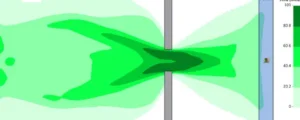
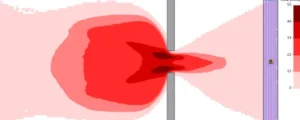
These visualizations make it easier to analyze flows, identify bottlenecks, and optimize safety and security in venues, transport hubs, and urban environments.
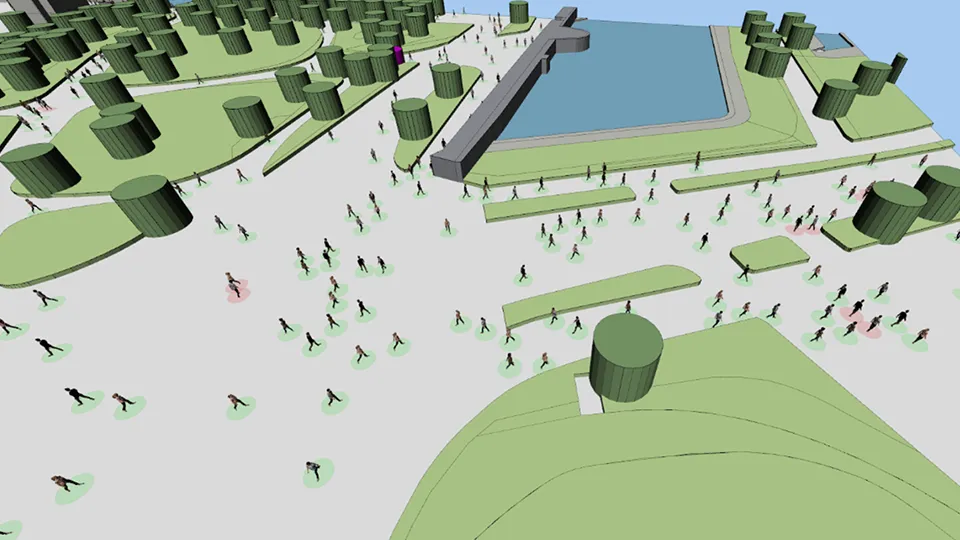
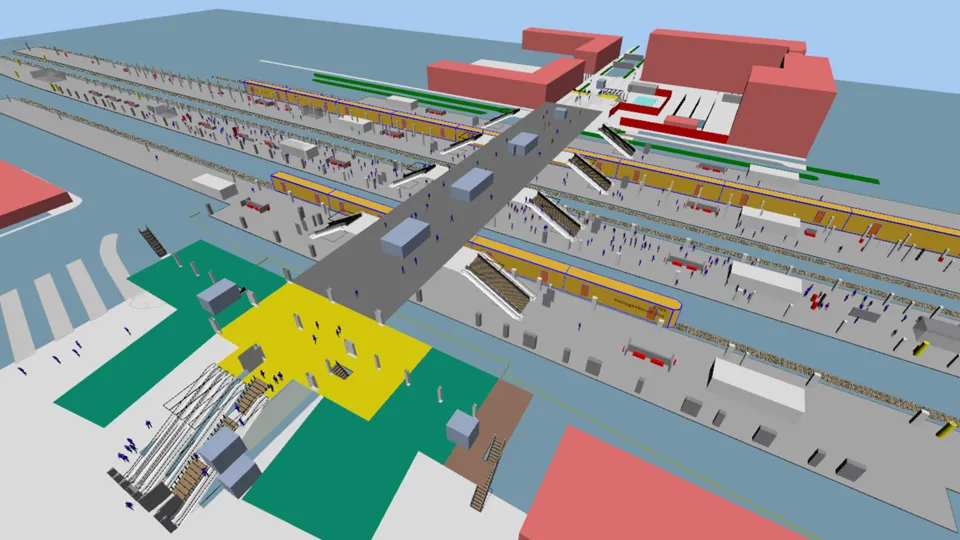
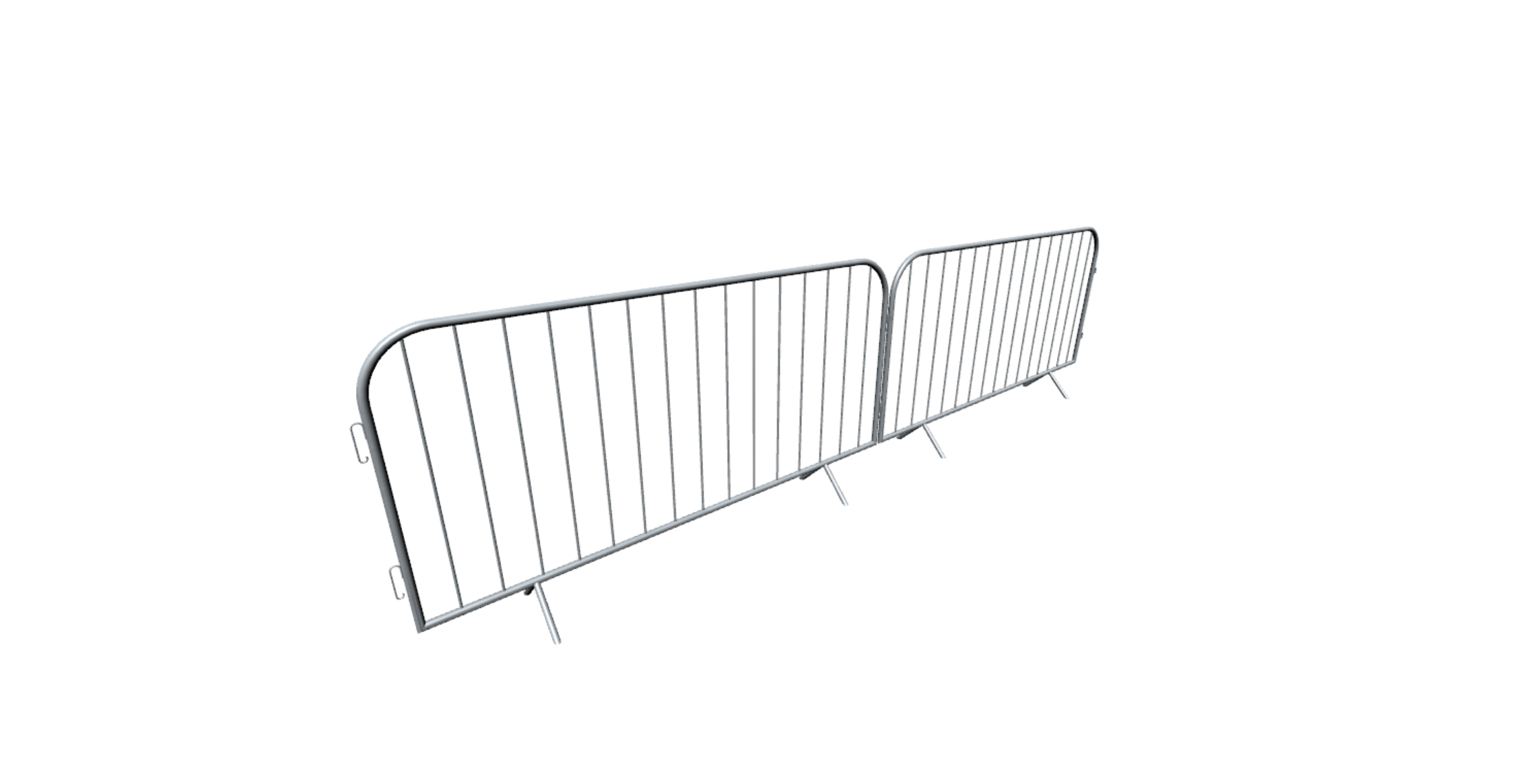
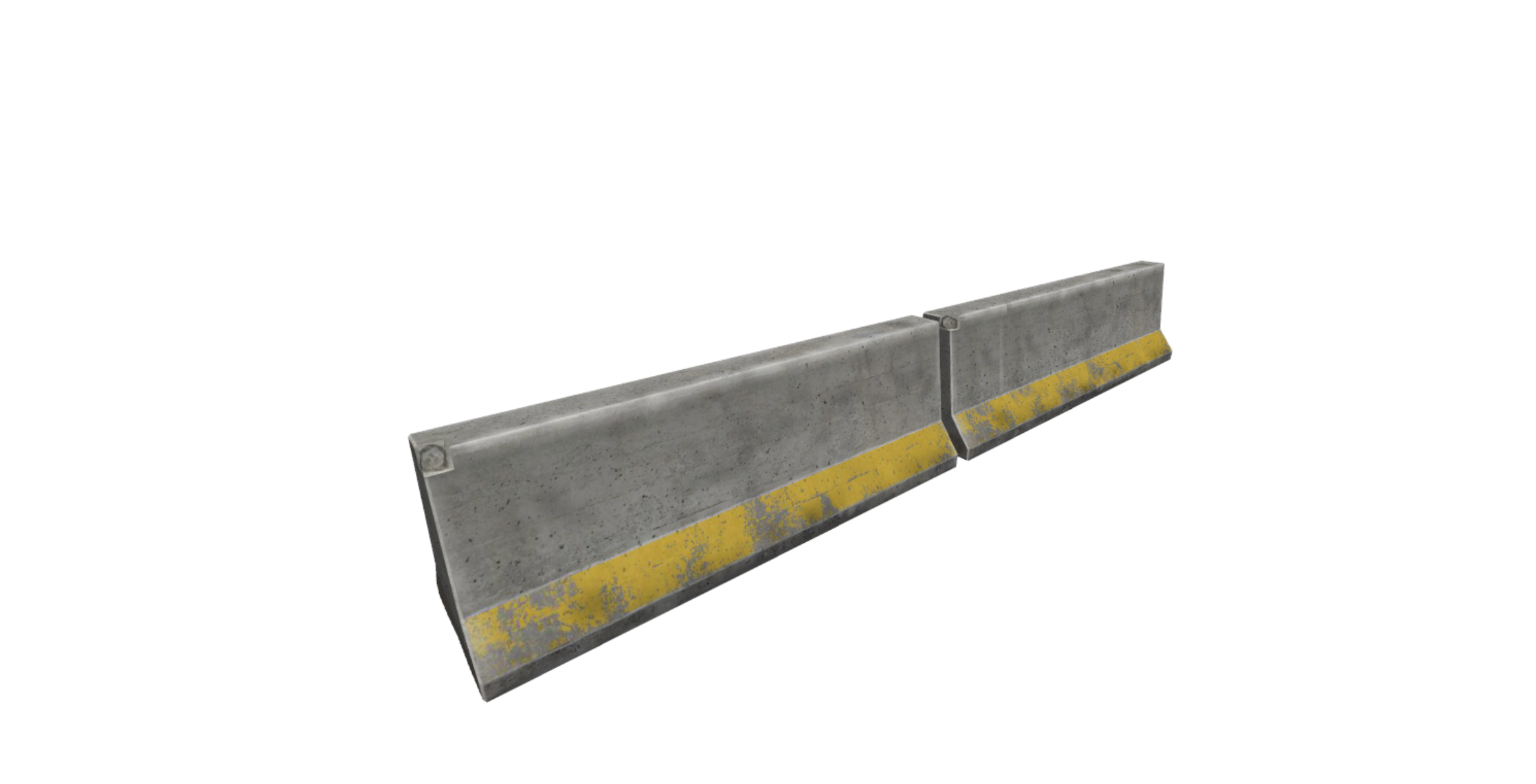
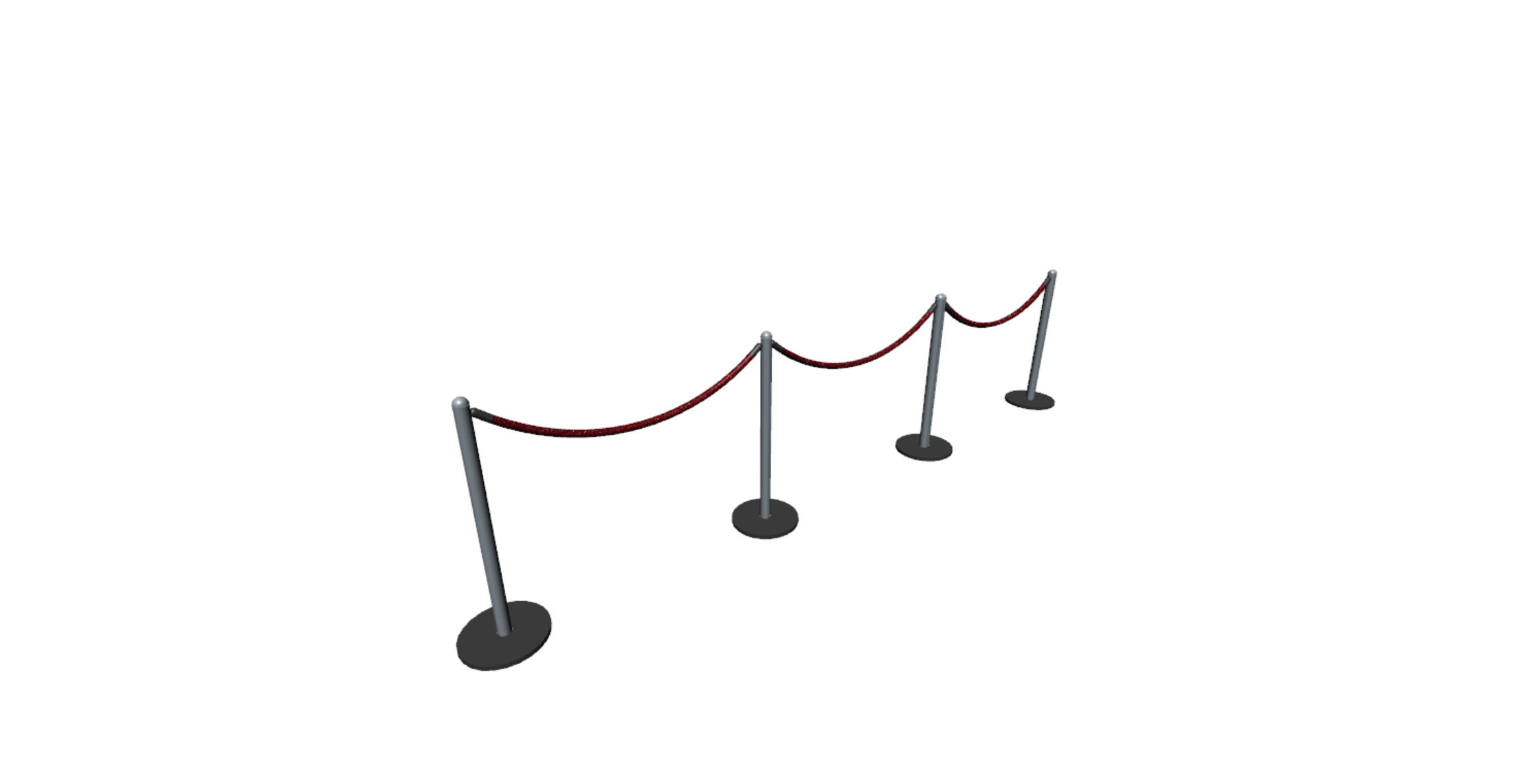
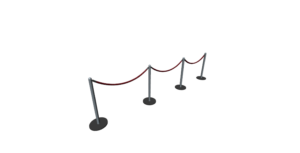
Pedestrian Dynamics® lets you utilize and adapt a wide range of simulation objects to fit your specific scenarios. With pre-built, customizable elements like cars, buses, stanchions, security gates, and other infrastructure-specific objects, you can build detailed digital twins that realistically simulate pedestrian flows, optimize safety and efficiency, enhance the overall experience, and clearly demonstrate design choices to stakeholders.
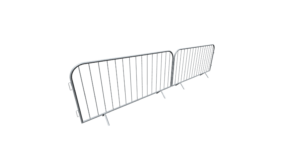
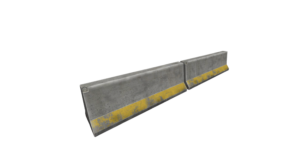
InControl’s Pedestrian Dynamics® connects seamlessly with external systems and real-time data feeds—such as cameras and sensors—to enrich simulations with live input. By incorporating real-world data, digital twins become more accurate and dynamic, enabling better evaluation of scenarios, performance optimization, and informed decision-making.

This makes it a powerful tool for improving pedestrian and crowd management across infrastructures like airports, urban areas, events, and commercial spaces—while also providing clear insights for stakeholder communication.

Pedestrian Dynamics® allows you to test and compare different strategies within a digital twin to model and optimize pedestrian flows. By analyzing factors such as bottlenecks, infrastructure design, and visitor numbers, the software helps predict potential issues, evaluate their impact on safety and efficiency, and identify the most effective solutions for complex environments. This makes it easier to make informed decisions and build confidence with stakeholders.
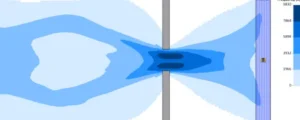
With Pedestrian Dynamics®, you can define and adjust a wide range of input parameters to build detailed simulations of pedestrian movement. Based on real-world data, these parameters capture crowd characteristics, infrastructure layouts, and operational scenarios within a digital twin.

This enables accurate predictions and optimizations for safety, efficiency, and the overall customer experience across any type of infrastructure.

Pedestrian Dynamics® makes it easy to export simulation results to Excel, databases, or business intelligence (BI) tools for deeper analysis. This capability supports efficient scenario comparison, bottleneck identification, and the measurement of safety, comfort, and overall performance. By turning simulation outcomes into actionable insights, you can optimize processes and improve decision-making across venues and infrastructures.
Key Features of Pedestrian Dynamics®

Pedestrian Dynamics® combines user-friendly modeling with advanced simulation capabilities to support a wide range of crowd management applications.

Real World Impact

Pedestrian Dynamics® is utilized across various sectors to improve safety and efficiency:

Crowded Places

Plan crowd control, ingress/egress, visitor flow management, and emergency evacuation for infrastructures and large-scale public events

Architectural Engineering

Visualize, optimize, and validate complex infrastructure. Create virtual replicas of real-world infrastructure to test, modify and optimize.

Airports & Transportation Hubs

Optimize passenger flow, queues, check-in, security, and boarding procedures in terminals and stations.

Fast, flexible, and scalable Implementation

Whether managing a single venue or a busy urban area, our solutions scale to your needs

Modular & Scalable

From small venues to city-wide simulations

No Coding Required

Intuitive platform designed for planners and operators

Seamless Integration

Combine with ticketing, POS, IoT, or access control systems

Expert Support

From data collection to actionable insights, we support your team

Modular & Scalable

From small venues to city-wide simulations

No Coding Required

Intuitive platform designed for planners and operators

Seamless Integration

Combine with ticketing, POS, IoT, or access control systems

Expert Support

From data collection to actionable insights, we support your team

See Pedestrian Dynamics® in Action

Interested in how Pedestrian Dynamics® can benefit your project? Experience the capabilities of our simulation software through a guided demo or by trying it yourself.

See Pedestrian Dynamics® in Action

Interested in how Pedestrian Dynamics® can benefit your project? Experience the capabilities of our simulation software through a guided demo or by trying it yourself.

Trusted by industry leaders

Trusted by industry leaders

Licenses

Pedestrian Dynamics® offers flexible licensing options to suit various project needs and organizational sizes. Below is a comparison of the functionalities included in each license level.

Open, run and view available simulation models and applications

Design, analyze & optimize

Develop, integrate & distribute

Viewer

Open, run and view available simulation models and applications

Studio

Design, analyze & optimize

Developer

Develop, integrate & distribute

> Home Edition

Start for Free!

Function
Viewer
Studio
Developer
Open
Run
View
Configure
Analyze
Model
Develop

Frequently
Asked
Questions

Pedestrian Dynamics® offers detailed agent-based modeling, allowing for realistic simulation of individual pedestrian behaviors and interactions within complex environments on a scale that cannot be matched by any competitive simulation tool.

Pedestrian Dynamics is developed with scale in mind and it is possible to simulate a full professional top-level stadium, the entire terminal or terminals of an airport, all people participating in a large-scale event, all in 1 simulation model.

Your first simulation model can be built in under a minute. Of course, it takes more time if you need to simulate, for example, a large stadium or arena in full detail. However, using the out-of-the-box capabilities to generate (portions of) your simulation model from a CAD, BIM, or 3D model saves a huge amount of modeling time.

You do not need to be a software developer to work with Pedestrian Dynamics. The available simulation objects allow you to use specific user-interfaces tailored to the simulation objects in which you can change parameters in an easy way.

The entire user-interface is designed to avoid programming altogether.

Pedestrian Dynamics supports many standards to load information for external systems like, for example, a database. It is also possible to set up real-time connections via, for example, TCP/IP and get life data.

Related Resources

Get started with our collection of tutorials, documentation, and how-to videos

Ready to take the next step?

Whether you’re seeking expert advice, a personalized demonstration, or more information on how Pedestrian Dynamics® can enhance your projects, our team is ready to assist you.

Download Brochure

Fields marked with * are obligatory