InControl Enterprise Dynamics appoints new CEO for EMEA

InControl Enterprise Dynamics appoints new CEO for EMEA.

Woerden, January 31stย 

Louis Schijve, the founder and owner of InControl Enterprise Dynamics, is stepping down as CEO of the company after a period of 34 years. The board of directors is pleased to announce the appointment of Geert-Jan van Nunen as the new CEO for the EMEA region. Geert-Jan is a seasoned manager with a proven track record of implementation and growth of software and platform technologies in the telecom and automotive industries.

Before joining InControl, Geert-Jan held various management positions. Understanding technology to accelerate business growth has been central to his career. Experienced with IoT, AI, platform technology, and integrated software systems. Previously he grew businesses from scratch to multimillion revenues. In his most recent role, he was responsible for the growth of a German AI technology scale-up.
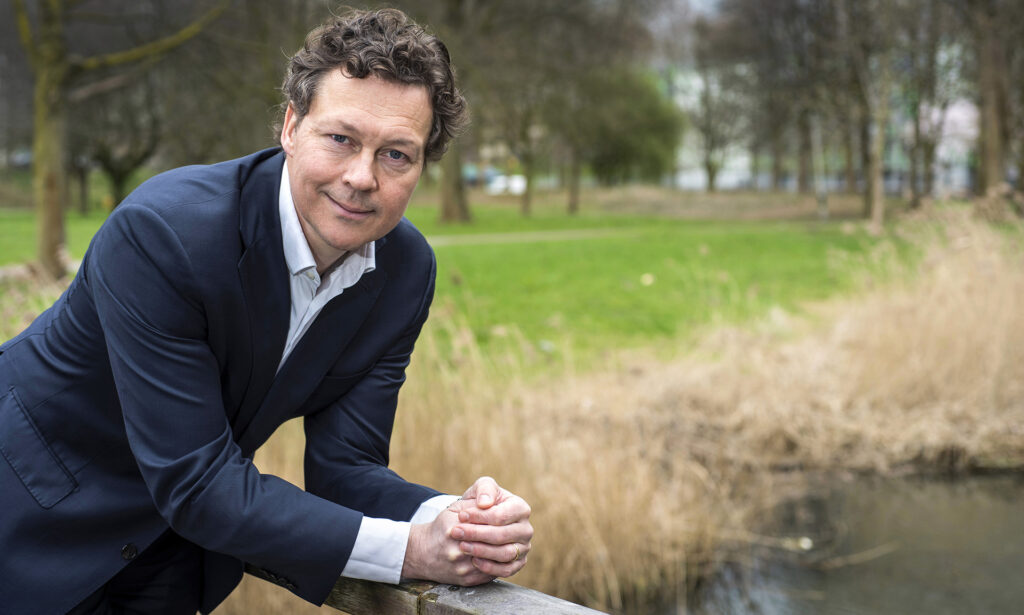
geert-jan van nunen

Geert-Jan van Nunen. CEO InControl Enterprise Dynamics EMEA region.

His mission is growing InControl as a partner of choice for customers that use digital simulation and digital twins as tools to better plan and operate their core processes; and to establish InControl as the leading emulation and simulation software provider for large-scale and complex operations.

โ€œWe are happy to have Geert-Jan van Nunen as the new CEO for EMEA. He is a proven leader with the vision and experience to expand on the success that InControl has been building over the past 34 years and take the company into its next phase of growth and innovation.โ€

 –  Louis Schijve, Founder and Chairman of the board of directors  – 

About InControl Enterprise Dynamics

InControl Enterprise Dynamics is a global software company that provides simulation software and services for the safety and sustainability of critical infrastructures such as warehouses, manufacturing plants, logistics, airports, railroads, border control, public events, etc. By accurately simulating the flow of people and goods we enable our clients to better plan and optimize their core business processes making their business more efficient, robust, and safer. InControl’s Simulation Platform delivers customers essential insights to continuously improve and optimize complex infrastructures and physical business processes.

Find more information about our software here.

Related news articles

Simulation contributes to the future of Rail Transport

Simulation contributes to the future of Rail Transport

For over 30 years, InControl develops innovative customized railway-traffic simulators and is an expert in railway simulation. InControl’s simulation software platform enables the development of applications. One example is a high-performance railway application designed, built, and maintained by InControl for organizations responsible for rail infrastructures and passengers. It supports the decisions related to system (future) performances and the effects of innovations. At this moment rail organizations have to implement efficiency and security-related programs like ERTMS*, ATO*, or TMS* and passenger flows at public transport hubs in cities and metropole areas.

InControlโ€™s Dutch railway simulator application called โ€œFRISOโ€ is developed for ProRail, the Dutch infrastructure company. It allows users to simulate and visualize large networks on a microscopic level including tracks, switches, signals, etc. The application supports users by automatic generation of a complete simulation model based on several databases. The benefits are valid data and information provisioning in a short timeframe. Visualization of the (sub)systems, insights into conflicting planning of rolling stock and staff, and multi-organizational and discipline staff training are part of the application services.

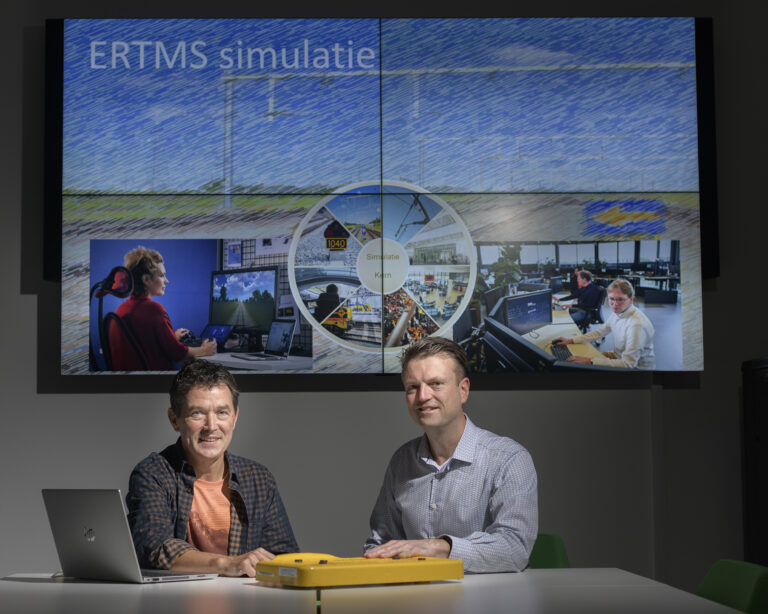
ERTMS affects the entire rail sector, so collaboration is a must. How does that work in practice? Last month, Joris Steneker, Team Manager Public Transport at InControl, and Dick Middelkoop, Program Manager ProRail Innovation, were invited by ERTMS Flash to discuss the long-lasting relationship. The original interview is in Dutch, for the English version please click here.

Source: Text Eveline Bets and foto Fokke Eenhoorn

Het ideale samenwerkingsmodel (geen simulatie, maar realiteit)
ERTMS raakt de hele spoorsector, dus samenwerken is een must. Hoe gaat dat in de praktijk?

Source: Fokke Eenhoorn

Hoe kennen jullie elkaar?
Dick
: โ€œAls programmamanager Modelontwikkeling houd ik me bezig met de ontwikkeling van simulatiemodellen en optimalisatievraagstukken. ProRail heeft een lange geschiedenis in simulaties, maar onze software was niet goed ingericht op de steeds complexere ontwikkelingen. Toen we jaren geleden op zoek gingen naar een flexibeler systeem met meer mogelijkheden, kwamen we terecht bij een platform dat is ontwikkeld door InControl.โ€

Joris: โ€œIk kwam er later bij, in 2006 geloof ik, toen ik als teammanager Public Transport verantwoordelijk werd voor simulatiemodellen voor onder andere het spoor.โ€


Aan welke simulatie(s) werken jullie op dit moment?
Joris
: โ€œActueel is een groot project waarin we de ERTMS-gebruikersprocessen hebben nagebouwd in een simulator. Doel is het valideren van die processen, en betere communicatie tussen machinist en treindienstleider. De simulator bootst de treindienst na in een soort 3D-omgeving van het spoor.โ€

Dick: โ€œHet gaat dus om testen of we het goed hebben uitgedacht, nog niet om het trainen van de mensen die ermee gaan werken. Dat komt later.โ€


Kunnen jullie het doel van de samenwerking omschrijven?
Dick
: โ€œOns doel is dat we op een efficiรซnte manier de toekomst van het spoor in beeld brengen en zo kunnen beleven, en dat we inzicht krijgen in die complexiteit.โ€

Joris: โ€œJa, dus gezamenlijk dingen beproeven en ontwikkelen. Dat is ook de kracht van simulatie. Een mooi voorbeeld is dat we na zoโ€™n sessie van machinisten en treindienstleiders terugkregen: โ€˜Nou, dat ga ik in de praktijk nooit zo doen.’โ€

Dick: โ€œOf omgekeerd: โ€˜Dit scenario is niet goed, kunnen we dat nog aanpassen?โ€™ Dat vond ik een mooie les. Het werkt dus twee kanten op. Zo verbeteren we de praktijk.โ€

Joris: โ€œEn daar worden we heel blij van!โ€

Kom je ook knelpunten tegen en zo ja: hoe lossen jullie dit op?
Dick
: โ€œJa, mijn werk is een leuke, maar uitdagende puzzel. Dat vraagt om chemie in de samenwerking en gebruik maken van elkaars kwaliteiten.โ€

Joris: โ€œProRail stelt ons soms uitdagende vragen. Bijvoorbeeld: ontwikkel een wiskundig optimalisatie-algoritme voor Automatic Train Operation. Dan is het best spannend of we dat ook kunnen leveren.โ€

Dick: โ€œMeestal leidt het tot goede resultaten. Of het valt nu nog niet in goede aarde, maar later wel. Dan zijn we onze tijd vooruit.โ€

Wat is er volgens jullie nodig voor goede samenwerking? En zie je dat terug bij elkaar?
Dick
: โ€œEerlijkheid, duidelijkheid, een open houding, doen wat je zegt.โ€

Joris: โ€œJa, Dick is inderdaad open en duidelijk. Er is daarnaast ruimte voor creativiteit, dat vind ik ook belangrijk.โ€

Dick: โ€œJoris doet wat hij belooft. En hij verrast mij niet alleen met zijn diepgaande inhoudelijke kennis, maar kan ook uitleggen dat niet alles wat ik wil als opdrachtgever relevant is.โ€

Joris: โ€œDick heeft ook veel kennis en stelt kritische vragen. En hij kan mensen overtuigen. Ik vind Dick wel een echte ambassadeur. Het leukste is als we samen aan anderen enthousiast vertellen wat we doen!โ€

Tot slot: kunnen jullie samen door 1 deur? Waarom?
Dick
: โ€œZeker. Omdat we niet bang zijn een beetje in te schikken als die deur, laten we zeggen, wat smal zou zijn.โ€

Joris: โ€œDan proberen we die deur breder te maken.โ€

Dick: โ€œZodat er nog meer mensen mee kunnen lopen.โ€

English version:

The ideal collaboration model (not simulation, but reality)
ERTMS affects the entire rail sector, so collaboration is a must. How does that work in practice?

Source: Fokke Eenhoorn

How do you know each other?
Dick
: โ€œAs a Model Development program manager, I am involved in the development of simulation models and optimization issues. ProRail has a long history in simulations, but our software was not well equipped for the increasingly complex developments. Years ago, when we were looking for a more flexible system with more options, we ended up with a platform developed by InControl.โ€

Joris: โ€œI joined later, in 2006 I believe, when I became responsible for simulation models for rail, among other things, as team manager Public Transport.โ€

Which simulation(s) are you currently working on?
Joris: โ€œCurrently we are involved in a major project in which we have recreated the ERTMS user processes in a simulator. The aim is to validate those processes and improve communication between the train driver and train traffic controller. The simulator simulates the train service in a kind of 3D environment in which the railway system is modelled.โ€

Dick: โ€œIt is therefore about testing whether we have thought it through properly, not yet about training the people who will work with it. That will come later.โ€

Can you describe the purpose of the collaboration?
Dick
: โ€œOur goal is to visualize and experience the future of rail in an efficient way, and to gain insight into that complexity.โ€

Joris: โ€œYes, so testing and developing things together. That is also the power of simulation. A good example is that after such a session we received feedback from drivers and train controllers: ‘Well, I will never do that in practice.'”

Dick: โ€œOr vice versa: โ€˜This scenario is not good; can we still adjust it?โ€™ I thought that was a good lesson. So, it works both ways. This is how we improve practice.โ€

Joris: โ€œAnd that makes us very happy!โ€

Do you also encounter bottlenecks and if so: how do you solve them?
Dick: โ€œYes, my work is a fun, but challenging puzzle. That requires chemistry in the collaboration and making use of each other’s qualities.โ€

Joris: โ€œProRail sometimes asks us challenging questions. For example: develop a mathematical optimization algorithm for Automatic Train Operation. Then it is quite exciting whether we can also deliver that.โ€

Dick: โ€œIt usually leads to good results. Or it may not be well received now, but it will later. Then we are ahead of our time.โ€

What do you think is necessary for good cooperation? And do you see that back together?
Dick
: โ€œHonesty, clarity, an open attitude, do what you say.โ€

Joris: โ€œYes, Dick is indeed open and clear. There is also room for creativity, which is also important to me.โ€

Dick: โ€œJoris does what he promises. And he not only surprises me with his in-depth substantive knowledge but can also explain that not everything I want as a client is relevant.โ€

Joris: โ€œDick also has a lot of knowledge and asks critical questions. And he can convince people. I think Dick is a real ambassador. The best part is when we enthusiastically tell others about what we do!โ€

Finally: Are you both on good terms with each other? Why?
Dick
: โ€œCertainly, because neither of us is afraid to compromise a little if necessary.โ€

Joris: โ€œThen we try to create more space for each other.โ€

Dick: โ€œSo that in the end more people can join us and benefit from our efforts.โ€

Abbreviations:
* ERTMS: European Rail Traffic Management System
* ATO: Automatic Train Operation
* TMS: Traffic Management System

Are you interested in our contributions toย the Rail Transportation Industry? Contact us, we are happy to tell you more about our expertise and experience.

Related news articles

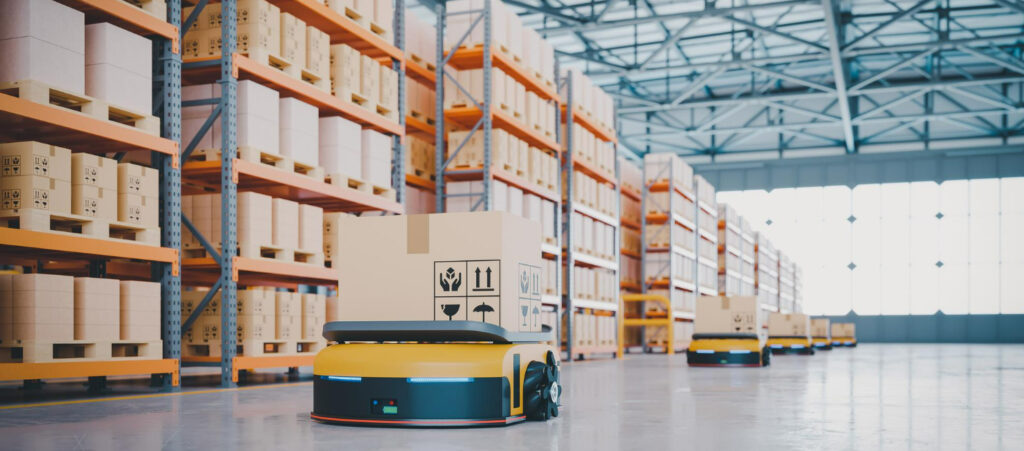
Simulation Software contributes to the warehouse of the future

smart warehousing

Simulation Software contributes to the warehouse of the future

Warehouses and distribution centers are facing major challenges. During the pandemic, consumer demands increased exponentially, consumers expected short lead times, high product availability, flexibility, and variation in delivery and return options. Companies started to build up more stocks to meet those expectations during this period. Now there are large stocks, but demand is falling as a result of the high inflation.

The global supply chain has been forced to adapt quickly to changes in demand, automation can help to build safer, more productive operations and boost the ability to respond to rapid changes in demand. Warehouses turned out as crucial breaking points in the supply chain. Therefore, optimization and efficiency in this industry are very important.

To meet these expectations, warehouses need to become smarter, faster, and more flexible, but how to prepare your warehouse for the future? Promises of superfast fulfillment are leading organizations with warehouses to explore digital twin technology, enabling them to mirror the operational setting and run experiments to experience and understand how it can be optimized, and how new technologies can be rolled into play.

By 2025, 50% of the work activities could be replaced by next-level process optimization and visualization. Applications will be impacted by e.g., Robotization: Robots, Cobots (collaborative robots) and RPA (Robotic Process Automation), and Process Virtualization by Digital Twins and AI (McKinsey & Company report: Top Trends in Tech, 2020). We see simulation as an inseparable part of AI, combining visions, (historical)data, algorithms, and assumptions to get insight and therefore grip on supply chain processes.

warehouse simulation

Simulation modeling is a powerful method for designing, planning, and optimizing warehouse operations. By creating a digital twin of a warehouse, companies can design, simulate, and test within current and new warehouse operations, including (semi) automatic order picking, batching algorithms, stock allocation, (empty) tote management, tracking and tracing temporary storage, and shelving virtually.

The challenge is to achieve the most efficient warehouse operation. Simulation modeling can contribute to the selection of the best order-picking module, conveyor and sorting systems, or automated storage and retrieval systems (ASRS). Using simulation software, warehouse managers can easily plan during peak days and determine when these peak moments are. By integrating the Warehouse Management System (WMS) with the simulation model, data from the inventory can be used for accurate simulation studies.

Questions that can be easily answered using Simulation Software are:

  • How to deal with capacity shortages both in operation and in design?
  • How many extra Shifts and/or resources are required?
  • How much surplus capacity do you accept during the rest of the year to handle your peak day? E.g. Do you leave an entire floor empty for a whole year, which you then only use during your peak period? How and when to fill up this floor. What measures to take to ensure sufficient stock?
  • What do you do if a part of your system breaks down (contingency)?
  • What are the lead times and are they short and stable enough to ensure product safety in case of, e.g., chilled foods?
  • What is the reason to implement a shuttle system and robots.
  • How to optimize your and 3rd Party equipment, staff and logistics?

From an emulation perspective, managers can get insight into the operation. How is the performance on a peak day/period? What extra dynamics do peak days provide? For example, during special offers on black Friday, there might be flows that would normally never be seen. How to cope with these challenges?

Enterprise Dynamicsยฎ is a powerful and robust simulation platform that provides a digital environment where you can safely explore a solution without impacting day-to-day operations. By using a virtual model to validate and visualize current and future operations, optimizations and innovations will demand less costs, risks, effort and time. So, supporting maximal operational performance.

Simulation software can give insight in:

  • Overall performance
  • Steering optimization, innovation and control
  • Bottleneck detection
  • The stability of the warehouse design under different loads
  • The impact of failures on the warehouse
  • Batching algorithms
  • Stock allocation
  • Empty Tote Management
  • Implementation and scale up a shuttle system and robots
  • Required and right seize capacities.

Curious how our simulation software can help to prepare your warehouse for the future? Download our free trial or contact us, we are happy to tell you about the capabilities of our software and expertise.

Related news articles

Pedestrian Dynamicsยฎ 4.2 released!

Pedestrian Dynamicsยฎ 4.2 released!

For all leading construction companies, architects, engineers, and consultants using crowd risk analysis. We are happy to announce the release of our crowd simulation software Pedestrian Dynamicsยฎ 4.2!

With Pedestrian Dynamicsยฎ you can increase customer experiences, decrease costs, and contribute to your innovation programs to contribute to more safe, secure, and sustainable infrastructures and events.

Pedestrian Dynamicsยฎ 4.2 gives the crowd modelers more tools to help them in the model building process and to present the results to the end user.

The new features of Pedestrian Dynamicsยฎ 4.2 are:

  • New TextBox Element, to enhance your model by showing text or output in your 2D or 3D visualizationย 
  • New functionality in the Error Monitor, to easily find the location where the error in your model is reported ย 
  • Miniature Map, a small layout shown at the bottom. Click on this layout to easily navigate your model.ย 

New TextBox element

The new text box element can show predefined messages or dynamically updatable
text. This tool brings extra functionality to help you analyze your environment during
the simulation run and create videos to show your projectsโ€™ results.
This element can be found on the draw toolbar of the 2D Builder. Draw the text box
in your layout, adjust its size, font, and many other settings in the settings window,
including the visualization in both 2D and/or 3D. Use the available predefined
logics to define the text to be shown: a fixed text such as the name of an activity
or its capacity, or even text that is updated dynamically during the run, such as the
number of people in a queue line.

Show the location in your 2D/3D model layout directly from the location reported in the Error monitor

New functionality has been added to the error monitor and tracer window. In the context menu you can find a new function Go to location. Use this for example to easily find the location of an error that is reported in the error monitor in your 2D/3D model layout.

Debugging your model is now facilitated by this tool. Select the line in the error
monitor which is reporting the location. Right-click on the error and the context
menu opens, which shows the โ€œGo to locationโ€ option. By selecting this option, a red
circle pops up on the environment which indicates the location.

Miniature Map for easy navigation

A miniature layout of your entire model for easy navigation. When working with
large models, the zoom in/out process to find a specific location can sometimes
be cumbersome. The miniature map tool does not only give you extra information
about which part of the model is shown in the view, but also makes it easier to move
between different areas.

A new button can be found on the View tab of the Model Layout. Click this
button and a settings window will appear in which you can enable the miniature
map. This map is shown in the bottom left corner of the 2D Builder windows. The
green area shows the current area shown in the Layout. Click the image to move the
view to the indicated location. The map can be updated via the settings window or
on reset.

Download our release highlights document to read more details about the new improvements in Pedestrian Dynamicsยฎ 4.2.ย 

Curious what Pedestrian Dynamicsยฎ can do for you, your company, and your customers? Pleaseย contact us, or try our software free of charge.