Agent-based simulation and warehouse automation simulation are two distinct approaches that model different aspects of complex systems. Agent-based simulation focuses on the behavior of individual autonomous entities and how their interactions produce system-level outcomes. Warehouse automation simulation, typically built on discrete event simulation software, models the flow of goods, equipment, and processes through a facility. The right choice depends on what you are trying to understand and optimize.
How does agent-based simulation actually work?
Agent-based simulation models a system by defining individual actors, called agents, each with their own rules, goals, and decision-making logic. The simulation runs by letting these agents interact with each other and with their environment, and the overall system behavior emerges from those interactions rather than being scripted from the top down.
Each agent operates independently. A pedestrian navigating a crowded terminal, for example, will respond to the position of other pedestrians, obstacles, and exits according to its own behavioral rules. When thousands of such agents run simultaneously, the model reveals patterns like congestion points, evacuation bottlenecks, or crowd surges that would be impossible to predict from static planning alone.
This makes agent-based simulation particularly powerful for modeling human behavior, decentralized decision-making, and systems where individual variation matters. It is the foundation behind our Pedestrian Dynamics software, which is used at airports, stadiums, and transit hubs to model crowd movement and safety scenarios.
What is warehouse automation simulation used for?
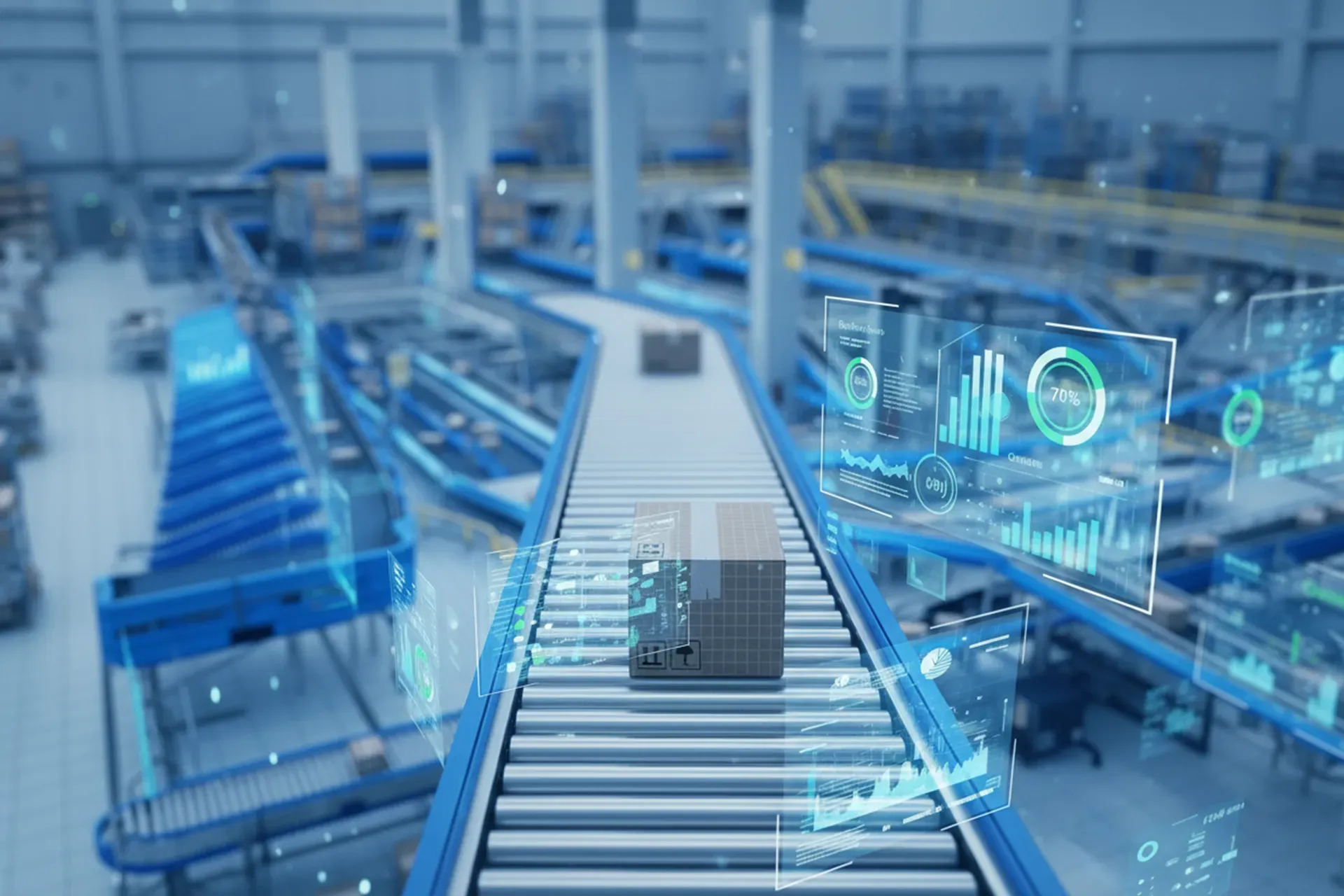
Warehouse automation simulation is used to model, test, and optimize the physical and operational systems inside a distribution or fulfillment center before those systems are built or changed. It helps engineers and operations teams understand how conveyors, sorters, automated storage and retrieval systems, and human workflows will perform under real-world conditions.
Common use cases include:
- Validating the throughput capacity of a new warehouse layout before construction
- Identifying bottlenecks in conveyor or sortation systems under peak load
- Testing different picking strategies and staffing levels to find the optimal mix
- Evaluating the return on investment for automation equipment before committing capital
- Running what-if scenarios when order profiles or product mixes change
The simulation recreates the warehouse as a virtual model, feeds it with realistic order data and system parameters, and then runs the operation at speed. Decision-makers can observe where the system struggles, adjust variables, and rerun the model without touching the real facility or risking operational disruption.
Build your own simulation, your way
Enterprise Dynamics gives developers full control to model, scale, and integrate complex systems with C++, APIs, and real-time data.
Explore Enterprise DynamicsWhat are the core differences between the two simulation types?
The core difference is what each approach places at the center of the model. Agent-based simulation centers on individual actors and emergent behavior. Warehouse simulation, which is typically built on DES simulation software, centers on processes, resources, and the material flow through a defined system.
Here is a direct comparison of the two approaches:
- Unit of analysis: Agent-based models individual decision-makers with autonomous behavior. DES simulation models items, orders, or pallets moving through a sequence of operations.
- System behavior: Agent-based behavior emerges from the bottom up. Discrete event behavior is defined by process logic and resource constraints at the system level.
- Best fit for: Agent-based excels at crowd dynamics, human behavior, and decentralized systems. DES software excels at throughput analysis, equipment utilization, and process optimization.
- Predictability: Agent-based models embrace variability and unpredictability as features. DES simulation models are designed to produce precise, measurable performance metrics.
- Visualization: Both can produce 2D and 3D visualizations, but agent-based models tend to show spatial movement while discrete event models tend to show operational flow and statistics.
Neither approach is superior in absolute terms. They are tools designed for different questions, and the best simulation projects often use both.
When should you use agent-based simulation over discrete event simulation?
You should use agent-based simulation when the behavior of individual actors, and the way they interact with each other, is what drives the outcome you care about. If the question is about how people move, how autonomous vehicles navigate, or how decentralized decisions ripple through a system, agent-based simulation is the right tool.
Choose agent-based simulation when:
- You are modeling pedestrian or crowd behavior in a large venue, transit hub, or emergency scenario
- Individual variation in behavior significantly affects system outcomes
- The system has no central controller and behavior emerges from local interactions
- You need to test safety or evacuation scenarios where human decision-making is unpredictable
Stick with a DES simulation platform when you need precise throughput figures, equipment utilization rates, or process cycle times. Warehouse automation projects almost always start there, because the questions they need to answer are fundamentally about process performance rather than individual behavior.
Can agent-based and warehouse automation simulation be combined?
Yes, and in many complex projects, combining both approaches produces the most accurate and useful results. A warehouse with a large human workforce, for example, benefits from modeling both the automated systems with discrete event logic and the workers with agent-based behavioral rules. The two formalisms can run within the same model, feeding each other data in real time.
This is known as multi-formalism simulation, and it is particularly valuable when the interaction between automated systems and human operators is itself a source of variability or risk. A sorter may perform perfectly in isolation, but its real throughput depends on how pickers upstream behave, how they respond to system signals, and how they adapt when something goes wrong. Intralogistics simulation that captures both dimensions gives operations teams a far more realistic picture of expected performance.
Advanced DES simulation platforms support this kind of hybrid modeling natively, allowing engineers to combine discrete event, agent-based, and even continuous simulation within a single environment. This removes the need to maintain separate models and ensures that insights from one part of the system are immediately reflected in the other.
Which simulation approach is right for your warehouse project?
The right simulation approach for your warehouse project depends on the specific questions you need to answer. If your primary goal is to validate equipment capacity, test layout configurations, or optimize material flow, discrete event simulation software is your starting point. If your facility involves significant human activity, AGV simulation with complex navigation logic, or safety-critical crowd scenarios, agent-based elements will add important accuracy.
Most warehouse and distribution center projects fall into one of three categories:
- Pure automation projects: Highly automated facilities with conveyors, AS/RS, and sortation systems benefit most from dedicated warehouse simulation software built on a DES simulation engine.
- Mixed operations: Facilities combining automation with a significant human workforce benefit from a hybrid approach that models both systems and workers accurately.
- Venue and terminal projects: Airports, stations, and large public facilities often need agent-based crowd simulation alongside operational flow modeling.
The most important step is defining your questions clearly before choosing your tools. What decisions are you trying to support? What risks are you trying to reduce? Those answers will point you to the right formalism, or the right combination of both.
How Enterprise Dynamics helps with warehouse simulation
Enterprise Dynamics is our simulation platform built specifically for the complexity of modern warehouses, distribution centers, and logistics operations. It brings together discrete event simulation and agent-based modeling in a single DES simulation environment, so your team does not have to choose between approaches or manage separate tools.
With Enterprise Dynamics, you can:
- Build detailed 2D and 3D models of your warehouse using a drag-and-drop library of pre-built components
- Integrate directly with your WMS or ERP to create a live digital twin warehouse software model fed by real operational data
- Run throughput analyses and bottleneck identification across your entire facility using material flow simulation
- Test what-if scenarios for new automation investments, layout changes, or staffing adjustments in a risk-free virtual environment
- Validate capital investment decisions before a single piece of equipment is ordered
Whether you are designing a new greenfield facility, expanding an existing operation, or evaluating the ROI of automation, Enterprise Dynamics gives your team the evidence it needs to make confident decisions. Get in touch with us to discuss your project and find out how simulation can reduce risk and accelerate your next warehouse initiative.
Frequently Asked Questions
How long does it typically take to build a warehouse simulation model from scratch?
The timeline depends on the complexity of your facility and the quality of data available. A straightforward discrete event model of a single-zone warehouse can often be built and validated in a few weeks, while a full multi-zone, hybrid simulation of a large distribution center may take two to three months. Using a platform like Enterprise Dynamics with pre-built component libraries significantly reduces build time compared to coding a model from scratch.
What data do I need to get started with warehouse automation simulation?
At a minimum, you need facility layout drawings, equipment specifications (conveyor speeds, sorter rates, lift capacities), order volume data, and SKU profiles including dimensions and weights. The more accurate and granular your input data, the more reliable your simulation outputs will be. If live WMS or ERP data is available, integrating it directly into the model eliminates much of the manual data preparation work.
Can simulation be used to evaluate ROI on automation investments before purchasing equipment?
Absolutely — this is one of the most valuable use cases for warehouse simulation. By modeling the proposed automation within your existing operation, you can generate throughput projections, identify hidden bottlenecks, and stress-test the system under peak demand scenarios before a purchase order is signed. This gives finance and operations teams concrete, evidence-based figures to support or challenge a business case rather than relying solely on vendor estimates.
What are the most common mistakes teams make when running a warehouse simulation project?
The most frequent mistake is starting with the tool before defining the question — building a detailed model without a clear set of decisions it needs to support often leads to wasted effort and inconclusive results. Other common pitfalls include using overly optimistic input data, failing to validate the model against real operational data before drawing conclusions, and treating the simulation as a one-time exercise rather than a reusable decision-making asset. Defining your success criteria upfront keeps the project focused and the outputs actionable.
How does agent-based simulation handle the unpredictability of human worker behavior in a warehouse?
Agent-based models assign behavioral rules to each worker agent — covering things like walking speed variation, response time to system signals, break patterns, and decision-making when exceptions occur. These rules can be calibrated using observed data from your actual operation, making the model statistically representative rather than idealized. The result is a simulation that captures the real variability human workers introduce into throughput and system performance, which pure discrete event models often underestimate.
Is simulation only useful for new warehouse builds, or can it add value for existing operations?
Simulation delivers significant value for existing operations, not just greenfield projects. Common applications include diagnosing persistent bottlenecks that are difficult to isolate in a live environment, evaluating the impact of a new product mix or seasonal peak before it hits, and testing layout or process changes without disrupting ongoing operations. Many companies also use simulation to create a digital twin of their current facility that continuously reflects live data, enabling ongoing optimization rather than a single point-in-time analysis.
How do I know whether my simulation model is accurate enough to trust its outputs?
Model validation is a critical step that should never be skipped. The standard approach is to feed the model historical operational data — real order volumes, actual equipment performance records, and known throughput figures — and verify that the model’s outputs match what actually happened within an acceptable margin, typically within 5 to 10 percent. If the model reproduces past behavior accurately, you can have reasonable confidence in its predictions for future or hypothetical scenarios. A reputable simulation partner will always include a formal validation phase as part of the project.