Logistics companies use supply chain simulation software to model, test, and optimise their operations in a virtual environment before implementing changes. This technology creates digital replicas of warehouses, distribution centres, and transportation networks, allowing companies to identify bottlenecks, test scenarios, and validate investments without operational disruption. The software helps reduce costs, mitigate risks, and improve decision-making across complex supply chain networks.
What is supply chain simulation software and why do logistics companies need it?
Supply chain simulation software creates virtual models of logistics operations using mathematical algorithms to replicate real-world processes. Typically built on a discrete event simulation engine, the software simulates material flow, resource utilisation, and operational constraints to provide insights into system performance and identify improvement opportunities.
Logistics companies face increasingly complex operational challenges that traditional planning tools cannot adequately address. Spreadsheets and basic planning systems struggle with the dynamic nature of modern supply chains, where multiple variables interact simultaneously. These challenges include:
- Capacity planning for fluctuating demand patterns
- Resource allocation across multiple facilities and time zones
- Impact assessment of operational changes before implementation
- Bottleneck identification in complex multi-stage processes
- Risk assessment for supply chain disruptions
Discrete event simulation software addresses these challenges by providing a risk-free testing environment where companies can experiment with different scenarios, validate proposed changes, and optimise operations before committing resources to real-world implementations.
How do logistics companies use simulation software to optimise warehouse operations?
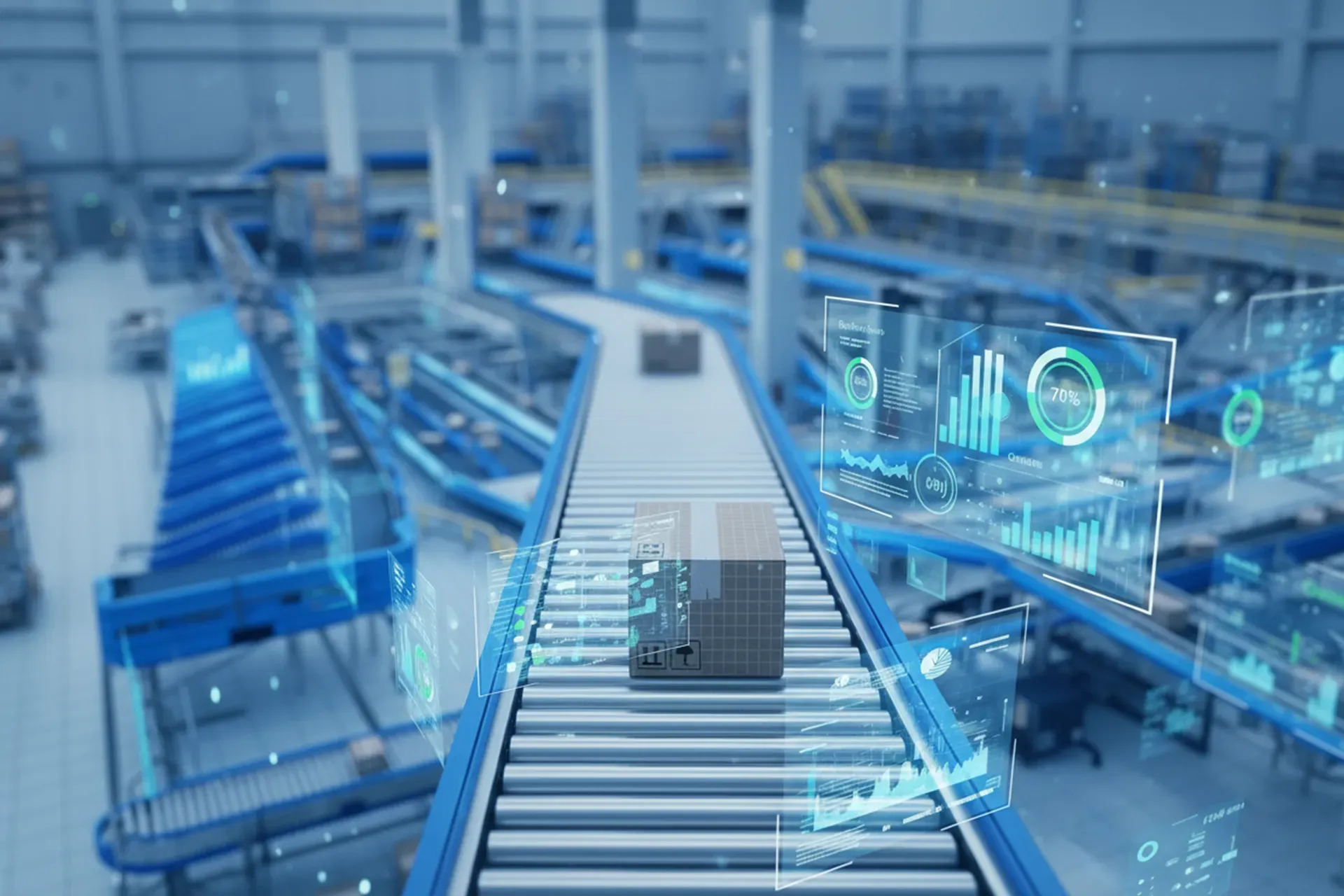
Logistics companies use warehouse simulation software to model warehouse layouts, test equipment configurations, and optimise material flow patterns. The software creates virtual representations of warehouse operations, including storage systems, picking processes, and material handling equipment, to identify performance improvements. This makes it particularly effective as an intralogistics simulation tool, covering everything from conveyor simulation to AGV simulation and AS/RS simulation.
Key warehouse simulation applications include:
- Layout optimisation – Testing different storage configurations and aisle arrangements to maximise space utilisation and minimise travel distances
- Throughput analysis – Evaluating processing capacity under different demand scenarios to ensure adequate performance levels
- Bottleneck identification – Pinpointing constraints in receiving, storage, picking, and shipping processes that limit overall performance
- Workforce planning – Determining optimal staffing levels and shift patterns to meet operational requirements efficiently
- Equipment utilisation – Analysing conveyor systems, automated storage and retrieval system simulation models, and material handling simulation scenarios to assess overall equipment performance
The simulation process involves creating detailed models that incorporate real operational data, including order patterns, product characteristics, and processing times. Companies can then test various scenarios, such as peak season demand or new product introductions, to validate operational strategies and equipment investments. Material flow simulation plays a central role here, enabling teams to visualise and refine how goods move through every stage of the warehouse.
What are the main benefits logistics companies see from supply chain simulation?
Logistics companies achieve significant cost reduction, risk mitigation, and improved operational performance through supply chain simulation. The technology enables data-driven decision-making by providing quantitative insights into operational changes before implementation, typically resulting in a 10–30% improvement in key performance indicators.
Primary benefits include:
- Cost reduction through optimised resource utilisation and elimination of inefficient processes
- Risk mitigation by testing scenarios in a DES simulation environment before real-world implementation
- Accelerated decision-making with quantitative analysis supporting strategic choices
- Enhanced operational performance through bottleneck elimination and material flow optimisation
- Investment validation ensuring capital expenditure delivers expected returns
- Improved customer service through better capacity planning and reduced delivery times
The software also enables continuous improvement by providing ongoing monitoring capabilities and scenario testing for operational adjustments. Companies can evaluate the impact of market changes, demand fluctuations, or process modifications without disrupting existing operations.
How does simulation software help logistics companies plan for peak seasons and disruptions?
Simulation software enables logistics companies to stress-test their operations under extreme conditions and develop contingency plans for various scenarios. Using a DES simulation modelling software approach, the technology models different demand levels, resource constraints, and disruption scenarios to identify potential issues and develop mitigation strategies.
Scenario planning capabilities include:
- Capacity stress testing – Evaluating system performance under peak demand conditions to identify breaking points
- Resource scaling analysis – Determining additional staffing, equipment, or space requirements for seasonal peaks
- Disruption impact assessment – Modelling the effects of supplier delays, equipment failures, or transportation issues
- Alternative routing evaluation – Testing backup plans for distribution networks and transportation routes
- Recovery time analysis – Estimating how quickly operations can return to normal after disruptions
The software helps companies build operational resilience by identifying vulnerabilities and testing response strategies. This preparation enables faster recovery from disruptions and maintains service levels during challenging periods. Companies can also evaluate the cost-effectiveness of different contingency measures to balance preparedness with operational efficiency.
How InControl helps with supply chain simulation for logistics companies
We provide Enterprise Dynamics simulation software specifically designed for logistics companies seeking to optimise their supply chain operations. Our DES simulation platform offers drag-and-drop modelling capabilities with extensive object libraries for material handling simulation, warehousing, and distribution systems, making it a powerful DES software for logistics and warehousing environments alike.
Key features for logistics companies include:
- Intuitive modelling with specialised logistics components and 3D visualisation
- Seamless integration with existing WMS and ERP systems for real-time data connectivity
- Comprehensive analysis tools for throughput, bottleneck identification, and performance optimisation
- Scenario testing capabilities for capacity planning and risk assessment, including warehouse automation simulation
- Scalable platform supporting complex multi-site supply chain networks
Our consultancy services provide dedicated project teams to support implementation and ensure successful outcomes. Whether you’re planning warehouse expansions, evaluating automation investments, or optimising distribution networks, our simulation experts help you make informed decisions with confidence.
Ready to optimise your supply chain operations? Contact our team to discuss how Enterprise Dynamics can address your specific logistics challenges and improve operational performance.
Related Articles
- How do you test warehouse automation logic using simulation software?
- What are the three types of supply chain optimization models?
- What makes a good alternative to AutoMod simulation software?
- How can supply chain simulation software prevent planning errors?
- What are the best alternatives to AutoMod simulation software?