Understanding the different types of simulations is crucial for organizations looking to optimize their operations and make data-driven decisions. Whether you’re managing a complex supply chain, designing warehouse layouts, or planning crowd management strategies, choosing the right simulation approach can mean the difference between successful optimization and costly mistakes.
Each simulation type offers unique advantages and serves specific purposes in modeling real-world systems. By understanding these fundamental approaches, you can select the most appropriate method for your operational challenges and maximize the value of your simulation investments.
What are the three main types of simulations?
The three main types of simulations are discrete event simulation, continuous simulation, and agent-based simulation. Each type models different aspects of real-world systems using distinct mathematical approaches and methods for handling time.
Discrete event simulation focuses on systems where state changes occur at specific points in time, making it ideal for logistics and manufacturing processes. Continuous simulation models systems with smooth, ongoing changes over time, such as fluid dynamics or chemical processes. Agent-based simulation creates individual entities that interact with each other and their environment, making it well suited to modeling human behavior or autonomous systems.
These three simulation paradigms form the foundation of modern discrete event simulation software, and many advanced platforms now offer multi-formalism capabilities that combine multiple approaches within a single model for comprehensive system analysis.
How does discrete event simulation work?
Discrete event simulation works by modeling systems as sequences of events that occur at specific points in time, with the system state remaining constant between events. The simulation advances from one event to the next, processing each event’s effects before moving to the next scheduled event.
The core mechanism involves an event calendar that maintains a chronological list of future events. When an event executes, it may schedule new events, cancel existing ones, or modify system attributes. For example, in a warehouse simulation, events might include:
- Order arrival at the facility
- A picker starting to collect items
- The conveyor system moving packages
- Truck departure with completed orders
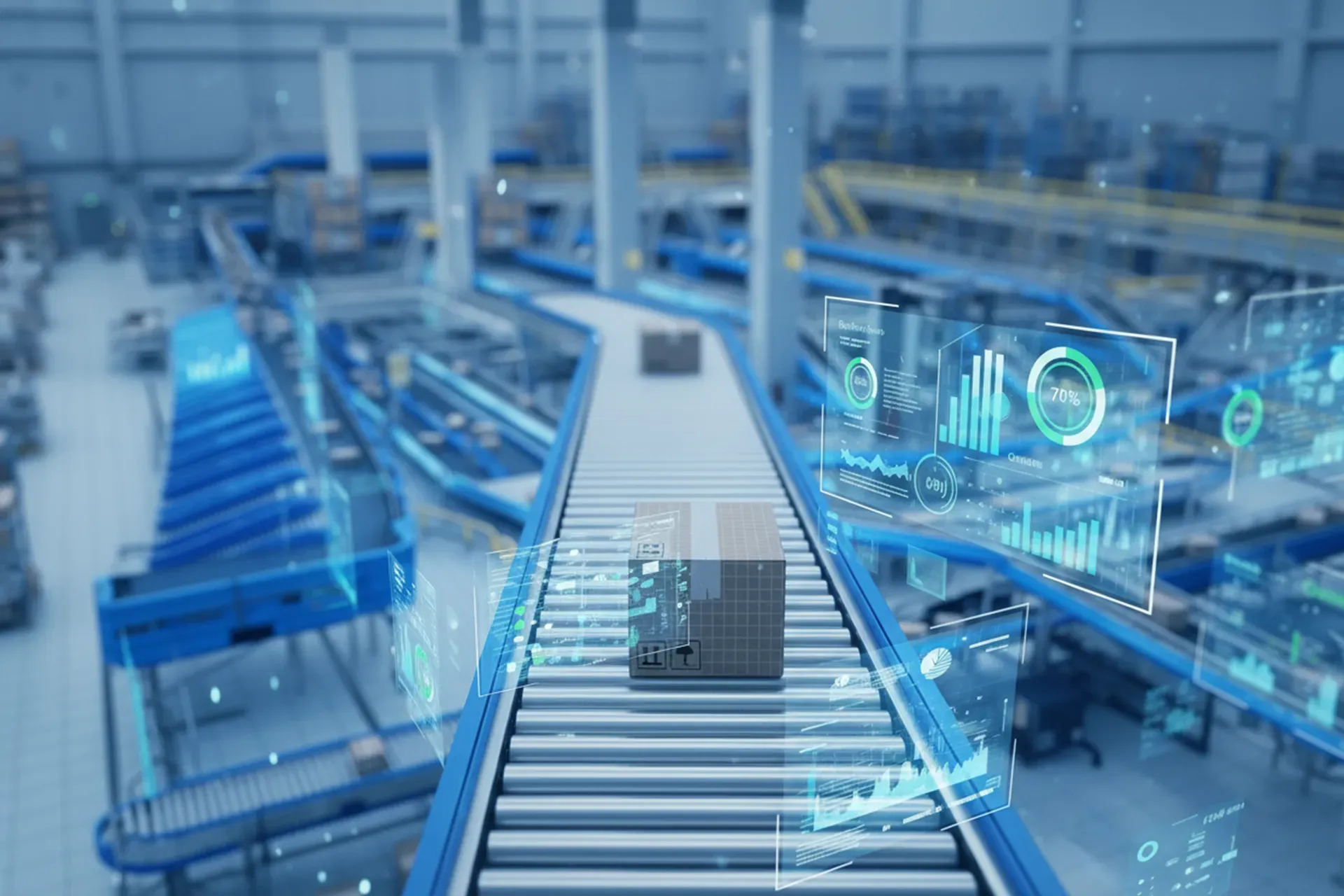
This approach excels in intralogistics simulation because it accurately captures the discrete nature of logistics operations. Orders arrive at specific times, processing stations have defined service durations, and resources become available or unavailable at precise moments. A well-configured DES simulation environment can track detailed statistics such as queue lengths, resource utilization, and throughput rates throughout the modeled time period.
What’s the difference between continuous and discrete simulation?
The fundamental difference between continuous and discrete simulation lies in how they handle time and state changes. Continuous simulation models systems with smooth, ongoing changes using differential equations, while discrete simulation focuses on instantaneous state changes at specific points in time.
Continuous simulation treats time as a continuous variable, with system states changing gradually and continuously. This approach suits modeling physical processes such as:
- Chemical reactions in pharmaceutical manufacturing
- Temperature changes in cold storage facilities
- Fluid flow through distribution networks
- Population dynamics over extended periods
Discrete simulation, conversely, assumes the system remains static between events and then experiences instantaneous changes when events occur. This method aligns perfectly with operational processes where distinct activities happen at specific moments, such as package sorting, order processing, or equipment maintenance schedules.
Many modern DES simulation platforms integrate both approaches, allowing modelers to capture continuous processes alongside discrete operational events within the same system model.
When should you use agent-based simulation?
Agent-based simulation should be used when modeling systems in which individual entities make autonomous decisions and interact with each other in complex ways. This approach excels when system behavior emerges from the collective actions of many independent agents rather than from centralized control mechanisms.
Key scenarios for agent-based modeling include situations in which individual behavior patterns significantly impact overall system performance. Consider using this approach when:
- Modeling pedestrian flow in airports or shopping centers
- Analyzing customer behavior in retail environments
- Simulating autonomous vehicle interactions in transportation networks
- Understanding worker behavior in flexible manufacturing systems
Agent-based simulation becomes particularly valuable when studying emergent phenomena that arise from individual interactions. For instance, in crowd management scenarios, each person acts as an agent with personal goals, preferences, and decision-making rules. The collective behavior of thousands of individual agents creates realistic crowd dynamics that would be impossible to capture using traditional discrete event approaches.
This simulation type also proves essential when testing systems with adaptive or learning components, where agents modify their behavior based on experience or environmental changes.
Which simulation type is best for supply chain modeling?
Discrete event simulation is typically the best choice for supply chain modeling because supply chains operate through distinct activities that occur at specific times, such as order processing, inventory replenishment, and shipment dispatching. DES software for supply chain applications naturally aligns with the event-driven nature of logistics operations, making it a reliable foundation for modeling complex distribution networks.
Supply chains consist of interconnected processes in which materials, information, and decisions flow between discrete operational stages. Each stage involves specific activities with defined durations, resource requirements, and dependencies. Discrete event simulation captures these characteristics by modeling:
- Order arrivals and processing times
- Inventory level changes and replenishment triggers
- Transportation schedules and delivery windows
- Warehouse operations and material handling activities
However, hybrid approaches often provide the most comprehensive supply chain insights. Modern supply chain simulation software may combine discrete event simulation for operational processes with continuous elements for modeling demand patterns or agent-based components for supplier relationship dynamics. The same platform can also support material flow simulation and warehouse automation simulation, giving operations teams a complete picture of their logistics environment.
The choice ultimately depends on your specific modeling objectives. For throughput analysis and bottleneck identification, DES simulation remains the gold standard. For strategic supply chain network design that incorporates market dynamics, hybrid multi-formalism approaches deliver superior results.
How InControl helps with simulation modeling
We provide comprehensive simulation capabilities through our Enterprise Dynamics platform, which combines discrete event simulation with advanced modeling tools specifically designed for complex operational systems. Our drag-and-drop approach enables rapid model development using pre-built components for conveyor simulation, AGV simulation, and AS/RS simulation, while seamless integration with WMS and ERP systems creates accurate digital twins of your operations.
Key benefits include:
- Intuitive visual modeling environment with 2D and 3D visualization
- Extensive libraries of specialized modeling components for warehouse simulation, material flow optimization, and production logistics simulation
- Risk-free testing environment for operational changes
- Comprehensive analysis tools for bottleneck identification and throughput optimization
Ready to explore how simulation can optimize your operations? Start your free trial or contact our simulation experts to discuss your specific modeling requirements and discover the right simulation approach for your organization.