Supply chain simulation software improves supply chain resilience by creating virtual models that test different scenarios before they happen in real life. This technology helps businesses identify vulnerabilities, plan for disruptions, and optimize operations without risking actual resources. Modern supply chains face constant threats from global events, supplier issues, and demand fluctuations, making discrete event simulation software essential for building robust, adaptable networks.
What is supply chain resilience and why does it matter for modern businesses?
Supply chain resilience is the ability of a supply network to maintain operations, recover quickly from disruptions, and adapt to changing conditions while continuing to deliver value to customers. Resilient supply chains combine flexibility, visibility, and redundancy to withstand unexpected events and bounce back stronger.
Today’s interconnected global economy makes supply chains vulnerable to numerous disruptions. Recent events like the COVID-19 pandemic, the Suez Canal blockage, and natural disasters have demonstrated how quickly disruptions can cascade through supply networks. Companies with resilient supply chains maintained operations while others faced significant losses.
Resilient supply chains share several key characteristics that distinguish them from fragile ones. They maintain multiple supplier relationships rather than relying on single sources, invest in real-time visibility across their networks, and build buffer capacity for critical components. These networks also emphasize collaboration with partners and maintain detailed contingency plans for various disruption scenarios.
The business impact of supply chain disruptions extends far beyond immediate operational challenges. Companies face revenue losses, customer dissatisfaction, increased costs, and potential damage to brand reputation. Building resilience requires upfront investment but provides significant protection against these risks while creating competitive advantages through superior reliability and responsiveness.
How does supply chain simulation software actually work?
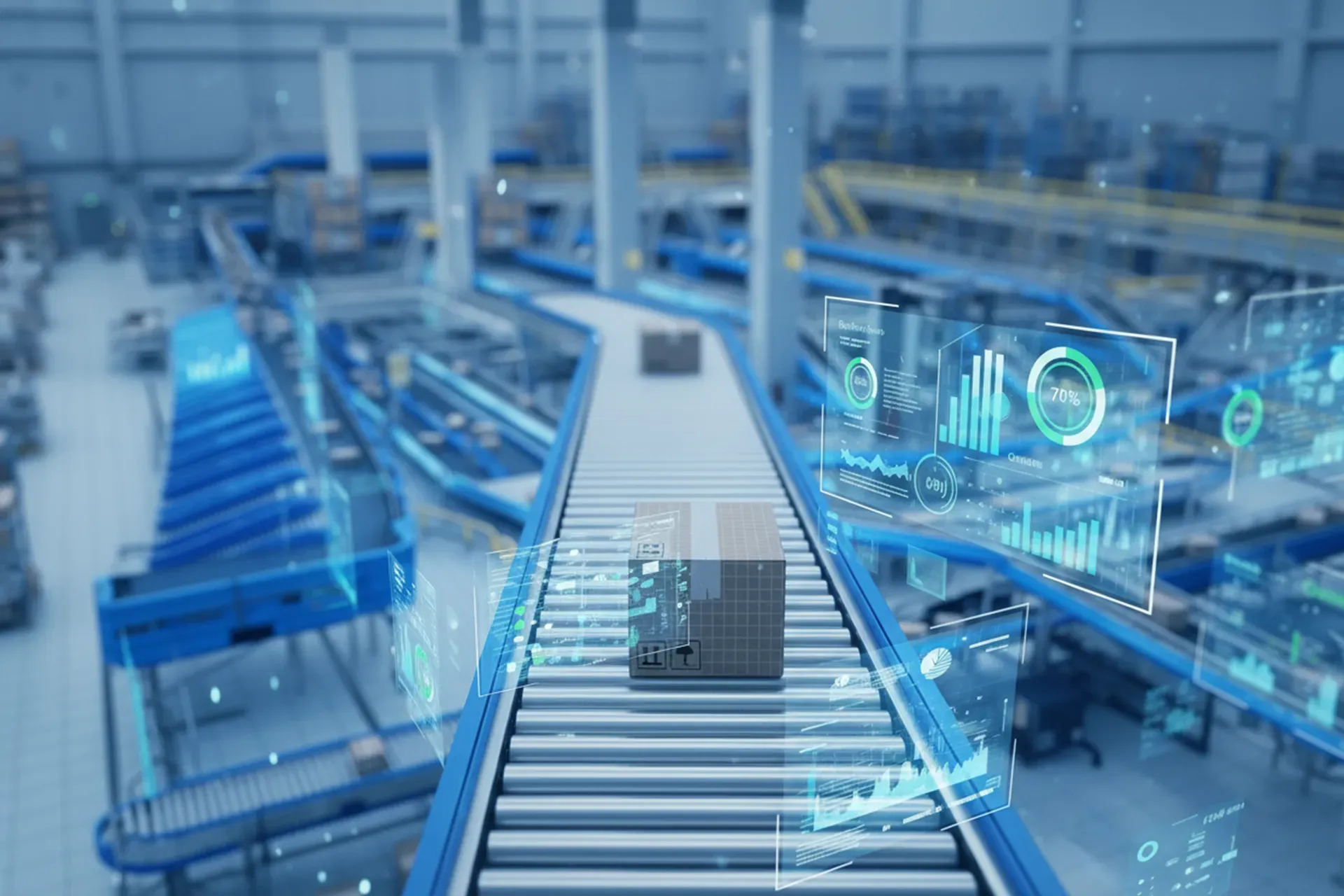
Supply chain simulation software uses discrete event simulation principles to model how materials, information, and resources flow through complex networks over time. As a DES simulation platform, the software creates virtual representations of real-world supply chain processes, allowing users to test different scenarios and observe outcomes without disrupting actual operations.
The technology builds on digital twin concepts, creating dynamic models that mirror real supply chain behavior. These models incorporate variables like demand patterns, supplier performance, transportation times, and capacity constraints. Users can adjust these parameters to simulate different conditions and observe how changes ripple through the entire network.
Key capabilities include scenario testing, where users can model various disruption situations like supplier failures or demand spikes. The DES simulation software identifies bottlenecks by analyzing flow patterns and highlighting constraint points that limit overall system performance. Risk assessment features help quantify the potential impact of different disruption types on operations and financial performance.
The simulation process involves collecting historical data about supply chain performance, building mathematical models that represent system behavior, and running multiple iterations to understand how the network responds to different conditions. Advanced DES simulation platforms can model complex interactions between multiple supply chain elements simultaneously, providing comprehensive insights into system dynamics. This makes them particularly effective as logistics simulation software and warehouse simulation software, where material flow simulation and intralogistics simulation are critical to accurate planning.
What types of supply chain disruptions can simulation software help predict?
Simulation software can model and predict the impact of various disruption types, including demand fluctuations, supplier failures, transportation delays, natural disasters, and capacity constraints. By creating virtual scenarios, businesses can understand how these disruptions affect their networks and develop appropriate response strategies.
Demand fluctuations represent one of the most common disruption types. The software can model seasonal variations, market shifts, and sudden demand spikes to help businesses understand capacity requirements and inventory needs. This capability proved particularly valuable during the pandemic when demand patterns changed dramatically across industries.
Supplier-related disruptions include complete failures, quality issues, and performance degradation. Simulation models can test the impact of losing key suppliers and evaluate the effectiveness of alternative sourcing strategies. Transportation disruptions, from port congestion to carrier failures, can be modeled using transportation simulation software to understand delivery impacts and evaluate routing alternatives.
Natural disasters and geopolitical events create regional disruptions that can affect multiple supply chain elements simultaneously. Simulation software helps businesses understand these cascade effects and identify vulnerabilities in their geographic distribution of suppliers and facilities.
Capacity constraints, whether in production, warehousing, or transportation, can be modeled to understand system limits and evaluate expansion options. For warehouse environments specifically, warehouse simulation and material flow optimization tools help identify which constraints have the greatest impact on overall performance and prioritize improvement investments accordingly. The same applies to automated systems such as conveyor simulation, AGV simulation, and AS/RS simulation, where warehouse automation simulation enables teams to evaluate changes before committing to costly physical modifications.
How do you implement supply chain simulation for maximum resilience benefits?
Successful implementation begins with comprehensive data collection about current supply chain performance, including historical demand patterns, supplier performance metrics, transportation times, and cost structures. This data forms the foundation for creating accurate simulation models that reflect real-world behavior and constraints.
Model building involves mapping current supply chain processes and relationships, then translating these into a DES simulation tool. Start with core processes and gradually add complexity as the model proves accurate. Validate the model against historical performance to ensure it accurately represents actual system behavior before using it for future scenario planning.
Scenario design requires careful consideration of relevant disruption types and their potential combinations. Create scenarios that reflect realistic disruption patterns rather than extreme edge cases. Include both individual disruptions and multiple simultaneous events to understand cascade effects and system interdependencies.
Stakeholder engagement throughout the implementation process ensures the simulation addresses real business needs and generates actionable insights. Include representatives from procurement, operations, logistics, and planning to capture different perspectives and requirements.
Best practices for creating effective what-if scenarios include starting with known historical disruptions, gradually increasing complexity, and focusing on scenarios that align with strategic business concerns. When interpreting results, look for patterns across multiple simulation runs rather than focusing on individual outcomes, and prioritize insights that can inform specific business decisions.
What are the key benefits of using simulation software for supply chain resilience?
Supply chain simulation software delivers significant benefits, including risk reduction through better understanding of vulnerabilities, cost optimization by identifying inefficiencies, improved decision-making speed through scenario testing, enhanced visibility across complex networks, and competitive advantage through superior operational performance and reliability.
Risk reduction occurs because businesses can identify potential failure points before they cause actual disruptions. The software reveals hidden dependencies and single points of failure that might not be obvious in complex supply networks. This proactive approach allows companies to implement mitigation strategies before problems occur.
Cost optimization benefits emerge from the ability to test different operational strategies without real-world implementation costs. Companies can evaluate inventory policies, supplier relationships, and capacity investments to find optimal configurations that balance cost and performance. DES software for supply chain planning is especially effective here, enabling teams to compare strategies across the full network before making any physical changes.
Decision-making speed improves dramatically when managers can quickly model different options and understand their implications. Rather than relying on intuition or simplified analyses, teams can make data-driven decisions based on comprehensive scenario testing within a DES simulation environment.
Enhanced visibility across supply networks helps managers understand complex interactions and dependencies that are difficult to grasp through traditional reporting. This understanding enables better coordination and planning across the entire supply chain, from production logistics simulation through to last-mile delivery.
Return on investment considerations include both direct cost savings from improved operations and risk mitigation value from avoided disruptions. The long-term strategic value includes building organizational capabilities for continuous improvement and adaptation to changing market conditions.
How InControl Enterprise Dynamics helps strengthen supply chain resilience
Enterprise Dynamics addresses supply chain resilience challenges through comprehensive discrete event simulation capabilities specifically designed for complex logistics and supply chain environments. As a DES simulation modelling software platform, it enables organizations to build detailed virtual representations of their supply networks and test resilience strategies before implementation.
Key features that strengthen supply chain resilience include:
- Throughput analysis that identifies maximum system capacity under various conditions
- Bottleneck identification tools that pinpoint constraint points limiting overall performance
- Comprehensive scenario testing capabilities for evaluating disruption impacts
- Investment validation features that assess the resilience value of proposed changes
- Integration with existing WMS and ERP systems to create accurate digital twins
- Advanced visualization tools for understanding complex supply chain interactions
The platform’s drag-and-drop modeling approach makes it accessible to supply chain professionals while providing the analytical depth needed for complex resilience planning. Whether used as warehouse simulation software, intralogistics simulation software, or a broader DES software for logistics, our extensive object libraries contain pre-built components for common supply chain elements, accelerating model development and ensuring accuracy.
Ready to strengthen your supply chain resilience? Contact us to discover how Enterprise Dynamics can help you build more robust, adaptable supply chain operations that withstand disruptions and maintain competitive advantage.