Supply chain simulation software is a digital tool that creates virtual models of manufacturing processes, allowing companies to test changes and optimise operations before implementing them in the real world. It helps manufacturers reduce risks, control costs, and improve efficiency by simulating production lines, warehouse operations, and supply networks in a risk-free environment.
What is supply chain simulation software and why do manufacturers need it?
Supply chain simulation software creates digital replicas of manufacturing processes, enabling companies to model, analyse, and optimise their operations without disrupting actual production. This technology uses mathematical models and algorithms to simulate real-world scenarios, helping manufacturers make informed decisions about process improvements, capacity planning, and resource allocation.
Manufacturers face increasingly complex operational challenges that traditional planning tools like spreadsheets and basic ERP systems cannot adequately address. Supply chain simulation software fills this gap by providing detailed insights into system behaviour under various conditions. The software can model everything from individual production lines to entire supply networks, incorporating variables such as machine breakdowns, demand fluctuations, and workforce variations.
The critical business challenges this technology addresses include risk mitigation through scenario testing, cost reduction by identifying inefficiencies before implementation, and operational optimisation by revealing bottlenecks and improvement opportunities. Manufacturers can validate investment decisions, test new processes, and optimise existing operations without the expense and disruption of physical trials.
How does simulation software model complex manufacturing processes?
Simulation software uses discrete event simulation methodology — commonly referred to as DES — to model manufacturing processes by representing operations as a series of events that occur at specific points in time. This DES simulation approach creates virtual environments where digital entities (representing products, materials, or components) move through simulated processes, following the same rules and constraints as real-world operations.
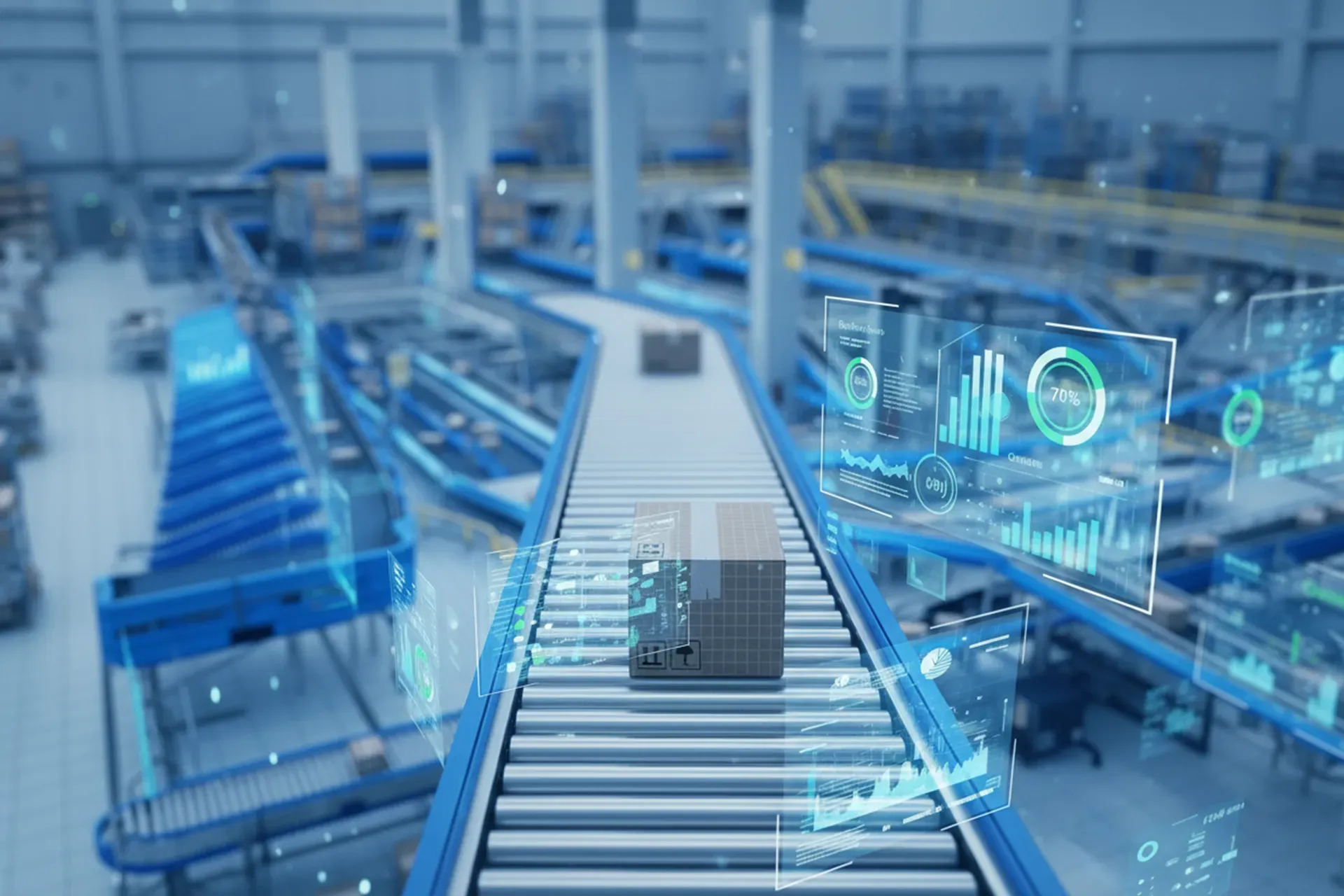
The technical process begins with mapping actual manufacturing workflows into digital format. This involves defining process steps, resource requirements, timing constraints, and decision points. Production lines are modelled by connecting virtual workstations, conveyor simulation elements, and storage areas within the DES simulation environment. Each component in the model behaves according to programmed parameters that reflect real-world capabilities and limitations.
Warehouse simulation and supply chain networks are modelled using similar principles, with digital representations of storage systems, material handling equipment, and transportation networks. This includes automated storage and retrieval system simulation, AGV simulation, and warehouse automation simulation for facilities that rely on advanced intralogistics systems. The software tracks inventory levels, monitors throughput rates, and simulates the material flow throughout the entire system. Advanced DES simulation platforms can integrate multiple manufacturing sites and distribution centres into comprehensive supply chain models.
What types of manufacturing problems can simulation software solve?
Manufacturing simulation software addresses bottleneck identification by analysing process flow and resource utilisation to pinpoint constraints that limit overall system performance. The software reveals where queues form, which resources are overutilised, and where capacity improvements would have the greatest impact on throughput.
Throughput optimisation becomes achievable through systematic testing of different operational scenarios. Manufacturers can evaluate the impact of adding equipment, changing process sequences, or adjusting staffing levels. The software quantifies potential improvements and helps prioritise investments based on expected returns.
Workforce planning challenges are addressed by simulating different staffing scenarios and shift patterns. The software can model the impact of skill levels, training requirements, and labour availability on production performance. Inventory management improvements come from testing different stocking strategies, reorder points, and safety stock levels to balance service levels with carrying costs.
Production scheduling improvements are achieved by testing various scheduling algorithms and priority rules. The software can evaluate the trade-offs between different objectives such as minimising lead times, maximising equipment utilisation, or reducing setup costs. Complex scheduling problems that are difficult to solve analytically become manageable through DES simulation modelling software, which enables simulation-based optimisation across a wide range of production logistics scenarios.
How do manufacturers implement simulation software in their operations?
Implementation begins with comprehensive data collection covering all aspects of the manufacturing process, including cycle times, setup times, failure rates, demand patterns, and resource capacities. This data forms the foundation for creating accurate simulation models that reflect actual operational conditions.
Model development follows a structured approach, starting with basic process flows and gradually adding complexity. Initial models focus on core processes and are validated against historical performance data. Once basic models are proven accurate, additional details such as maintenance schedules, quality issues, and variability are incorporated. For operations involving automated equipment, material handling simulation is an important step in capturing the behaviour of conveyors, AGVs, and AS/RS systems accurately within the model.
Validation procedures ensure model accuracy through statistical testing and comparison with actual performance metrics. This involves running simulations under known conditions and verifying that results match observed behaviour. Scenario testing then explores various what-if situations to evaluate potential improvements and assess risks.
Integration with existing manufacturing systems requires connecting the DES software with data sources such as ERP systems, manufacturing execution systems, and warehouse management systems. This integration enables real-time model updates and supports ongoing decision-making processes. Training programmes ensure staff can use the simulation tools effectively and interpret results correctly.
How InControl helps with supply chain simulation in manufacturing
InControl’s Enterprise Dynamics software provides comprehensive supply chain simulation capabilities specifically designed for manufacturing environments. Our discrete event simulation software platform uses an intuitive drag-and-drop modelling approach with extensive object libraries containing pre-built components for production lines, warehouse simulation, and material handling simulation.
Key features that address manufacturing simulation needs include:
- Powerful 2D and 3D visualisation tools for creating realistic virtual models
- Seamless integration with WMS and ERP systems to create digital twins
- Advanced analytics capabilities for bottleneck identification and throughput optimisation
- Multi-scenario testing for risk-free evaluation of operational changes, including intralogistics simulation and material flow optimisation
- Comprehensive reporting tools for data-driven decision-making
Our implementation support includes dedicated project teams, comprehensive training programmes, and ongoing consultancy services to ensure successful deployment. Manufacturing organisations benefit from reduced implementation risks, faster time-to-value, and improved operational performance through evidence-based decision-making.
Ready to optimise your manufacturing operations through simulation? Contact us to discuss how Enterprise Dynamics can address your specific supply chain challenges and improve your operational efficiency.
Related Articles
- Can warehouse layout simulation be used for retrofit automation projects?
- Can warehouse simulation software be used to train warehouse control algorithms?
- What is the difference between warehouse simulation and a digital twin?
- How does supply chain simulation software help with inventory management?
- How can supply chain simulation software identify bottlenecks?