The best simulation tool depends on your use case, but for logistics, warehousing, and material handling, discrete-event simulation software is typically the strongest fit. The right choice comes down to three factors: the type of system you are modeling, the complexity of your processes, and whether you need a ready-to-use platform or a fully custom-built solution. This article walks through the most common questions teams ask when evaluating simulation tools.
What types of simulation tools exist?
Simulation tools fall into four main categories: discrete-event simulation (DES), agent-based simulation (ABS), continuous simulation, and system dynamics modeling. Each is designed for a different type of problem. Most industries dealing with physical operations — logistics, manufacturing, transportation — rely on DES simulation or agent-based approaches, or a combination of both. Choosing the right DES simulation platform early in your evaluation process can save significant time and reduce the risk of costly redesigns later.
- Discrete-event simulation: Models systems as sequences of events over time. Ideal for warehouses, production lines, and logistics networks where individual items, machines, or vehicles follow defined processes.
- Agent-based simulation: Models individual autonomous agents and their interactions. Best for crowd behavior, pedestrian flow, and scenarios where emergent behavior matters.
- Continuous simulation: Tracks variables that change continuously over time, such as fluid levels or temperature. Common in process industries and engineering.
- System dynamics: Focuses on feedback loops and high-level stock-and-flow relationships. Useful for strategic planning and policy analysis rather than operational detail.
Many modern platforms allow you to combine these approaches within a single model, which is particularly valuable when a real-world system involves both physical flows and human behavior.
What’s the difference between discrete-event and agent-based simulation?
Discrete-event simulation models a system as a series of events that occur at specific points in time, while agent-based simulation models individual actors who make autonomous decisions based on rules and their environment. The core difference is perspective: DES simulation tracks what happens to items moving through a system, whereas ABS tracks the behavior of the entities themselves.
In a warehouse context, warehouse simulation software would model how pallets move through receiving, storage, picking, and shipping stages, tracking throughput, queue lengths, and resource utilization at each step. Agent-based simulation, by contrast, would model how individual workers or vehicles navigate the floor, respond to congestion, and adapt their routes dynamically.
For most logistics and warehousing applications, DES software delivers the most actionable insights because the primary questions are about throughput, bottlenecks, and capacity. Agent-based simulation becomes essential when human behavior or crowd dynamics are central to the problem, such as at airports, stadiums, or train stations.
Which simulation tool is best for logistics and warehousing?
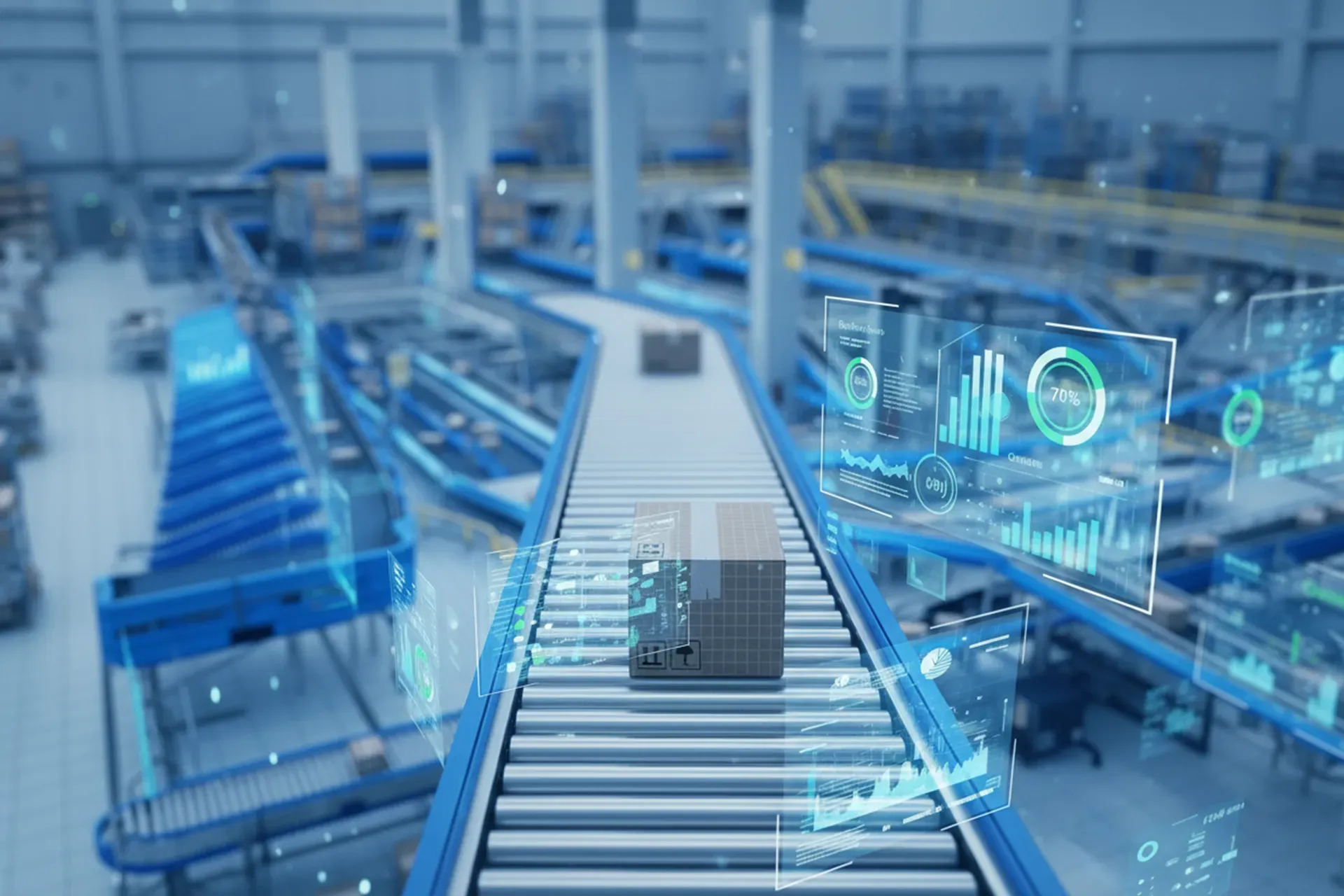
For logistics and warehousing, DES software for warehousing with WMS and ERP integration is the most effective choice. The best warehouse simulation software should handle throughput analysis, bottleneck identification, workforce planning, and what-if scenario testing within a visual, 3D environment that reflects your actual facility layout.
Key capabilities to look for in warehouse simulation software include:
- Pre-built libraries of conveyor systems, sorters, storage units, and handling equipment
- Integration with existing WMS and ERP data to reflect real operational conditions
- 2D and 3D visualization for stakeholder communication and validation
- Scenario comparison tools to evaluate layout changes, automation investments, or staffing adjustments
- Support for digital-twin warehouse software that stays synchronized with live or historical data
Digital-twin warehouse software goes one step further by creating a continuously updated virtual replica of your facility. This allows teams to test operational changes against current conditions rather than historical averages, making it especially valuable for high-velocity distribution centers and e-commerce fulfillment operations. Intralogistics simulation plays a key role here, enabling teams to model material flow optimization across the entire facility before committing to physical changes.
How do you choose a simulation tool for your industry?
Choose a simulation tool by matching its core modeling paradigm to the dominant dynamics of your industry. Start by identifying whether your primary challenge involves item flow (DES), individual behavior (ABS), continuous processes, or a mix. Then evaluate whether the tool’s built-in libraries, integration options, and visualization capabilities align with your operational environment.
Industry-specific considerations include:
- Material handling and intralogistics: Prioritize DES software for logistics with rich conveyor simulation, AGV simulation, and AS/RS simulation libraries. Integration with WMS data is essential for accurate material handling simulation.
- Supply chain networks: Look for supply chain simulation software that can model end-to-end flows across multiple facilities, including variability in demand, lead times, and transportation.
- Transportation hubs (airports, rail): A combination of DES simulation for infrastructure flow and ABS for passenger behavior typically yields the most complete picture.
- Crowded venues and events: Agent-based simulation is the primary tool for evacuation analysis and crowd safety planning.
- Pharmaceutical and regulated manufacturing: Look for audit trails, validation support, and the ability to model compliance constraints alongside throughput.
Beyond the technical fit, consider the learning curve for your team, the availability of training and support, and whether the vendor has experience in your specific sector.
Should you build a custom simulation platform or use off-the-shelf software?
Use off-the-shelf DES simulation software unless you have requirements that no existing platform can meet. Custom-built simulation platforms require significant development resources, ongoing maintenance, and specialized expertise — costs that are rarely justified when mature commercial tools already cover the use case. Off-the-shelf solutions typically offer faster time to value, vendor support, and a proven track record across similar deployments.
Custom development makes sense in a limited set of scenarios: when you need to embed simulation capabilities directly into a proprietary product, when your modeling requirements combine multiple simulation paradigms at a scale that commercial tools cannot handle, or when you are building simulation applications for clients as a system integrator.
Some platforms offer a middle path by providing a core DES simulation engine with open APIs and scripting languages, allowing developers to build custom applications on top of a validated foundation without starting from scratch. This approach combines the reliability of a tested engine with the flexibility of custom development.
What questions should you ask a simulation software vendor?
Before selecting a simulation software vendor, ask questions that reveal both technical fit and long-term partnership quality. The right vendor should be able to demonstrate experience in your industry, explain how their DES simulation modelling software handles your specific modeling challenges, and provide a clear path from pilot to production use.
Key questions to ask include:
- What industries and use cases does your software specialize in?
- How does your tool integrate with our existing WMS, ERP, or data systems?
- Can we see a reference project from a comparable operation?
- What does the model-building process look like, how long does a typical project take?
- What training and support do you provide after deployment?
- How does your platform handle model updates as our operations change?
- Is the software capable of running what-if scenarios without specialist involvement, or does every analysis require a consultant?
Pay particular attention to how vendors answer the last question. The most valuable simulation tools empower your internal team to run scenarios independently over time, not just during an initial project engagement.
How Enterprise Dynamics helps with warehouse simulation
For organizations in logistics, warehousing, and material handling, Enterprise Dynamics brings together everything covered in this article into a single, proven platform. It is a discrete-event simulation software tool built specifically for complex operational environments, and it addresses the most common gaps teams encounter when evaluating warehouse simulation software and intralogistics simulation software.
Here is what Enterprise Dynamics delivers in practice:
- Drag-and-drop model building using pre-built atoms for conveyors, sorters, storage systems, and handling equipment, so your team can build accurate material handling simulation models without starting from scratch
- WMS and ERP integration to create a digital-twin warehouse software environment that reflects your real operational data
- 2D and 3D visualization for communicating findings to stakeholders and validating designs before committing to capital investments
- Throughput analysis, bottleneck identification, and what-if scenario testing to support both day-to-day operational decisions and long-term investment planning
- Scalability from single-facility warehouse simulation to large-scale logistics networks, including baggage handling systems, container terminals, and production line simulation
We have supported clients including Walmart, Schiphol Airport, and Boehringer Ingelheim in using simulation to reduce risk and improve operational performance. If you are ready to explore what simulation can do for your operation, get in touch with our team and we will help you find the right starting point.
Frequently Asked Questions
How long does it typically take to build and run a warehouse simulation model?
The timeline depends on the complexity of your facility and the availability of operational data, but most initial warehouse simulation models can be built and validated within 4 to 12 weeks. Platforms like Enterprise Dynamics significantly reduce build time through pre-built component libraries for conveyors, sorters, and storage systems. Once the baseline model is in place, running individual what-if scenarios typically takes hours or days rather than weeks, allowing teams to iterate quickly on design or operational decisions.
What data do I need to get started with a warehouse simulation project?
At a minimum, you need facility layout data (floor plans or CAD files), process flow descriptions, equipment specifications, and historical throughput or order data. WMS and ERP exports covering order profiles, SKU velocity, shift patterns, and resource counts will significantly improve model accuracy. If clean data is not immediately available, experienced simulation vendors can help you identify reasonable assumptions and validate the model against observed performance metrics before refining it with better data.
Can simulation software handle seasonal demand spikes or peak-period planning?
Yes, and this is one of the strongest use cases for discrete-event simulation in warehousing and logistics. You can load different demand profiles, such as peak holiday volumes or promotional surges, and test whether your current layout, staffing levels, and equipment capacity can absorb the increase without bottlenecks. This allows operations teams to make staffing and resource decisions proactively, weeks or months before a peak period, rather than reacting under pressure.
What is the difference between a simulation model and a digital twin, and do I need both?
A simulation model is typically a project-based tool built to answer specific design or planning questions, while a digital twin is a continuously updated virtual replica of your facility that stays synchronized with live or near-real-time operational data. Whether you need both depends on your goals: simulation models are ideal for one-time or periodic analysis such as evaluating a new layout or automation investment, while a digital twin is more valuable for ongoing operational monitoring and dynamic decision-making. Many organizations start with a simulation model and evolve it into a digital twin as their data infrastructure matures.
How do I know if my simulation model is accurate enough to trust its results?
Model validation is a critical step that involves comparing simulation outputs against real-world performance data you already have, such as historical throughput rates, queue lengths, or resource utilization figures. A well-validated model should reproduce observed behavior within an acceptable margin, typically within 5 to 10 percent of key metrics, before it is used for forward-looking scenario testing. Reputable simulation vendors will include a formal validation phase in their project process, and tools with 3D visualization make it easier for operational staff to spot discrepancies between the model and the real facility.
What are the most common mistakes teams make when implementing simulation for the first time?
The most frequent mistake is over-engineering the first model by trying to capture every operational detail before establishing a validated baseline. Starting with a simplified but accurate representation of your core processes and expanding from there produces faster results and builds internal confidence in the tool. Other common pitfalls include using average data instead of variability-rich distributions (which causes the model to underestimate real-world congestion), skipping stakeholder walkthroughs of the 3D model before acting on results, and failing to plan for how the model will be maintained and updated as operations evolve.
Can non-technical operations staff use simulation software, or does it always require a specialist?
Modern discrete-event simulation platforms are increasingly designed for operational users, not just simulation engineers. Tools with drag-and-drop model builders, pre-configured component libraries, and guided scenario dashboards allow logistics managers and industrial engineers to run what-if analyses independently once a baseline model has been set up. That said, the initial model build and validation typically benefits from specialist involvement to ensure accuracy. The key question to ask any vendor is whether your internal team can run scenarios autonomously after the initial project, which is a strong indicator of long-term value from the investment.
Related Articles
- What are the six pillars of supply chain management?
- Can warehouse layout simulation model conveyor and sortation systems?
- How does warehouse simulation software help avoid costly automation failures?
- What is the difference between warehouse simulation and a digital twin?
- What are the key performance indicators tracked by warehouse simulation software?