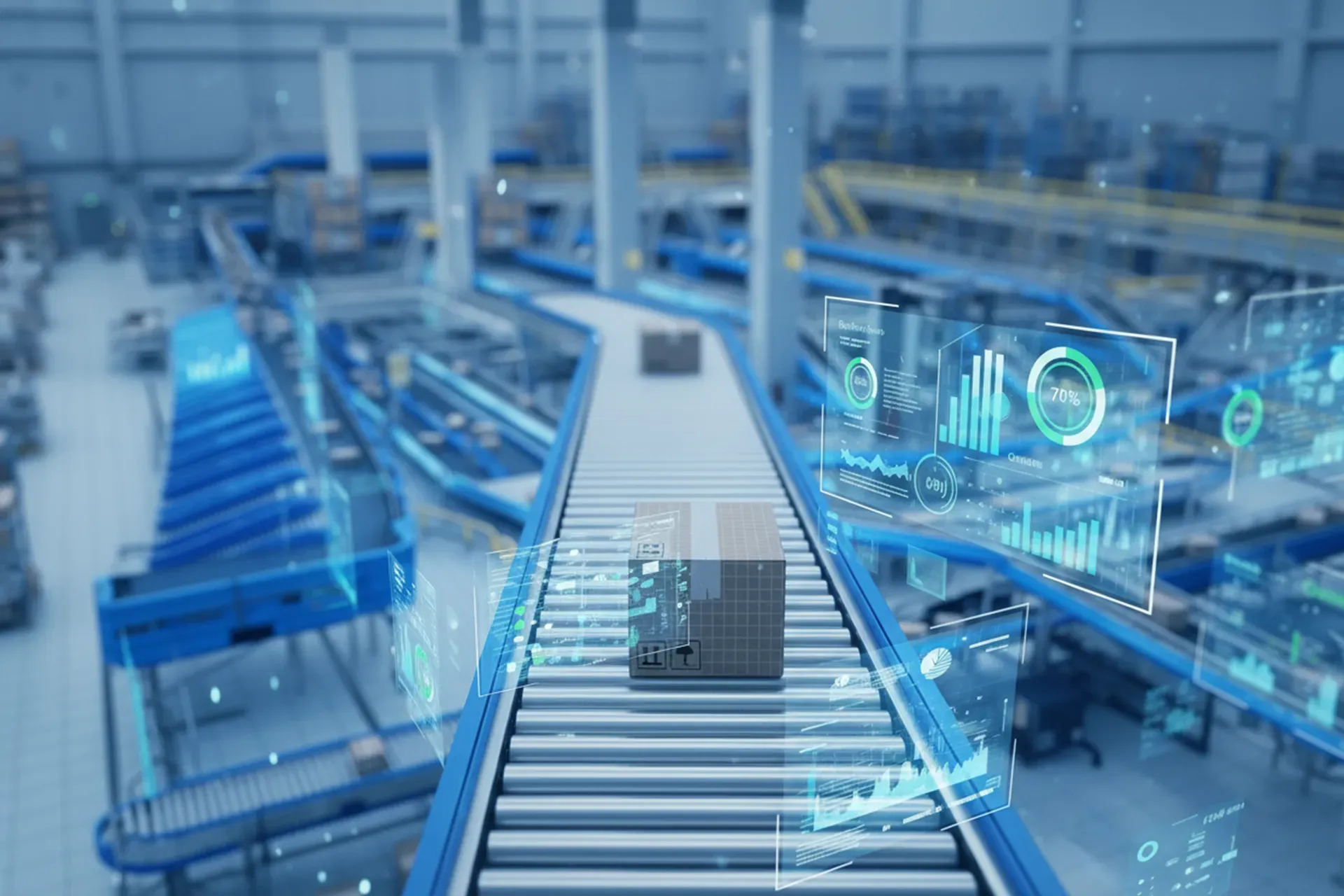
Warehouse simulation software supports pharma distribution planning by creating a virtual replica of the distribution center where planners can model, test, and optimize every process before making operational changes or capital investments. Unlike generic logistics tools, simulation accounts for pharma-specific constraints such as cold chain requirements, serialization, lot traceability, and GDP-compliant workflows. The sections below unpack the most common questions pharma distribution teams ask before adopting simulation technology.
What makes pharma distribution planning more complex than standard warehousing?
Pharma distribution is more complex than standard warehousing because every operational decision carries regulatory, safety, and product integrity consequences that go far beyond throughput and cost. A delayed shipment in retail is a service failure. A temperature excursion or documentation gap in pharma can mean a product recall, regulatory action, or patient harm.
Several layers of complexity stack on top of each other in a pharmaceutical distribution center:
- Temperature-controlled storage zones that require precise flow routing to avoid excursions
- Serialization and lot traceability requirements that add scanning, verification, and documentation steps at every touchpoint
- Expiry date management and FEFO (First Expired, First Out) logic that overrides standard FIFO picking strategies
- Controlled substance handling with additional access controls and audit trail requirements
- GDP (Good Distribution Practice) compliance that governs everything from receiving to final delivery
- Highly variable order profiles driven by hospital, pharmacy, and wholesale demand patterns
These constraints interact with each other in ways that spreadsheets and static planning tools simply cannot capture. A change to pick path logic that improves throughput might inadvertently create dwell time in a temperature-sensitive zone. Discrete event simulation software is the only planning method that models these interdependencies dynamically, making it the natural choice for intralogistics simulation in pharma environments.
Build your own simulation, your way
Enterprise Dynamics gives developers full control to model, scale, and integrate complex systems with C++, APIs, and real-time data.
Explore Enterprise DynamicsHow does warehouse simulation software model pharma-specific processes?
Warehouse simulation software models pharma-specific processes by building a discrete event simulation model of the distribution center where every entity, resource, and rule can be defined with the precision that pharmaceutical operations demand. This DES simulation environment replicates not just physical flows but the decision logic, compliance checks, and conditional routing that define a GDP-compliant DC.
In practice, this means the simulation can represent:
- Temperature zone routing – products are assigned to specific storage areas and pick paths that respect cold chain boundaries, with dwell time tracked throughout
- FEFO picking logic – the model applies expiry-based allocation rules so that throughput analysis reflects real picking sequences, not simplified assumptions
- Serialization verification steps – scanning and validation touchpoints are built into the process flow, so their impact on cycle time and labor is accurately captured
- Variable order profiles – demand patterns from hospitals, pharmacies, and wholesalers can be loaded into the model to stress-test the DC under realistic conditions
- Equipment and staff resources – conveyors, sorters, forklifts, and pick staff are modeled as finite resources with realistic availability and performance parameters, supporting accurate material flow simulation
The result is a living model that behaves the way the real DC behaves, including the edge cases and peak scenarios that cause the most operational pain. Our Enterprise Dynamics simulation platform integrates with WMS and ERP systems to pull real operational data directly into the model, making it a true digital twin rather than a theoretical approximation.
What distribution bottlenecks can simulation identify in a pharma DC?
Simulation can identify bottlenecks anywhere in the pharma distribution flow, including congestion points that are invisible to conventional analysis because they only emerge under specific demand conditions or process combinations. The key advantage is that simulation reveals why a bottleneck exists, not just where it is.
Common bottlenecks that simulation surfaces in pharma distribution centers include:
- Receiving and quarantine staging – inbound goods held for quality checks can create upstream congestion if staging capacity is undersized relative to delivery frequency
- Cold chain transitions – handoff points between temperature zones are frequent chokepoints, especially during peak periods
- Serialization scanning stations – verification steps add process time that compounds across high-volume order waves
- Pick face replenishment – FEFO logic often requires more frequent replenishment than FIFO, creating competition for aisle access between pickers and replenishment staff
- Packing and labeling – GDP documentation requirements at the packing stage can slow throughput more than the physical packing work itself
- Dispatch staging – carrier scheduling mismatches with order completion rates create congestion at the outbound dock
Because the DES simulation tool runs in accelerated time, planners can observe a full week of operations in minutes, watching where queues build, where resources sit idle, and where process sequences create unintended conflicts. This level of visibility is not achievable through observation alone or through static capacity models.
How can simulation support GDP compliance and regulatory validation?
Simulation supports GDP compliance by allowing distribution teams to test whether proposed processes, layouts, and workflows consistently meet regulatory requirements before those processes go live. Rather than discovering compliance gaps through an audit or an incident, simulation exposes them in a risk-free virtual environment.
From a regulatory standpoint, simulation contributes in several practical ways. Process validation is a core GDP requirement, and simulation provides documented evidence that a proposed process design has been tested under a range of conditions, including worst-case scenarios. This evidence can support validation packages submitted to regulators or internal quality assurance teams.
Temperature excursion risk is another area where simulation adds direct compliance value. By modeling product flow through temperature-controlled zones, planners can identify process sequences where dwell time in ambient areas exceeds acceptable limits and redesign those flows before implementation.
Simulation also helps teams prepare for regulatory change. When GDP guidelines are updated or a new market’s requirements differ from existing practice, the simulation model can be adjusted and re-run to assess the operational impact of compliance changes without disrupting live operations.
When should a pharma distributor invest in simulation over other planning tools?
A pharma distributor should invest in warehouse simulation software when the cost, risk, or complexity of a decision exceeds what spreadsheets, WMS analytics, or static capacity models can reliably handle. Simulation becomes the right tool when the consequences of getting the answer wrong are significant and the system being planned is too dynamic for linear analysis.
Specific trigger points that justify simulation investment include:
- Designing or reconfiguring a distribution center, where layout decisions lock in operational performance for years
- Evaluating automation investments such as goods-to-person systems, automated storage and retrieval system simulation scenarios, or conveyor simulation studies for new conveyor networks
- Planning for significant volume growth or a new product category that changes the order profile
- Preparing for GDP audit readiness or process revalidation after a significant operational change
- Investigating recurring performance problems that have resisted conventional fixes
Simulation is not always necessary for routine operational adjustments where the system is well understood and the change is incremental. But when the stakes are high and the system is complex, the cost of a DES simulation package is consistently lower than the cost of discovering problems after implementation.
How Enterprise Dynamics supports pharma distribution planning
Enterprise Dynamics is our discrete event simulation software platform built for exactly the kind of complex, constraint-heavy environments that pharma distribution represents. As a purpose-built DES simulation platform for logistics and warehousing, it gives planning teams a drag-and-drop modeling environment where they can build a detailed virtual replica of their distribution center, complete with temperature zones, FEFO logic, serialization steps, and realistic order profiles.
Here is what pharma distribution teams use Enterprise Dynamics for in practice:
- Throughput analysis under realistic peak demand conditions, including seasonal surges and order wave patterns
- Bottleneck identification across receiving, storage, picking, packing, and dispatch
- What-if scenario testing for layout changes, automation investments, and process redesigns
- Workforce planning to match staffing levels to demand without over- or under-resourcing
- Compliance validation support through documented process testing under worst-case conditions
- WMS and ERP integration to build a digital twin grounded in real operational data
If your distribution center is facing a planning decision that carries real operational or regulatory risk, we would be glad to show you what simulation can reveal. Get in touch with our team to discuss your situation and explore whether Enterprise Dynamics is the right fit.
Frequently Asked Questions
How long does it typically take to build a simulation model for a pharma distribution center?
The timeline depends on the complexity of the DC and the availability of operational data, but most pharma distribution simulation projects move from data collection to a working model in four to twelve weeks. Platforms like Enterprise Dynamics accelerate this significantly when integrated with WMS and ERP systems, since real operational data populates the model directly rather than requiring manual estimation. A simpler single-site model with defined processes can be ready for scenario testing faster, while a multi-site or highly automated DC with complex compliance rules will require more build and validation time.
What data do we need to provide to get started with a warehouse simulation project?
The core inputs for a pharma DC simulation model are order history and demand profiles, facility layout dimensions, process flow documentation, resource specifications (equipment counts, staff shifts, throughput rates), and any GDP or cold chain constraints that govern routing decisions. WMS and ERP exports are the most efficient source for order and inventory data, while time-and-motion studies or existing SOPs typically cover process parameters. You do not need perfect data to start — simulation teams routinely work with ranges and assumptions that are refined as the model is validated against observed performance.
Can simulation help us evaluate whether to automate part of our pharma DC, and how do we compare options fairly?
Yes, this is one of the most common and highest-value use cases for warehouse simulation in pharma distribution. The model can represent multiple automation scenarios — such as a goods-to-person system, an ASRS, or a conveyor-based sortation network — and run each against the same realistic demand profile so that throughput, labor impact, and bottleneck behavior are compared on equal terms. This removes the vendor-specific assumptions that often bias ROI calculations and gives decision-makers an independent, data-driven basis for capital investment choices. Simulation also reveals whether a proposed automation solution creates new constraints elsewhere in the flow that would offset its expected benefits.
What is the difference between a warehouse simulation model and a digital twin, and does the distinction matter for pharma planning?
A simulation model is a detailed virtual replica of your DC used primarily for planning and scenario testing, while a digital twin is a simulation model that maintains a live data connection to the real operation, updating continuously as conditions change. For pharma distribution planning purposes, both deliver value, but the distinction matters depending on your use case. If your goal is to evaluate a future layout or test a process change before implementation, a simulation model is sufficient. If you want ongoing operational visibility — for example, to detect emerging bottlenecks or monitor compliance-sensitive flows in near real time — a fully connected digital twin adds that layer of continuous insight.
How do we validate that the simulation model accurately reflects our real distribution center before trusting its outputs?
Model validation in pharma DC simulation typically involves running the model against a known historical period — such as a peak week or a typical operating month — and comparing simulated outputs (throughput, cycle times, resource utilization) against actual recorded performance from your WMS or ERP. Discrepancies are investigated and resolved by adjusting process parameters, resource rules, or demand inputs until the model reliably replicates observed behavior. This validation step is also documentable, which is valuable for GDP compliance purposes since it provides evidence that the model is a credible representation of the real operation before it is used to support process or investment decisions.
Can simulation be used to train operational staff or prepare teams for a new DC layout before go-live?
Simulation models can absolutely serve a training and change management function alongside their planning role. A visual, animated model of a new DC layout or process flow gives operations managers, supervisors, and quality teams a concrete way to understand how the redesigned environment will work before they experience it on the floor. Running scenario walkthroughs in the simulation — including peak periods or exception handling — helps staff anticipate challenges and refine SOPs in advance, reducing the learning curve and compliance risk associated with go-live transitions.
What are the most common mistakes pharma distribution teams make when approaching a simulation project for the first time?
The most frequent mistake is underinvesting in the data preparation phase — starting to build the model before order profiles, process times, and resource parameters are properly documented, which leads to a model that cannot be validated and produces unreliable outputs. A second common error is scoping the model too broadly at the outset, attempting to simulate every process in the DC simultaneously rather than focusing on the specific decisions or bottlenecks driving the project. Finally, many first-time simulation users treat the model as a one-time deliverable rather than a reusable asset — the most durable value comes from maintaining the model so it can be re-run as the operation evolves, volumes grow, or new compliance requirements emerge.
Related Articles
- Why do material handling companies invest in digital twin warehouse software?
- What is the difference between warehouse simulation software and ERP planning tools?
- What are the 5 ps of risk management?
- How do logistics companies use supply chain simulation software?
- Who uses supply chain simulation software?