Supply chain simulation software supports network design by creating virtual models of complex logistics networks before physical implementation. This technology allows organisations to test different configurations, identify bottlenecks, and optimise facility locations without costly real-world experimentation. The software provides data-driven insights for strategic network decisions across multiple scenarios.
What is supply chain simulation and why does network design need it?
Supply chain simulation is a digital modelling technology that creates virtual representations of logistics networks, enabling organisations to test and optimise their supply chain designs before implementation. This approach addresses the limitations of traditional planning methods like spreadsheets and static models that cannot capture the dynamic complexity of modern supply chains.
Traditional network design methods fall short when dealing with complex interactions between multiple facilities, varying demand patterns, and unpredictable disruptions. Static planning tools cannot account for the ripple effects of decisions across interconnected supply chain nodes, leading to suboptimal designs and costly mistakes.
Supply chain simulation software fills this gap by modelling the dynamic behaviour of entire networks over time. It captures variability in demand, transportation delays, capacity constraints, and seasonal fluctuations that significantly impact network performance. This virtual testing environment allows planners to evaluate thousands of scenarios without disrupting actual operations.
How does simulation software model complex supply chain networks?
Simulation software models complex supply chain networks through discrete event simulation, which represents network activities as sequences of events occurring over time. This approach — at the core of modern DES simulation software — creates virtual entities representing products, vehicles, and resources that move through the network according to defined rules and constraints.
The modelling process begins with data integration from existing systems like ERP and WMS platforms. This real-world data feeds into the simulation engine, ensuring the virtual model accurately reflects current operations. The software then replicates physical processes, including transportation routes, warehouse operations, production schedules, and inventory management policies.
Advanced DES simulation platforms use object-oriented modelling approaches, where network components are represented as reusable building blocks. These components can be configured and connected to create comprehensive network representations spanning multiple countries, facilities, and transportation modes. The software tracks performance metrics throughout the virtual network, providing detailed insights into system behaviour. This makes DES software for logistics particularly valuable when dealing with large-scale, multi-node supply chain environments.
What supply chain network design problems can simulation solve?
Facility location optimisation is one of the most critical network design challenges that simulation addresses effectively. The software evaluates potential warehouse and distribution centre locations by modelling transportation costs, service levels, and capacity requirements across different geographic configurations.
Capacity-planning challenges become manageable through simulation testing of demand scenarios against proposed facility sizes. The software identifies when facilities will reach capacity limits and evaluates the impact of expansion decisions on overall network performance. This prevents both overcapacity investments and service disruptions caused by insufficient capacity.
Transportation network optimisation involves complex trade-offs between cost and service that simulation handles well. The software models different routing strategies, carrier selection policies, and delivery frequency options to identify optimal transportation configurations. Intralogistics simulation plays an important role here, particularly when modelling the internal flow of goods through warehouses and distribution centres, including conveyor simulation and AGV simulation for automated environments. Inventory positioning across the network requires balancing holding costs against service levels, which simulation optimises by testing various stocking policies and safety stock levels.
How do you validate and test network designs using simulation?
Network design validation begins with baseline model creation using current network data to establish performance benchmarks. This baseline model must accurately replicate existing operations before testing proposed design changes, ensuring reliable comparison points for new configurations.
What-if analysis involves systematically testing design alternatives by changing network parameters and observing performance impacts. Planners modify facility locations, capacities, and operating policies within the simulation to evaluate different design options. The software tracks key performance indicators, including cost, service levels, and resource utilisation across all scenarios.
Stress testing validates network designs under extreme conditions by simulating demand spikes, facility disruptions, and transportation delays. This reveals design weaknesses and identifies required contingency capabilities. Bottleneck identification occurs naturally as the simulation highlights capacity constraints and process inefficiencies that limit network performance. Material flow simulation is especially useful at this stage, as it exposes congestion points and inefficiencies in the movement of goods across facilities.
Performance validation compares proposed designs against business objectives using standardised metrics. The DES simulation environment provides detailed reports showing how each design alternative performs across cost, service, and risk dimensions, supporting confident decision-making.
What are the key benefits of simulation-driven network design?
Risk reduction is the primary benefit of simulation-driven network design, as organisations can identify and address potential problems before committing to expensive infrastructure investments. Virtual testing reveals design flaws and operational challenges that would be costly to fix after implementation.
Cost optimisation occurs through comprehensive evaluation of design trade-offs across the entire network. Simulation identifies the most cost-effective combinations of facility locations, sizes, and operating policies while maintaining required service levels. This holistic optimisation often reveals counterintuitive solutions that traditional planning methods miss.
Decision-making speed improves significantly as simulation provides rapid evaluation of multiple design alternatives. Stakeholders can compare scenarios quickly and make informed choices based on quantitative performance data rather than intuition or limited analysis.
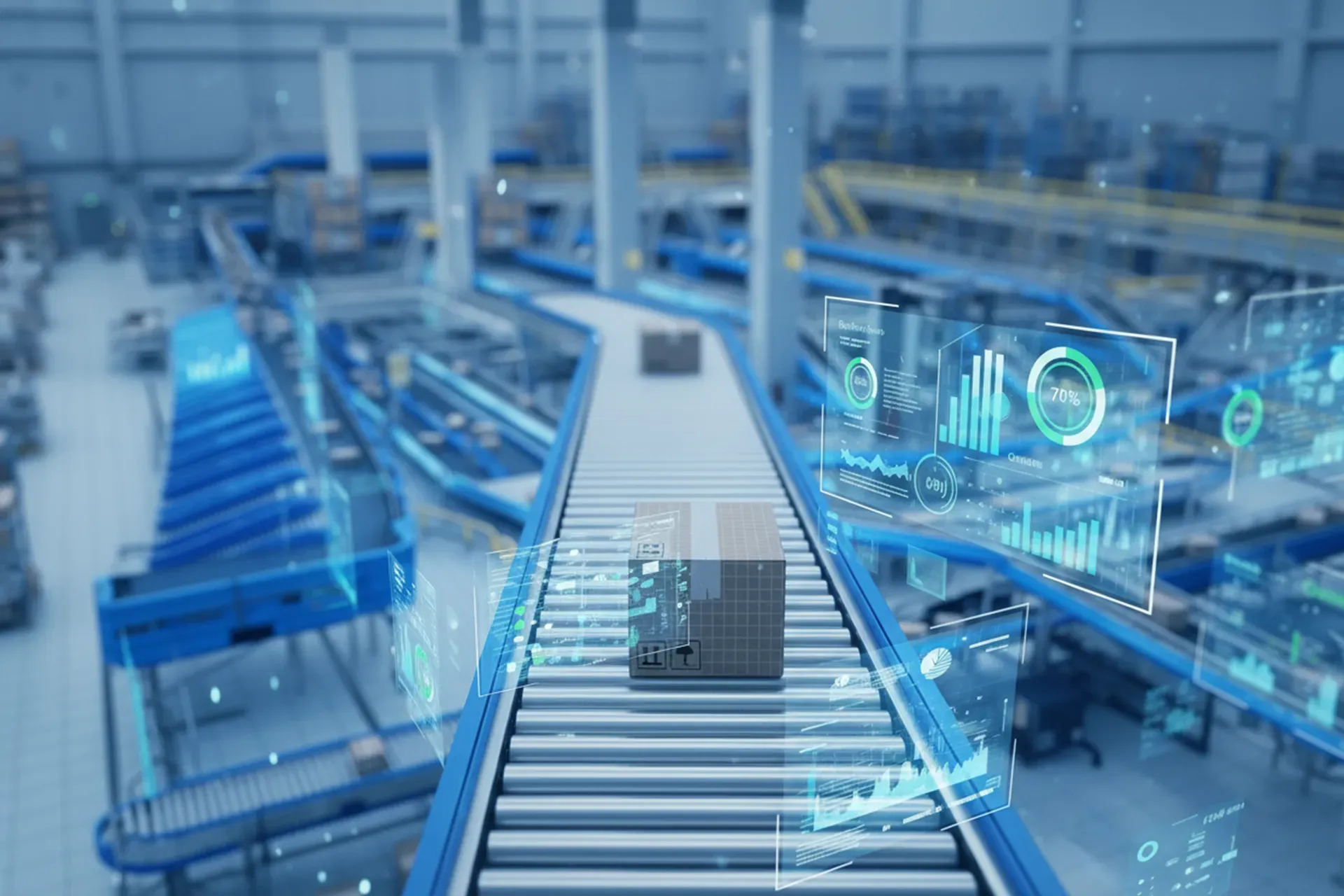
Enhanced stakeholder confidence results from the comprehensive analysis and visual representations that simulation provides. Decision-makers can see exactly how proposed networks will perform under various conditions, reducing uncertainty and building consensus around network design investments. Warehouse simulation software and material handling simulation software further strengthen this confidence by visualising automated storage and retrieval system simulation, warehouse automation simulation, and material flow optimization in a realistic, interactive environment.
How InControl supports supply chain network design
Enterprise Dynamics provides comprehensive supply chain network design capabilities through discrete event simulation software specifically developed for complex logistics systems. Our DES simulation tool enables organisations to model entire supply chain networks with unprecedented detail and accuracy, covering everything from production logistics simulation to intralogistics simulation software for warehousing and distribution environments.
Key capabilities include:
- Drag-and-drop network modelling with extensive object libraries for rapid model development
- Seamless integration with WMS and ERP systems for real-time data synchronisation
- Advanced 3D visualisation tools for stakeholder communication and validation
- Comprehensive scenario analysis and performance optimisation features
- Multi-location network modelling spanning global supply chain operations
We support organisations from initial network assessment through implementation planning, providing both simulation software and expert consultancy services. Our approach ensures successful network design projects that deliver measurable operational improvements.
Ready to optimise your supply chain network design? Contact us to discuss how Enterprise Dynamics can transform your network planning capabilities and support your strategic logistics objectives.
Related Articles
- Why do engineers use warehouse simulation for bottleneck analysis?
- What are the limits of traditional warehouse layout planning tools?
- What is the benefit of running warehouse simulations faster than real time?
- How do you measure warehouse efficiency with simulation software?
- What is the difference between supply chain simulation software and a digital twin?