Real-time data integration in digital twin warehouse software delivers a continuously updated virtual replica of your warehouse that reflects actual conditions as they happen. Instead of relying on snapshots or historical data, operations teams can observe live system behavior, respond to disruptions instantly, and validate decisions before acting on the physical floor. The sections below unpack exactly how this works, what problems it solves, and when it makes the biggest operational difference.
How does real-time data integration actually work in a warehouse digital twin?
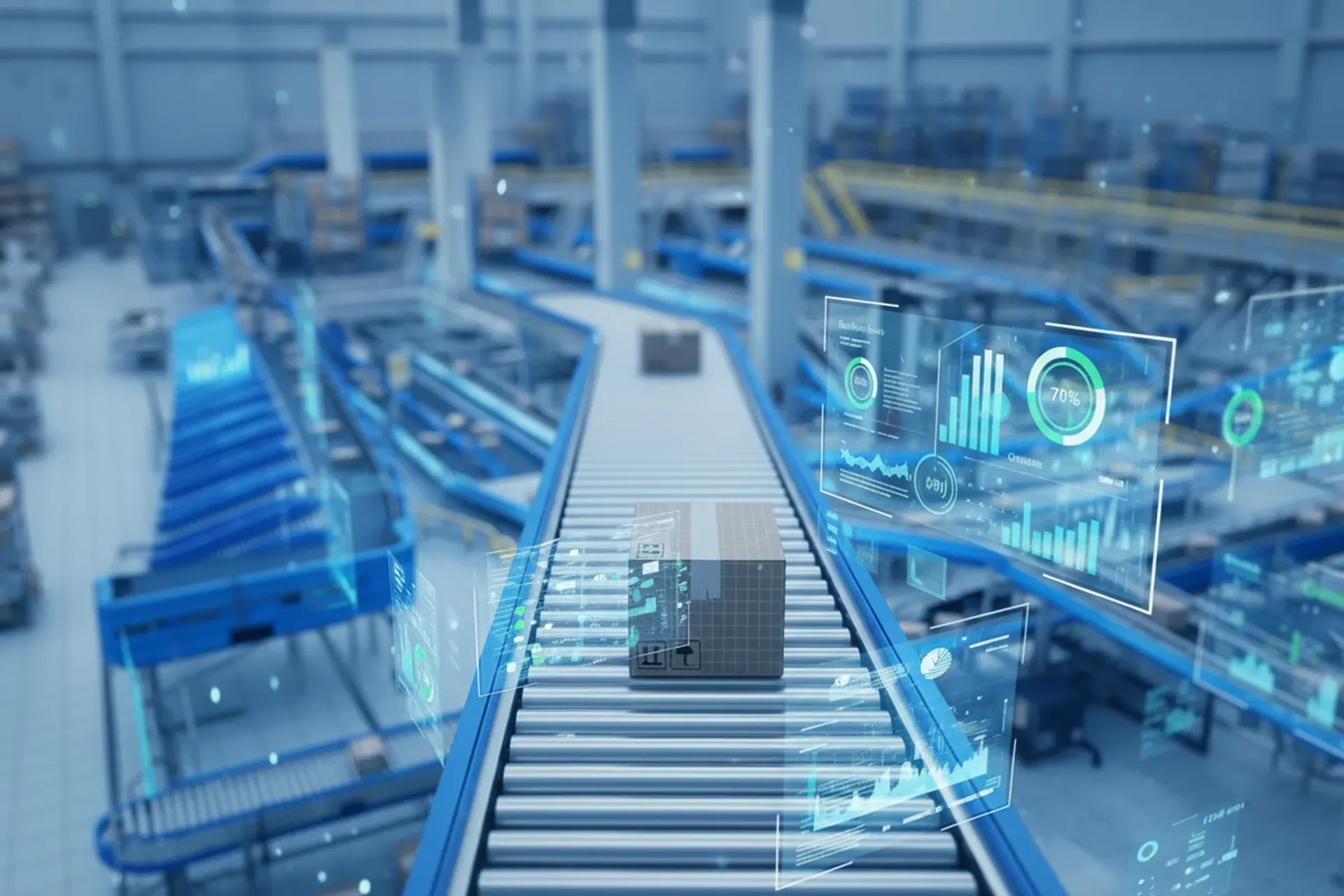
A warehouse digital twin with real-time data integration connects the virtual model directly to live data streams from your physical operations. Sensors, conveyor systems, warehouse management software, and order management platforms continuously push data into the simulation model, which updates its state to mirror what is happening on the floor at that exact moment.
The digital twin ingests this data through APIs and middleware connectors, translating raw operational signals into model inputs. As inventory moves, machines cycle, and orders are processed, the twin recalculates throughput, queue lengths, resource utilization, and predicted bottlenecks in near real time. At its core, this relies on a discrete event simulation engine that processes each operational event as it occurs, making the twin a genuinely responsive tool rather than a static snapshot. The result is a living model that behaves like the warehouse itself, not a frozen representation of how it looked last week.
This continuous synchronization is what separates a true live digital twin from a static simulation built once and left to age. The model stays accurate because the data feeding it never stops flowing.
What operational problems does a live digital twin solve that static models cannot?
Static warehouse models are built at a point in time and reflect conditions that may no longer exist. A live digital twin solves the problems that emerge from that gap, particularly unexpected disruptions, shifting demand patterns, and the compounding effect of small inefficiencies that static models simply cannot detect.
Specific operational problems a live twin addresses include:
- Unplanned downtime: When a conveyor or sorting system fails, the live twin immediately shows how the disruption cascades through the rest of the operation, allowing teams to reroute flows before delays accumulate.
- Dynamic bottlenecks: Bottlenecks in a warehouse shift throughout the day depending on order mix, staffing, and equipment availability. A static model captures one scenario; a live twin tracks the bottleneck as it moves.
- Inaccurate capacity planning: Static models rely on averages. Real-time twins reflect actual volume peaks, which means capacity decisions are grounded in what is genuinely happening rather than historical assumptions.
- Slow incident response: Without a live view, teams diagnose problems reactively after impact has already occurred. A synchronized twin makes the problem visible the moment it begins to develop.
In short, static models are excellent for design and planning. Live digital twins are essential for operations management, where conditions change faster than any periodic model update can keep pace.
Build your own simulation, your way
Enterprise Dynamics gives developers full control to model, scale, and integrate complex systems with C++, APIs, and real-time data.
Explore Enterprise DynamicsHow does real-time integration improve decision-making in warehouse operations?
Real-time integration improves warehouse decision-making by grounding every operational choice in current, verified data rather than estimates or intuition. Managers can test a proposed change inside the twin before implementing it on the physical floor, which removes the guesswork and significantly reduces the risk of costly errors.
Consider a scenario where an unexpected spike in inbound volume threatens to overwhelm the receiving area. With a live digital twin powered by warehouse simulation software, a supervisor can immediately model two or three staffing adjustments, see which configuration prevents a queue from forming, and deploy that solution within minutes. Without the twin, the decision relies on experience and gut feel, and the consequences of a wrong call ripple through the shift.
The decision-making improvements extend beyond crisis response. Day-to-day operational choices, such as when to reassign pickers, how to sequence outbound shipments, or whether to open an additional packing station, become faster and more accurate when they are informed by a model that reflects reality. Over time, this builds a culture of evidence-based operations management that consistently outperforms reactive approaches.
What types of data sources feed into a warehouse digital twin?
A warehouse digital twin draws from multiple data sources simultaneously to build a complete picture of operations. The breadth of these inputs determines how accurately the twin reflects real conditions.
Common data sources include:
- Warehouse Management Systems (WMS): Order status, inventory locations, pick task assignments, and receiving records flow directly from the WMS into the twin.
- Enterprise Resource Planning (ERP) systems: Inbound purchase orders, outbound shipment schedules, and demand forecasts provide the operational context the twin needs to model future states.
- IoT sensors and conveyor control systems: Real-time throughput rates, equipment status, and fault signals from automated handling equipment keep the twin synchronized with physical asset performance. This includes conveyor simulation data and, in facilities running autonomous vehicles, AGV simulation feeds that track vehicle positions and task states.
- Labor management systems: Workforce availability, task completion rates, and shift schedules feed into resource modeling within the twin.
- Order management platforms: Live order volumes and priority flags allow the twin to reflect demand as it arrives, not as it was forecast.
The richness of a live digital twin is directly proportional to the quality and coverage of these data connections. A twin fed by only one or two sources will always have blind spots; a fully integrated twin that combines WMS, ERP, and equipment data gives a genuinely complete operational picture. For facilities with automated storage and retrieval systems, AS/RS simulation data adds another critical layer, ensuring that the twin accurately reflects the behavior of those high-throughput assets.
When does a warehouse operation benefit most from real-time twin integration?
A warehouse operation benefits most from real-time twin integration when the cost of operational errors is high, when volumes are volatile, or when the complexity of the system makes manual oversight insufficient. The more moving parts an operation has, the more value a continuously synchronized twin delivers.
Specific situations where the benefit is most pronounced include high-velocity e-commerce fulfillment centers handling thousands of orders per hour, pharmaceutical distribution facilities where accuracy and compliance are non-negotiable, and warehouse automation simulation environments where equipment interdependencies mean a single failure can halt multiple processes simultaneously.
Operations preparing for peak periods, such as seasonal demand surges or new product launches, also gain significant value from real-time integration. The twin can be used to stress-test the operation against projected peak conditions using live baseline data, making the resulting insights far more reliable than those produced by a static model built months earlier. Material flow simulation is particularly valuable here, as it reveals how product movement patterns shift under peak load and where the operation is most likely to buckle.
If your operation runs on predictable, low-complexity processes with stable volumes, a periodic simulation model may be sufficient. But as soon as variability, automation, or scale increases, real-time integration stops being a nice-to-have and becomes a genuine operational advantage.
How Enterprise Dynamics supports real-time digital twin integration
Enterprise Dynamics is our warehouse simulation software built specifically to handle the complexity that real-time integration demands. As a full discrete event simulation software platform, it connects directly with WMS and ERP systems to create a synchronized digital twin of your warehouse, and it gives your team the tools to act on that data immediately.
With Enterprise Dynamics, your operation gains:
- Seamless integration with WMS and ERP platforms for continuous data synchronization
- A discrete event simulation environment that models throughput, queues, and resource behavior as they evolve in real time
- Material flow optimization capabilities that identify where product movement can be made faster, leaner, and more reliable
- 2D and 3D visualization of your live operation, making it easy to communicate findings across teams
- What-if scenario testing against current operational conditions, not outdated baselines
- Bottleneck identification and KPI analysis in a risk-free virtual environment
Whether you are managing a high-volume fulfillment center or a complex automated distribution facility, Enterprise Dynamics gives you the confidence to make faster, better-informed decisions. Ready to see what a live digital twin could do for your warehouse? Get in touch with our team and we will show you exactly where to start.
Frequently Asked Questions
How long does it typically take to implement a real-time digital twin for a warehouse?
Implementation timelines vary depending on the complexity of your operation and the number of data sources being integrated, but most warehouse digital twin deployments range from a few weeks to a few months. Simple environments with a single WMS connection can be up and running relatively quickly, while highly automated facilities integrating IoT sensors, ERP systems, and labor management platforms require more configuration and validation time. Working with a solution like Enterprise Dynamics that has pre-built connectors for common WMS and ERP platforms can significantly reduce that timeline.
What if our warehouse doesn't have IoT sensors — can we still benefit from a live digital twin?
Yes, a digital twin can still deliver significant value even without IoT sensors in place. Data from your WMS, ERP, and order management systems alone can power a highly accurate live model that tracks inventory movement, order flow, and resource utilization in real time. IoT sensor data adds another layer of fidelity — particularly for equipment performance and fault detection — but it is not a prerequisite for getting started. You can begin with the data sources you already have and expand the integration as your sensor infrastructure grows.
How do we know if the digital twin is accurately reflecting our real warehouse conditions?
Model validation is a critical step in any digital twin deployment and involves comparing the twin’s outputs — such as throughput rates, queue lengths, and cycle times — against actual measured performance over a defined period. If the model’s predictions consistently align with observed results within an acceptable margin, the twin is considered validated. Ongoing accuracy depends on maintaining clean, uninterrupted data feeds, so monitoring data connection health and flagging anomalies in incoming streams is an important part of keeping the twin trustworthy over time.
What are the most common mistakes teams make when deploying a warehouse digital twin?
One of the most common mistakes is underestimating the importance of data quality — a digital twin is only as accurate as the data feeding it, and poor or inconsistent data from source systems will produce a model that misleads rather than informs. Another frequent pitfall is building the twin in isolation without involving the operations team who will actually use it, which leads to a technically sound model that nobody trusts or knows how to act on. Finally, teams sometimes treat the digital twin as a one-time project rather than a continuously maintained operational tool, allowing it to drift out of sync with reality as processes and layouts evolve.
Can a warehouse digital twin be used to train new staff or test new processes before going live?
Absolutely — this is one of the most underutilized applications of a warehouse digital twin. Because the virtual model mirrors real operational conditions, it serves as a risk-free environment for onboarding new supervisors, testing revised workflows, or simulating the impact of a new product line before any physical changes are made. Running proposed process changes through the twin first allows teams to identify unintended consequences, such as a new picking sequence that inadvertently creates a bottleneck downstream, before they affect real throughput or customer orders.
How does a real-time digital twin handle sudden, large-scale disruptions like a system outage or a major staffing shortage?
When a major disruption occurs, the live digital twin immediately reflects the changed conditions — reduced staffing, offline equipment, or halted processes — and recalculates downstream impacts across the entire operation in real time. This gives operations managers a clear, data-driven picture of where delays will accumulate, which orders are at risk, and which mitigation actions will have the greatest effect. Rather than relying on experience alone during a high-pressure incident, teams can use the twin to rapidly model recovery scenarios and choose the most effective response before implementing it on the floor.
Is a real-time digital twin only practical for large warehouse operations, or can smaller facilities benefit too?
While large, highly automated facilities see some of the most dramatic returns from real-time digital twin integration, smaller and mid-sized operations can benefit significantly as well — particularly those experiencing growth, handling high-value goods, or managing complex order profiles. The key factor is not the size of the facility but the cost and frequency of operational errors. If a wrong staffing decision or a missed bottleneck regularly causes missed shipments or overtime costs, a live digital twin pays for itself quickly regardless of facility scale. Starting with a focused integration covering your most critical data sources keeps the initial investment manageable.