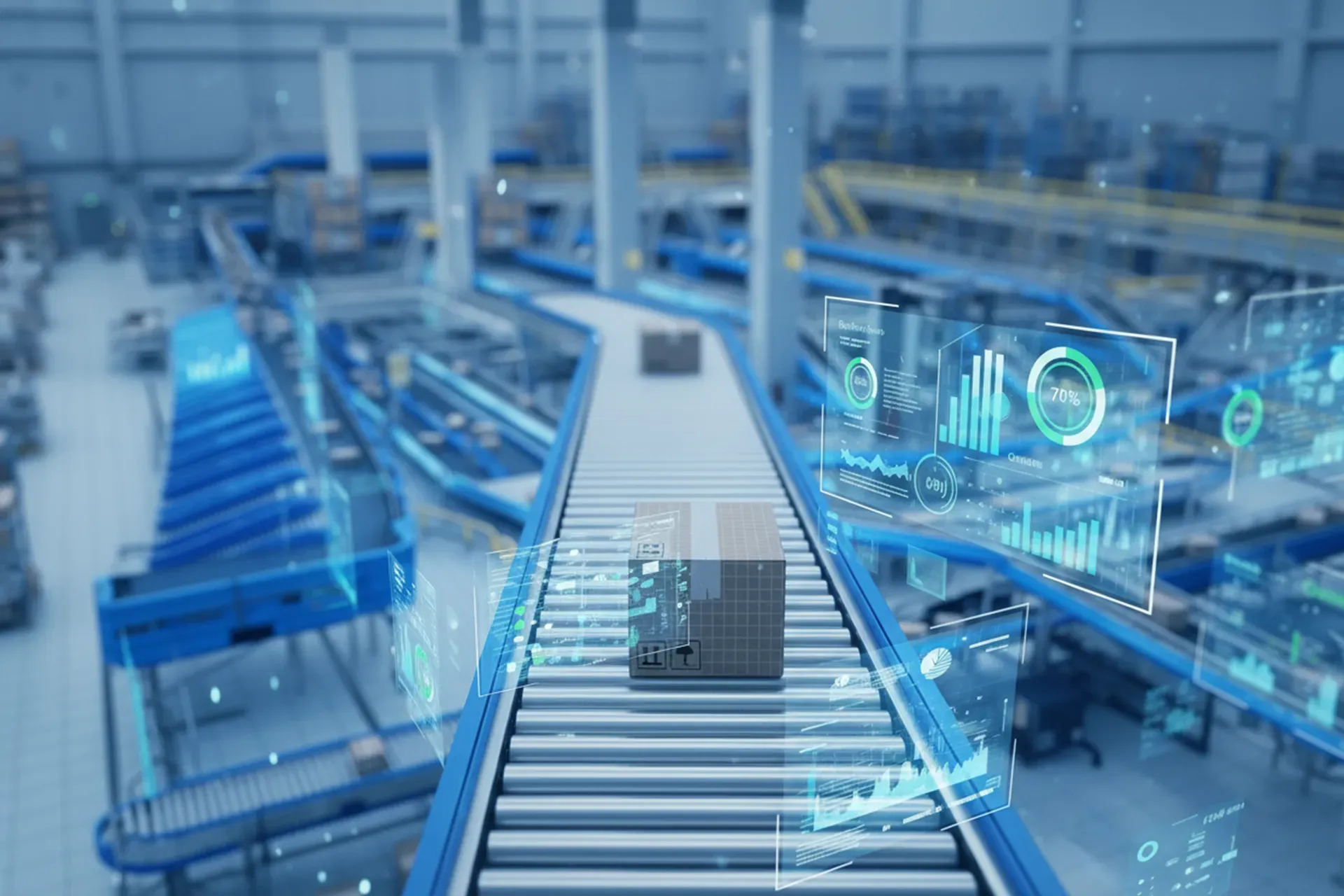
Supply chain simulation software creates virtual models of real-world supply chain operations, allowing businesses to test scenarios and optimise processes before implementation. Unlike traditional planning tools such as spreadsheets or ERP systems, this discrete event simulation software uses discrete-event modelling to replicate complex interactions between suppliers, warehouses, transportation, and customers in a risk-free environment.
What is supply chain simulation software and how does it differ from traditional planning tools?
Supply chain simulation software is a digital platform that creates virtual representations of entire supply chain networks, enabling organisations to model, analyse, and optimise their operations without disrupting real-world processes. This technology builds dynamic models that replicate the behaviour of suppliers, manufacturing facilities, distribution centres, transportation networks, and customer demand patterns.
Traditional planning tools like spreadsheets, ERP systems, and warehouse management systems primarily handle static data and historical reporting. They excel at tracking current inventory levels, processing orders, and managing day-to-day operations, but struggle with complex scenario planning and future-state modelling.
The fundamental difference lies in how these tools handle complexity and uncertainty. Spreadsheets use fixed formulas and assumptions, making them inadequate for modelling dynamic interactions between multiple variables. ERP systems focus on transaction processing and data management rather than predictive analysis or optimisation testing.
Supply chain simulation software, however, creates living models where virtual entities move through processes, encounter bottlenecks, and respond to changing conditions just like real operations. This approach reveals hidden inefficiencies, tests improvement strategies, and validates investment decisions before committing resources.
How does discrete event simulation work in supply chain modeling?
Discrete-event simulation models supply chains by tracking individual entities (products, orders, vehicles) as they move through a series of processes and events over time. The DES simulation engine advances from one event to the next, updating the model state and collecting performance data at each step.
The simulation begins by defining entities that represent real-world objects like pallets, containers, or individual products. These entities have attributes such as size, weight, destination, and priority level. Resources represent the physical and human assets that process these entities, including conveyor systems, forklifts, warehouse staff, and loading docks.
Events occur when entities interact with resources or reach decision points in the process. For example, when a pallet arrives at a picking station, the simulation calculates processing time based on predefined rules, checks resource availability, and either begins processing or queues the entity until resources become available.
The DES simulation environment maintains an event calendar, executing events in chronological order while tracking key performance indicators like throughput, utilisation rates, queue lengths, and cycle times. This approach captures the dynamic nature of supply chain operations, including variability in demand, processing times, and resource availability.
What types of supply chain problems can simulation software solve?
Supply chain simulation software addresses complex operational challenges that traditional analytical methods cannot handle effectively. Bottleneck identification represents one of the most valuable applications, revealing constraint points that limit overall system performance and testing solutions before implementation.
Capacity planning becomes more accurate when simulation models account for variability in demand, processing times, and resource availability. Rather than using average values, the software tests how systems perform under peak conditions, seasonal fluctuations, and unexpected disruptions.
Warehouse simulation software is particularly effective for design and layout optimisation. The software tests different storage strategies, picking routes, and equipment configurations to minimise travel time and maximise throughput. This capability proves especially valuable when designing new facilities or reconfiguring existing operations, and extends naturally into warehouse automation simulation for environments that incorporate conveyors, AS/RS, or AGV systems.
Transportation and routing decisions involve multiple variables that interact in complex ways. Transportation simulation software tests different delivery schedules, vehicle assignments, and route optimisations while considering factors like driver availability, vehicle capacity, and customer time windows.
What-if scenario analysis enables supply chain managers to evaluate the impact of potential changes before implementation. This includes testing new supplier relationships, alternative sourcing strategies, technology investments, and operational policy changes in a controlled virtual environment.
How do you build and validate a supply chain simulation model?
Building an accurate simulation model begins with comprehensive data collection and process mapping. This involves gathering historical performance data, documenting current processes, and identifying key performance metrics that the model must replicate accurately.
The model-building process starts with creating a simplified version that captures the essential elements of the supply chain. This includes defining entity types, resource capacities, process flows, and decision logic. The initial model focuses on core processes before adding complexity and detail.
Data integration requires collecting information about processing times, demand patterns, resource capacities, and system constraints. This data comes from various sources, including ERP systems, warehouse management systems, transportation management systems, and direct observation of operations.
Model validation ensures the simulation accurately represents real-world behaviour. This involves comparing simulation outputs with historical performance data, testing the model’s response to known scenarios, and verifying that individual processes behave as expected. For operations involving automated equipment, this step often includes validating material flow simulation outputs against observed throughput and cycle times.
Calibration fine-tunes model parameters to match actual performance metrics. This iterative process adjusts processing times, resource capacities, and variability factors until the simulation consistently produces results that align with observed system behaviour. Proper validation builds confidence in the model’s ability to predict the impact of proposed changes.
How InControl helps with supply chain simulation and optimisation
We provide comprehensive supply chain simulation capabilities through Enterprise Dynamics, our DES simulation platform designed specifically for complex logistics and supply chain optimisation. Our software enables organisations to create detailed virtual models of their entire supply chain networks, from supplier relationships through to customer delivery.
Key capabilities include:
- Drag-and-drop modelling interface with pre-built supply chain components
- Integration with existing WMS and ERP systems for real-time data connectivity
- Advanced 3D visualisation for stakeholder communication and validation
- Comprehensive analytics and reporting for performance optimisation
- Multi-scenario testing for investment validation and risk assessment
- Material handling simulation and intralogistics simulation for automated and manual warehouse environments
Our platform supports end-to-end supply chain analysis, enabling you to test everything from warehouse layouts and picking strategies to transportation networks and inventory policies. As a fully featured DES software for logistics and warehousing, the platform scales from individual-facility optimisation to complex multi-site supply chain networks.
Ready to optimise your supply chain operations with proven simulation technology? Contact our team to discuss how Enterprise Dynamics can help you reduce costs, improve performance, and make confident decisions about your supply chain investments.
Related Articles
- Can warehouse simulation software model both manual and automated processes?
- What is the difference between warehouse simulation and operational analytics?
- Which software is used in a warehouse?
- What are the different types of simulation software?
- How is supply chain simulation software different from ERP or planning tools?