Distribution centres gain significant operational advantages from supply chain simulation software through virtual testing, risk-free optimisation, and data-driven decision-making. This technology creates digital replicas of warehouse operations, enabling managers to identify bottlenecks, test scenarios, and validate investments before implementation. Modern discrete event simulation software addresses complex logistics challenges that traditional planning methods cannot handle effectively.
What exactly is supply chain simulation software and how does it work?
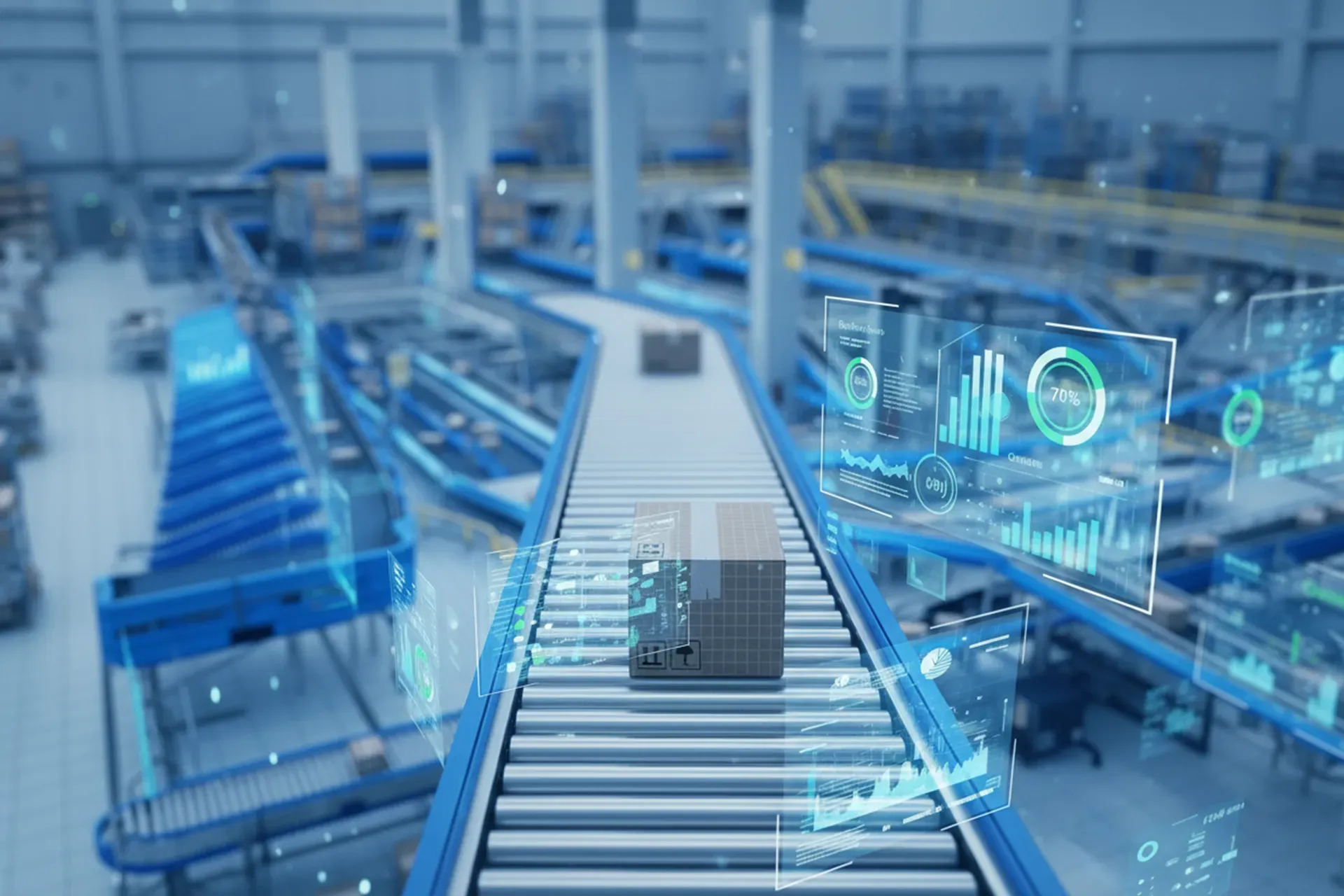
Supply chain simulation software creates virtual models of distribution centre operations using discrete-event simulation and digital twin technology. These systems replicate real-world processes digitally, allowing managers to test changes without disrupting actual operations.
The software works by building mathematical models that represent every component of your distribution centre, from conveyor systems and picking zones to workforce schedules and inventory flows. Discrete-event simulation processes individual events chronologically, such as order arrivals, picking activities, and shipping departures. A well-configured DES simulation engine can process thousands of these events simultaneously, giving planners a highly accurate picture of operational behaviour.
Digital twin technology takes this further by creating dynamic virtual replicas that mirror your physical operations in real time. The system integrates with existing warehouse management systems and ERP platforms to ensure accurate data representation. Users can then run thousands of scenarios rapidly, testing different configurations, staffing levels, or process changes.
The modelling process typically involves drag-and-drop interfaces where users place virtual representations of equipment, workstations, and pathways. The software calculates throughput, identifies constraints, and visualises operations through 2D and 3D environments that make complex data easily understandable.
Why do distribution centres struggle with traditional planning methods?
Traditional planning tools like spreadsheets and static ERP reports cannot handle the dynamic complexity of modern distribution centres. These methods rely on historical averages and assumptions that fail to account for real-world variability and interdependencies.
Spreadsheet-based planning becomes unreliable when dealing with multiple variables simultaneously. Peak-season planning, workforce scheduling, and equipment capacity calculations involve thousands of interconnected factors that change constantly. Static tools cannot model these relationships accurately or predict how changes in one area affect others.
ERP systems excel at transaction processing but lack the analytical capabilities needed for complex scenario planning. They provide historical data but cannot simulate future states or test operational changes before implementation. This limitation forces managers to make expensive decisions based on incomplete information.
The risks of traditional methods become apparent during major operational changes. Installing new equipment, redesigning layouts, or adjusting processes without proper testing can result in costly mistakes, reduced throughput, and extended implementation timelines. Many distribution centres discover problems only after changes are implemented and are difficult to reverse. Dedicated warehouse simulation software eliminates this guesswork by allowing teams to validate every change in a risk-free virtual environment before a single piece of equipment is moved.
What specific benefits does simulation software provide to distribution centres?
Simulation software delivers measurable operational improvements through comprehensive analysis capabilities that traditional tools cannot provide. The primary benefits include throughput optimisation, bottleneck identification, workforce planning, and investment validation.
Throughput analysis reveals maximum capacity under different scenarios, helping managers understand true operational limits. The software identifies constraints before they become problems, enabling proactive capacity planning and resource allocation.
Bottleneck identification pinpoints exactly where operations slow down and why. This detailed analysis goes beyond simple observation, quantifying the impact of each constraint and prioritising improvement opportunities based on potential return on investment. Material flow simulation is particularly valuable here, as it traces the movement of goods through every stage of the distribution process and highlights inefficiencies that would otherwise go unnoticed.
Workforce planning becomes more accurate through simulation of different staffing scenarios. Managers can test various shift patterns, break schedules, and skill distributions to find optimal combinations that balance service levels with labour costs.
Investment validation reduces financial risk by testing expensive changes virtually. Whether evaluating new equipment, layout modifications, or process improvements, simulation provides concrete data about expected outcomes before committing resources. This is especially important when assessing automated systems such as conveyors, AGVs, or AS/RS installations, where warehouse automation simulation can confirm expected performance gains before capital is committed.
Risk mitigation occurs naturally through comprehensive scenario testing. Managers can prepare for peak seasons, equipment failures, or demand fluctuations by testing response strategies in advance.
How do you implement simulation software in an existing distribution centre?
Implementation begins with comprehensive data collection and system analysis, followed by model building, validation, and integration with existing operations. The process typically takes 8–12 weeks for standard distribution centres.
Data collection involves gathering detailed information about your current operations, including layout drawings, equipment specifications, process flows, staffing patterns, and historical performance data. This foundation ensures the simulation model accurately represents your real operations.
Model building starts with creating the physical layout virtually, then adding operational rules, timing data, and resource constraints. Model validation compares simulation results against actual performance to ensure accuracy before proceeding with scenario testing.
The validation phase involves running the model under known conditions and comparing outputs with real operational data. This step is crucial for building confidence in simulation results and identifying any adjustments needed for accuracy.
Integration with existing systems enables automatic data updates and seamless workflow incorporation. The software connects with WMS and ERP systems to maintain current information and support ongoing decision-making processes.
Training ensures your team can effectively use the simulation tools for ongoing optimisation. Most implementations include comprehensive training programmes covering model operation, scenario development, and results interpretation.
What should distribution centres look for when choosing simulation software?
Key evaluation criteria include modelling capabilities, ease of use, integration options, scalability, and industry-specific features. The right software should match your operational complexity while remaining accessible to your team.
Modelling capabilities determine what you can simulate effectively. Look for DES software for logistics that handles your specific equipment types, processes, and operational rules. Advanced visualisation tools help communicate results to stakeholders and identify improvement opportunities quickly.
Ease of use affects adoption and ongoing value. Drag-and-drop interfaces, pre-built component libraries, and intuitive controls reduce learning curves and enable faster model development. Consider how easily your team can create and modify scenarios independently.
Integration capabilities ensure the software works with your existing technology stack. Seamless connections with WMS, ERP, and other operational systems eliminate manual data entry and enable real-time analysis.
Scalability becomes important as your operations grow or become more complex. Choose software that can handle larger models, additional facilities, or more sophisticated analysis without fundamental limitations. A capable DES simulation platform should scale from a single warehouse to a full multi-site intralogistics network without requiring a fundamental change in tooling or methodology.
Industry-specific features address unique distribution centre requirements. Look for built-in components for material handling equipment, warehouse processes, and logistics-specific analysis tools that accelerate implementation and improve accuracy. Strong intralogistics simulation capabilities — including support for conveyor simulation, AGV simulation, and automated storage and retrieval system simulation — are particularly important for modern, highly automated facilities.
Support services and total cost of ownership affect long-term success. Consider implementation support, training programmes, ongoing technical assistance, and software maintenance costs when making your decision.
How InControl helps with distribution centre optimisation
InControl’s Enterprise Dynamics software addresses distribution centre challenges through discrete-event simulation specifically designed for material handling and logistics operations. Our platform enables comprehensive optimisation of warehouse processes, equipment utilisation, and operational efficiency, making it a proven DES simulation modelling software solution for some of the world’s most demanding logistics environments.
Key capabilities include:
- Drag-and-drop modelling with extensive libraries of pre-built warehouse components
- Advanced 2D and 3D visualisation for clear operational insights
- Seamless integration with WMS and ERP systems for real-time data analysis
- Comprehensive scenario testing for investment validation and risk mitigation
- Specialised material handling simulation tools for complex intralogistics systems, including conveyor simulation, AGV simulation, and AS/RS simulation
Our software helps distribution centres reduce costs, accelerate decision-making, and improve operational performance through proven simulation methodologies. We serve major logistics operations worldwide, providing the expertise and technology needed for successful optimisation projects.
Ready to optimise your distribution centre operations? Contact our simulation experts to discuss how Enterprise Dynamics can address your specific operational challenges and improvement goals.
Related Articles
- What are the limits of traditional warehouse layout planning tools?
- What does warehouse simulation software do that spreadsheets cannot?
- Why do developers choose programmable warehouse simulation platforms over fixed tools?
- What is the best simulation software for warehouses?
- What are the 5 KPIs for a warehouse?