
Commercial Buildings & Crowded Places
Optimize Flow, Safety, and Customer Experience with Digital Twin Simulation
In the design and management of commercial buildings and crowded places, details must be carefully planned to ensure smooth movement, safety, and a positive experience for all occupants and visitors. Whether it’s a shopping mall, office complex, stadium or event venue, avoiding congestion and ensuring efficient operations are critical to success.
But how can this be achieved when traffic patterns are unpredictable, crowd sizes fluctuate, and safety regulations are evolving? Operators of these spaces need better insights to predict and mitigate risks that could disrupt operations or threaten safety, such as:
- Managing crowd flow during peak hours or special events
- Minimizing wait times at entry points, elevators, or service areas
- Optimizing staff deployment for better service and security
- Ensuring effective evacuation procedures in case of emergencies
With the help of accurate Digital Twin simulation, these challenges are addressed proactively – enabling smarter, safer, and more pleasant flows of crowds.
Digital Twin Solutions
Digital Twin simulation empowers Architects, Designers and Crowd Managers to evaluate the impact of various day-to-day and “what-if” scenarios before implementing a new design, or a design change in the real world. By utilizing real-time data, they can test strategies, monitor building performance, and make well-informed decisions to optimize design and operations. Whether for individual venues or large commercial complexes, Digital Twin software delivers valuable insights that enhance safety, efficiency, and sustainability.
-
Ensure Smooth Flow and Avoid Bottlenecks
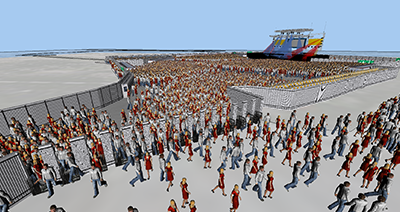
Digital Twin simulation offers a powerful solution for analyzing movement patterns and predicting bottlenecks at key areas such as entrances, exits, security checkpoints and escalators. This allows you to proactively design layouts that ensure seamless flow and minimize risks, especially during peak times or emergencies. -
Enhance Emergency Response and Safety
Digital Twin technology helps design effective emergency evacuation strategies by assessing building capacity and simulating various emergency scenarios. This enables businesses to identify potential bottlenecks, optimize egress routes and signage, and improve safety protocols. Additionally, the simulation outputs provide emergency responders with valuable training, ensuring they are better prepared for real-life situations and can execute safe evacuations more efficiently. -
Boost Commercial Activity
Digital Twin simulations enable businesses to accurately predict crowd flows and analyze foot traffic, allowing them to strategically position products and services in high-traffic areas. This data-driven approach enhances visibility, attracts customer attention, and improves layouts, ultimately driving sales. By understanding crowd behavior, businesses can design more effective layouts that enhance the customer experience and maximize revenue.


Benefits of Simulation
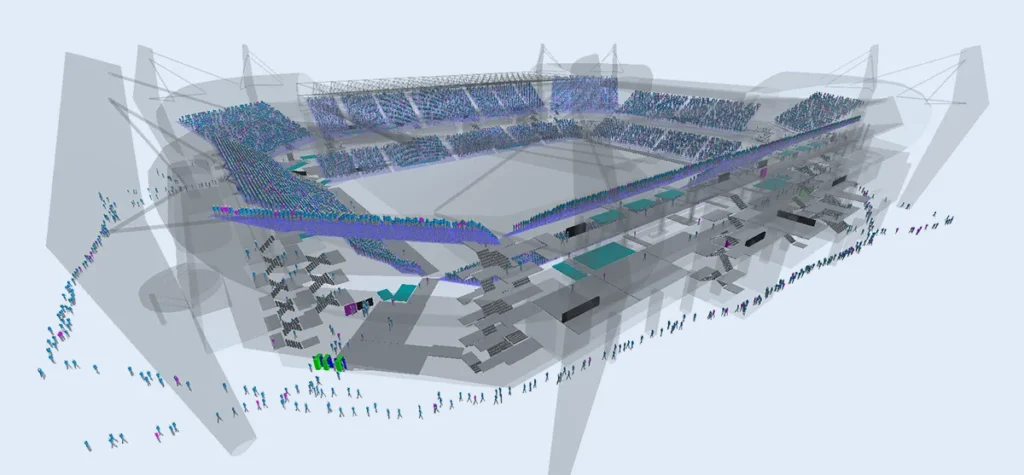
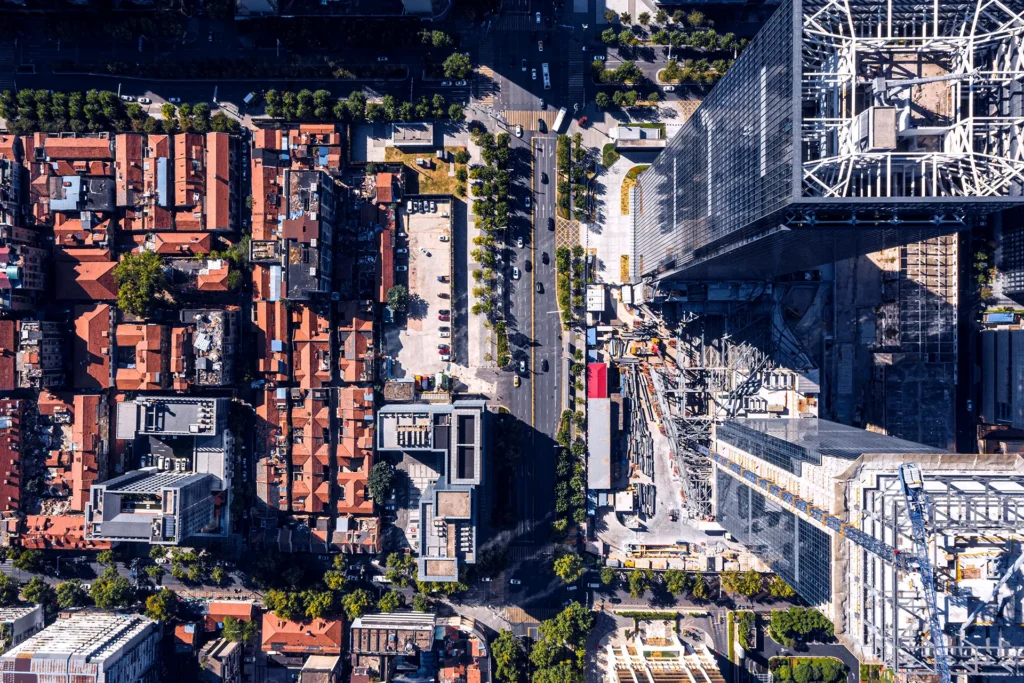
InControl offers a powerful simulation platform that enables you to create a Digital Twin of real-world infrastructures and systems. This virtual replica allows you to gain valuable insights into the behavior of the actual system under various conditions and scenarios. By modeling stadiums, airport terminals, museums, urban areas, multi-modal transportation hubs and other crowded places, you can understand and optimize the performance of your operations.
The software’s core functionality involves simulating the flow of entities, such as products, persons, or vehicles, through an infrastructure or system. By considering factors like resource allocation, processing times, and transportation, users can experiment with diverse strategies and policies. This experimentation empowers you to optimize processes, boost efficiency, mitigate bottlenecks, and proactively identify potential issues before implementing changes in the real world.
Reduced costs
Minimize rework and optimize material usage by identifying potential issues early in the design phase, saving you time and money.
Enhanced Efficiency
Streamline workflows by leveraging simulation to test various design iterations quickly and efficiently, accelerating project timelines.
Improved Safety
Identify potential structural risks and ensure the integrity of your designs before construction begins, mitigating safety hazards.
Elevated User Experience
Design with human comfort and functionality in mind. Simulate realistic behaviour to create spaces that are functional and user-friendly.
17%
sales optimization & space utilization
20%
increased customer experience
congestion reduction
Pedestrian Dynamics®
Our Digital Twin Sofware
Our powerful Digital Twin software Pedestrian Dynamics is designed to model any kind of pedestrian infrastructure or environment.
Our software significantly contributes to the customer experience, (cost) efficiency, innovation, safety, and security of your project. It has been widely employed in numerous large-scale projects across critical infrastructure environments, including stadiums, airports, public transport terminals, mega-events, and urban planning.
Pedestrian Dynamics offers a rapid model-building environment, delivering both time and cost savings. With just a few straightforward steps, even the most complex operations can be efficiently modeled. For instance, in crafting a Digital Twin for an airport terminal, multi-source data inputs such as CAD drawings and BIM models are seamlessly integrated. Once the layout is established, the simulation incorporates all types of visitor/pedestrian data.
Key advantages of Pedestrian Dynamics:
- Enhancing Customer Experience
- Driving (cost) efficiency in operations
- Providing a platform for innovative solutions
- Contributing to a safer environment
- Addressing security concerns effectively
Learn more
Contact us
Interested in exploring our Digital Twin Software? Book a demo with one of our experts or reach out to us directly for more information!